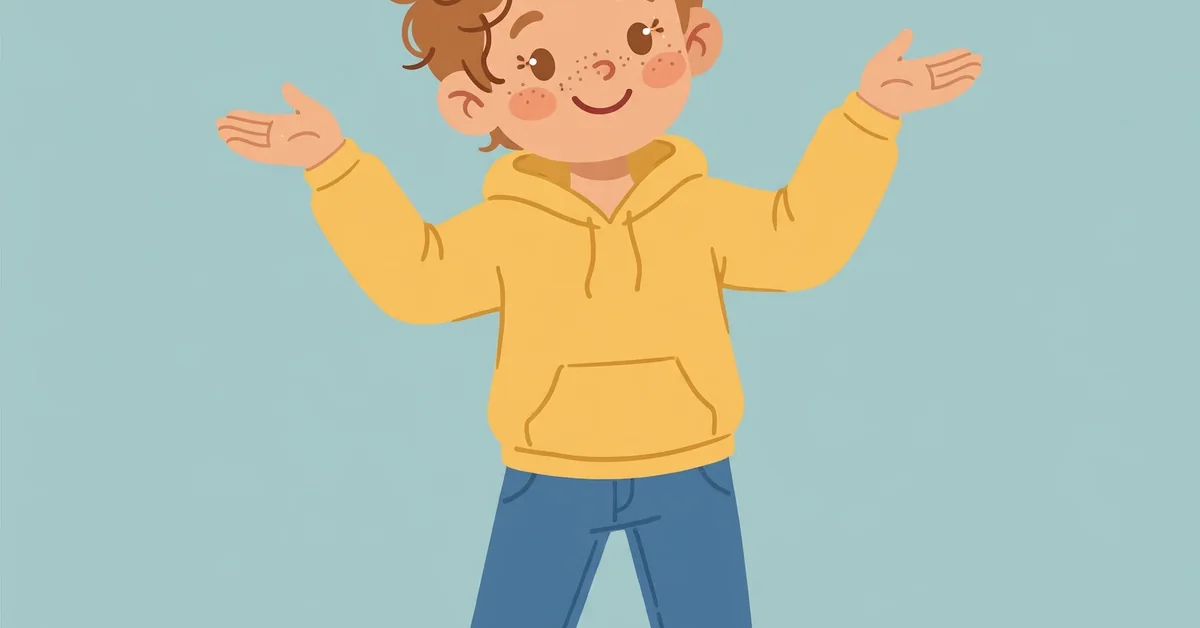
Some questions have no good answer, and 🤷 was built for exactly those. The shrug emoji means “I don’t know,” “not my call,” or “there is nothing I can do.”
It is a whole shoulder shrug, packed into one tap — hands up, eyebrows calm, problem officially above my pay grade.
What Does the Shrug Emoji Mean?
The emoji shows a person shrugging: shoulders raised, palms up, face unbothered. It comes in women’s and men’s versions and every skin tone, and all of them say the same thing.
Three readings cover almost every use:
- No idea. “When does the sale end? 🤷”
- Can’t help. “The printer is broken again 🤷”
- It is what it is. “Train’s cancelled 🤷 we walk.”
One honest note about delivery: 🤷 can end conversations. Sent at the wrong moment, the chat simply stops, because a shrug gives the other person nothing to answer. If the talk matters, treat the shrug as a comma, not a period — say the honest “I don’t know,” then say what happens next.
In spirit, it is the answer-side cousin of the question mark emoji. One of them asks. The other has officially stopped asking.
The gesture itself is ancient body language. People shrug in most of the world, and strangers who share no language still understand raised shoulders and open palms: “I don’t know, and I can’t fix it.” That is why the emoji needs no learning curve. Your body already knows this one — the phone just borrowed it.
🤷 vs ¯\_(ツ)_/¯: Same Shrug, Two Eras
Long before the emoji, the internet had a typed shrug: ¯\_(ツ)_/¯ — a kaomoji built from keyboard characters, including ツ, a Japanese katakana mark doing duty as a smile.
The typed shrug ruled forums, comment sections, and early chats. Then phones arrived. Nobody wants to hunt down ¯ and ツ on a phone keyboard, so the emoji quietly took the job.
The text shrug is not dead, though. It still lives on Reddit, in gaming chats, and in programmer humor — places where the retro effort is part of the joke. Typing ¯\_(ツ)_/¯ today is like wearing a vintage shirt: same message, deliberate style.
So which one should you use? On a phone, the emoji. In a forum full of old-school posters, the kaomoji earns respect. The meaning never changes — only the era showing through.
The effort is precisely the point. Anyone can tap 🤷 in half a second. Pasting ¯\_(ツ)_/¯ means you cared enough to keep the old shrug alive — like quoting a classic on purpose. In tech and gaming spaces, that little extra work quietly signals “I’ve been on the internet a while.” Choose per room: speed for chats, heritage for forums.
The kaomoji also lives where emojis feel too plain: profile bios, forum signatures, and usernames. A typed shrug in a bio says “unbothered” with vintage styling — the same reason people wear retro sneakers. The emoji is the tool; the kaomoji is the fashion.
Polite Shrug vs “Don’t Care” Shrug
Here is where 🤷 gets people in trouble: the same emoji can sound honest or ice-cold, and the words around it decide.
Polite shrug:
- “Honestly? No idea 🤷 sorry!”
- “Beats me 🤷 I’ll ask around”
Don’t care shrug:
- A bare “🤷” as the entire reply
- “Not my problem 🤷”
A lone shrug under someone’s worried message reads like a door closing. Add one kind word — even just “sorry” — and it turns back into an honest answer.
If you receive a bare 🤷, read the relationship before the emoji. From a relaxed friend, it may mean nothing at all. From someone in an argument, it is a statement.
There is a middle move worth stealing: the shrug plus an open door. “🤷 What do you think?” admits you don’t know, then hands the question back instead of dropping it. Couples, teams, and group chats all run better on that version. A bare shrug ends a topic; a shrug with a question keeps the talk alive — and nobody walks away feeling dismissed.
Using 🤷 in Work Chats
Work is where the shrug needs the most care.
Safe ground:
- Small factual unknowns: “Do we have the new logo yet? 🤷 first I’ve heard of it”
- Handing off gracefully: “Not my area 🤷 but Sam will know”
Risky ground:
- Problems that are your job. If your boss asks why the report is late, “🤷” does not read as honest. It reads as not caring.
- Anything involving a customer. Customers see the shrug, not your situation.
One repair works every time: attach a next step. “Not sure 🤷 — I’ll check by noon” keeps the honesty and drops the attitude. The promise does what the emoji cannot.
Watch a good work shrug in action:
- Boss: “Any idea why the site is slow?”
- Teammate: “Nothing from my side 🤷 I’ll check the server logs now.”
Honest, quick, and owned. The shrug admits the gap; the sentence fills it. That is the only shrug a workplace ever needs.
Shrug Combos That Soften It
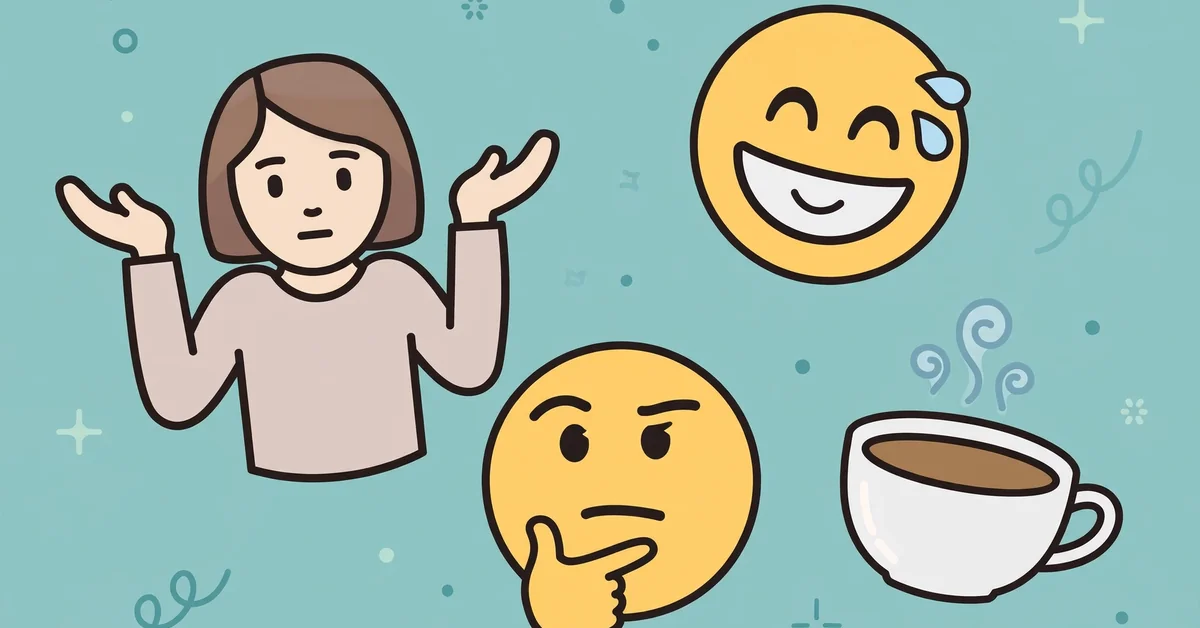
Pairing 🤷 with the right partner changes its temperature:
- 🤷😅 — “oops, no idea.” Playful and sheepish; the safest version.
- 🤷🤔 — “genuinely unsure, still thinking.” Good for real questions.
- 🤷☕ — unbothered. “Not stressing about this one.”
- 🤷🙂 — light acceptance. Things are what they are, and it’s fine.
- 🤷📦 — “no idea where the delivery is.” The official posture of package tracking.
- 🤷🎲 — “it’s a gamble.” For plans, picks, and guesses nobody can guarantee.
The pattern is clear: a warm face beside the shrug keeps it friendly. A bare shrug keeps people guessing — and they rarely guess kindly.
FAQs
What does 🤷 mean when someone sends it?
Most often, “I don’t know” or “nothing I can do.” Read the words around it: kind words make it honest, no words make it cold. When unsure, assume the friendlier reading first.
Is the shrug emoji passive-aggressive?
It can be. A lone 🤷 reply, especially during a tense chat, often reads as “don’t care.” With soft words attached, it is just an honest answer. Context does the judging.
How do you type the text shrug?
Copy this: ¯\_(ツ)_/¯. Most people paste it or set a keyboard text shortcut, since the characters come from several different keyboards. In chats, the emoji does the same job in one tap.
What is the difference between 🤷♂️ and 🤷♀️?
Only the look — man shrugging vs woman shrugging. The meaning is identical. Pick whichever matches you, the same way you’d pick a skin tone.
Is 🤷 okay in a work email?
In a casual team chat, yes, with a next step attached. In a formal email or anything to a client, skip it — write “I’m not sure, but I’ll find out” in words instead.
The short version: a shrug with kind words is honest; a shrug alone is a door closing. Add one soft word, and 🤷 stays friendly.

Hi, I’m Elena Brooks, a symbolism writer for Symboliism.com with a passion for spiritual growth numbers and their deeper meanings. I specialize in explaining awakening symbols, soul-path signs, and transformation numbers in a clear and inspiring way. My goal is to help readers understand the messages that guide their spiritual journey and personal evolution.