You can’t hug through a phone — but 🤗 gets as close as an emoji can. The hug emoji means comfort, support, and friendly warmth.
People send it to say “I’m here for you” when a full speech would feel too heavy. It is small, kind, and almost impossible to take the wrong way. Almost.
What Does the Hug Emoji Mean?
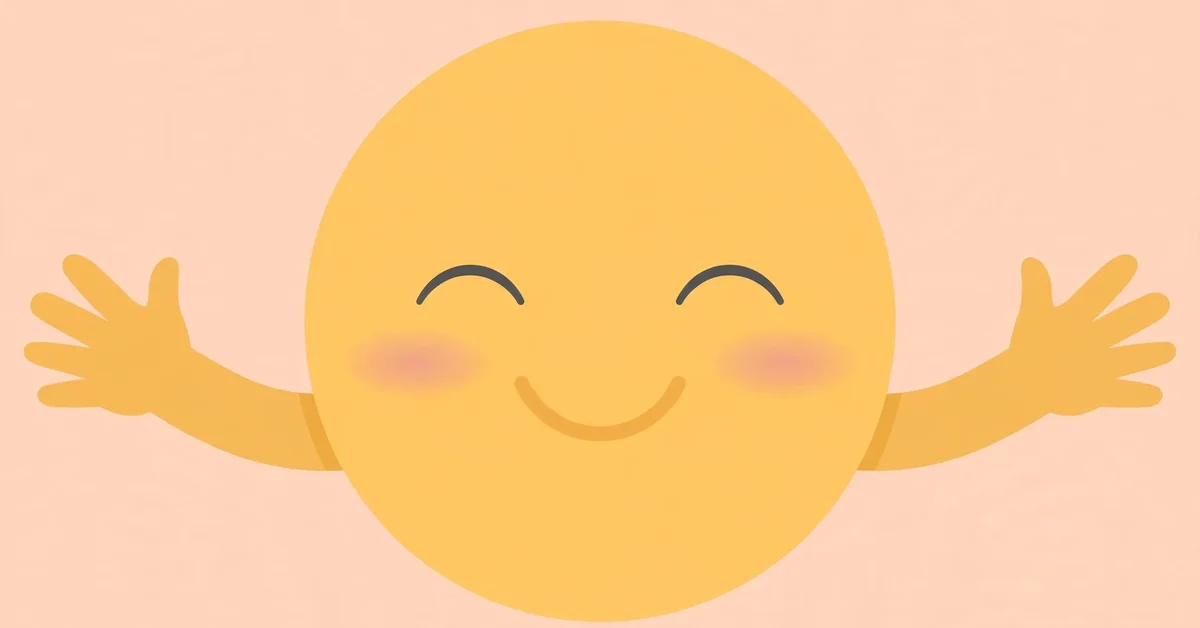
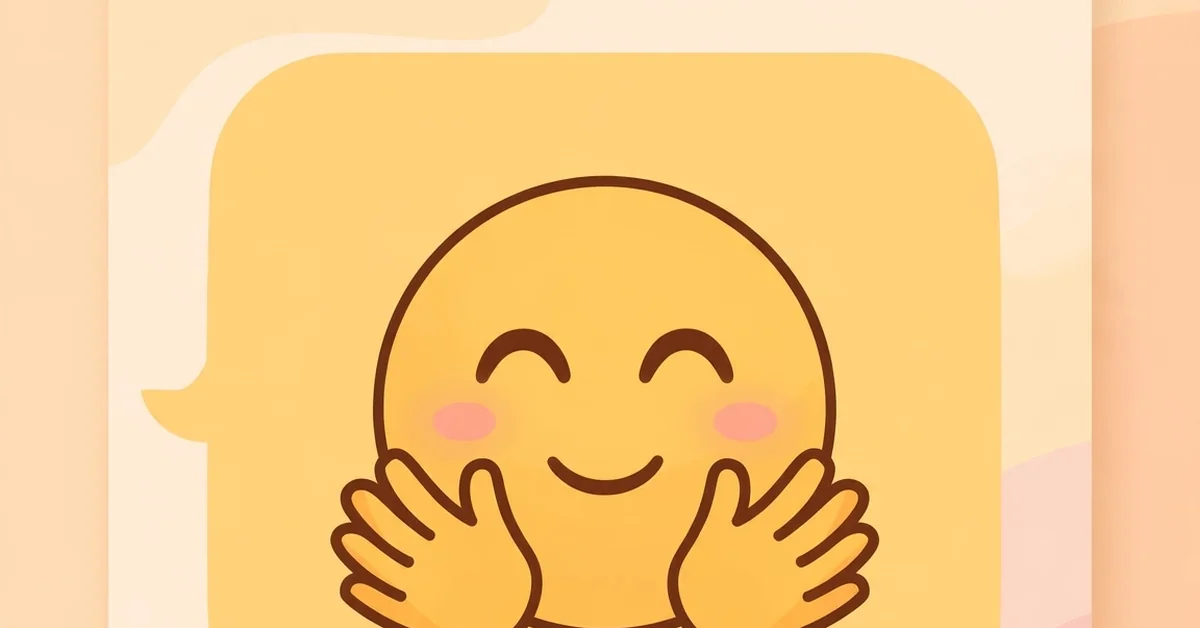
Its official name is “Hugging Face”: a smiling face with two open hands reaching out toward you. The intent is clear from the design — arms open, hug incoming.
Its main meanings:
- A virtual hug. The direct read, and the most common one.
- Warm thanks. A step above “thanks” and below a speech.
- Congratulations. Softer than fireworks, warmer than a plain “nice.”
- Gentle support. “I read your message. I care. Here.”
Unlike most faces, 🤗 is almost purely positive. The drama around it — and there is some — is not about meaning. It’s about the hands.
Distance made this emoji a regular. Friends move cities. Family spreads across time zones. Partners travel for work. When real arms are not an option, people still want to send the feeling — and 🤗 became the standard delivery. It shows up after long flights, missed birthdays, and late-night “wish you were here” messages, doing quiet emotional work that a thumbs up never could.
Sending 🤗 for Comfort and Support
The hug emoji earns its keep on hard days. A friend texts about a failed exam, a rough shift, a lonely evening — and a wordy reply feels wrong. 🤗 says the essential thing fast.
Pair it with one short line and it gets stronger:
- “One step at a time 🤗”
- “You’re not alone in this 🤗”
- “Proud of you for trying 🤗”
Congratulations are the other home of the hug. New job, new baby, a passed test — 🤗 hugs the moment.
Strangers use it more than you might expect. Under posts about illness, loss, or a rescue dog finally adopted, comment sections fill with 🤗 from people who know nothing but the story. It is the internet’s way of saying “a human read this and cared” — a two-second act of kindness that costs nothing and is rarely forgotten by the person who posted. Big public wins pair it with the celebration emoji family for extra noise.
For quiet support rather than a squeeze, many people swap in the praying emoji instead — 🙏 is calmer, 🤗 is warmer. Both mean “I’m with you,” in different temperatures.
Long-distance friendships run on it. When someone you love lives far away, you cannot do much from a screen — but you can do this. “Miss you tons 🤗” travels across oceans and lands exactly as meant. It is small text, but for the person receiving it, it often becomes the best message of the day.
It also works as a peace flag after small fights. When the argument is over but nobody wants the first heavy sentence, a lone 🤗 says “we’re good” in a way words sometimes can’t. Many long friendships have been quietly repaired by exactly that one emoji, sent at exactly the right tired evening moment.
The Jazz Hands Problem
Now, the famous joke. Look at 🤗 again: two open palms, held up beside the face. To plenty of eyes, those are not hugging arms. Those are jazz hands.
The misreading is so common it became a meme of its own. People send a heartfelt hug; the other side sees an excited “ta-da!” — like the emoji is celebrating rather than comforting.
Designs vary a little by platform, and some versions look huggier than others, which keeps the debate alive. One phone’s warm hug is another phone’s stage performance.
Here’s the saving grace: both readings are warm. Nobody receives 🤗 and feels insulted. At worst, your comfort arrives with a little extra sparkle — and on a hard day, that is hardly a disaster.
If the moment really matters, take the doubt away yourself: spell it out. “Sending you a big hug 🤗” cannot be misread as a stage trick. Words pin the meaning down; the emoji just delivers the warmth. That pairing — one clear sentence plus 🤗 — is the safest comfort combo there is.
🤗 vs 🫂: Face Hug or People Hugging?
A newer emoji, 🫂 “People Hugging,” shows two figures actually embracing. It exists largely because of the jazz-hands problem — no one can misread two people mid-hug.
Pick 🫂 when:
- The hug itself is the message — sympathy, reunion, farewell
- The other person might read 🤗 as jazz hands
- The moment is serious and you want zero ambiguity
Pick 🤗 when:
- You want warmth plus a smile, not just the hug
- It’s a thank-you or a quick congratulations
- The chat is playful
Think of 🤗 as a hug with a face, and 🫂 as a hug with a witness. Both are kind; they just photograph differently.
One more 🫂 habit worth copying: people use it for group support. Under a post about a loss, a scare, or a hard week, a row of 🫂 from strangers acts like a whole crowd hugging at once. 🤗 can do it too, but 🫂 reads more like real arms — which is why it owns those threads.
Sweet 🤗 Combos for Hard Days

Combos let you tune the hug to the moment:
- 🤗💛 — warm, gentle support. The everyday comfort combo.
- 🤗☕ — hug plus a hot drink. “Sit down, breathe, I’m here.”
- 🤗🌻 — a cheer-up hug, bright and hopeful.
- 🤗💪 — “you’ve got this.” Support with backbone.
Keep combos to two or three emojis. More than that and the hug drowns in decorations — and the whole point of 🤗 is that it is simple.
FAQs
Is 🤗 really a hug, or jazz hands?
Its official job is a hug — the name is literally “Hugging Face.” But the open-palm design makes many people see jazz hands, and the joke is now part of its identity. Both readings are friendly.
What does 🤗 mean from a friend?
Warmth. It can be a hug, a thank-you, or a small congratulations. If it follows bad news, it means comfort. If it follows good news, it means they are hugging your win.
Is the hug emoji romantic?
Usually not. It reads as friendly and warm, like a hug you’d give a friend or sibling. If you mean something romantic, pair it with hearts and words — 🤗 alone won’t carry that message.
What is the difference between 🤗 and 🫂?
🤗 is a smiling face with open hands; 🫂 shows two people hugging. 🫂 is clearer and a bit more serious, 🤗 is cuter and more casual. For big sympathy moments, 🫂 is the safer pick.
When should I not send 🤗?
In formal work messages, where it can feel too casual. And for very formal condolences, real words carry more weight — lead with a sentence, then add 🤗 if the relationship allows it.
The short version: 🤗 is the small, kind default — comfort without a speech. If the moment is big, add real words. The hug opens the door; your words walk through it.

Hi, I’m Nathan Cole, a symbols researcher and writer for Symboliism.com. I specialize in decoding money symbols, career numbers, and prosperity meanings. I love turning complex spiritual and financial symbolism into clear, practical guides that help readers understand the signs influencing their success, goals, and growth.