A single 😠 can change the whole mood of a chat. The angry emoji clearly means someone is mad — but how mad? And do they mean it?
Think of 😠 as the middle step on the anger scale: more than annoyed, less than furious. That middle spot is exactly what makes it tricky, and useful.
What Does the Angry Emoji Mean?
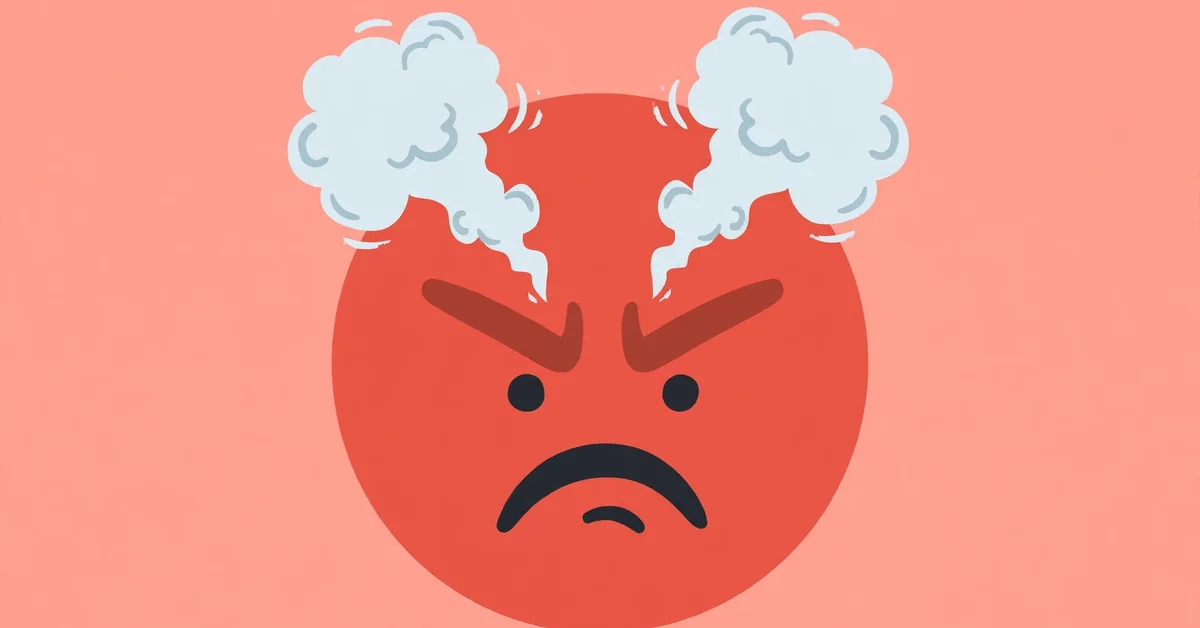
The face is a cartoon classic: hard frown, eyebrows pulled down, mouth flat with annoyance. Its opposite is a smile — and everyone reads it instantly.
People use 😠 for:
- Real frustration. A delay, a broken promise, a rude stranger.
- Reactions to annoying news. Traffic jams, rising prices, their team losing again.
- Mock anger between friends. “You ate the last slice 😠” is not a fight. It is a bit.
- “Mad emoji” searches. Most people hunting for a mad emoji want 😠 or its red-faced cousin 😡.
The emoji itself is simple. The sender’s mood is the variable — and the sections below show how to read it.
Notice what triggers it most days: not disasters, but friction. A delivery that never came. A plan changed at the last minute. A message left on read. 😠 is the face of everyday fed-up — the small angers of ordinary life, which is why it shows up so often in family chats, group chats, and comment sections under frustrating news.
😠 vs 😡 vs 😒: Levels of Mad
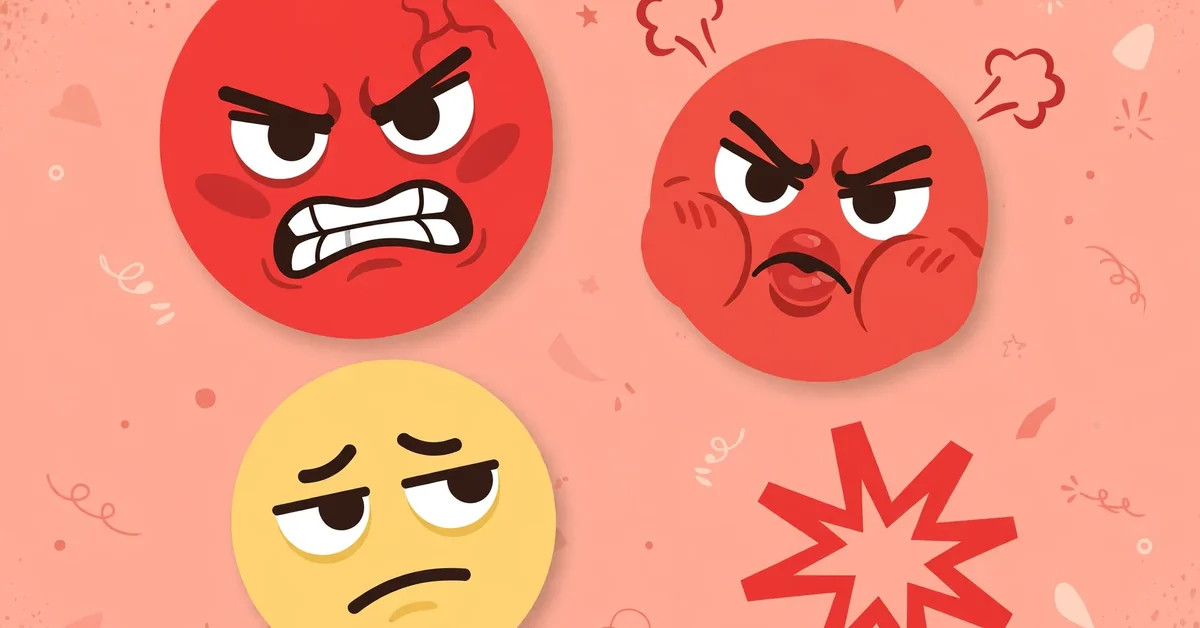
Not all mad faces are equal. Think of it as a scale:
| Emoji | Level | It feels like |
|---|---|---|
| 😒 Annoyed | Low | “Ugh, really?” |
| 😠 Angry | Middle | “I’m genuinely mad about this” |
| 😡 Pouting face | High | Red-faced, steaming rage |
😒 is the eye-roll stage — irritation without heat. We cover that end of the scale in our annoyed emoji guide.
😠 is where annoyance turns into actual anger. Something crossed a line.
😡, with its red face, is anger turned all the way up. Oddly, it is also the one people use most for exaggerated jokes — red-face rage over tiny things, like a phone dying at 2%.
Knowing the scale keeps you from overreacting. An 😒 needs a shrug. An 😠 needs attention. An 😡 needs the actual problem solved, or at least heard.
Repetition moves the needle too. One 😠 is a statement. Three in a row is pressure building. And a jump straight from normal chat to 😡 with no steps in between usually signals a joke — real anger tends to climb the stairs one step at a time.
Joking Angry vs Real Angry in Texts
Since text hides tone, context is your only instrument. A few reliable signs:
Signs it’s a joke:
- It sits next to 😂 or a laughing reply
- The “crime” is tiny — last slice, stolen fries, a changed plan
- The chat was playful a second ago
Signs it’s real:
- It follows an actual complaint, stated in words
- Replies suddenly get short
- It repeats: 😠😠😠 is steam, not comedy
When joking anger turns loud and dramatic, the yelling emoji takes over the job. 😠 frowns; yelling shouts.
The gray zone is mock anger about a real irritation — a friend who jokes about your lateness but is also a little hurt. If you are not sure, treat it as real. Asking “we good?” costs nothing.
A few worked examples help:
- Joking: “I can’t believe you ate MY fries 😠😂” — the laughing face gives it away.
- Real: “Waited an hour for the bus 😠 never taking this route again” — the words carry the complaint; the face just seals it.
- Gray zone: “Sure, change the plans again 😠” — could be a bit, could be fed up. The only move is to ask.
In the gray zone, most people choose to play along — and most gray-zone senders were a little hurt. Checking in saves both sides.
Using 😠 at Work: Careful
Work chats strip away every friendly signal. A face that felt small in your head can land big on someone else’s screen.
- A manager’s 😠 reads ten times colder than the same emoji from a friend.
- Jokes that work face-to-face often die in text — the frown survives, the humor doesn’t.
- Never aim it at customers, clients, or anyone in a support chat.
If you are frustrated at work, words beat faces. “I’m frustrated because the file came late, and I need it by three” fixes something. A bare 😠 just freezes the room.
Same boss, two messages: “The numbers are wrong 😠” versus “The numbers are off — can we fix them by two?” The first creates a mood. The second creates a plan. Work runs on the second kind.
How to Cool a Chat Down After 😠
Someone sent 😠 and meant it. What now?
- Don’t match the energy. A bigger frown never shrinks the first one.
- Ask what happened. A plain “what went wrong?” opens the story.
- Acknowledge before solving. “Fair — that’s annoying” lands better than instant fixes.
- Humor comes last. A small joke works after they vent, not instead of it.
And if it was you who sent 😠 in a hot moment: own it plainly. “Sorry, that came out sharp” repairs more than pretending it was a joke.
Group chats need one extra step: cool the whole room, not just the sender. Change the subject once the vent is done, drop a neutral plan, give people a ladder down. Watching two friends trade bigger and bigger frowns is its own kind of group entertainment — but it rarely ends well.
One last case: the daily 😠. If someone is angry in the chat every single day, the emoji stops being the story — the mood is. That pattern deserves a real, off-group conversation, not another reply in the thread.
FAQs
Which is angrier, 😠 or 😡?
😡 is stronger. Its red face signals fury, while 😠 is everyday anger — firm, but not boiling over. In jokes the order flips a bit, since 😡 is so dramatic it often reads as comedy.
What is the “mad emoji” people search for?
Usually 😠 or 😡. Both show up under that search because “mad” covers the whole middle-to-high range. If the feeling is mild, 😒 annoyed is the better pick.
Is it rude to send 😠?
Not by itself. Between friends, it is often a joke. Sent bare to a coworker, a boss, or during a real dispute, it can feel rude because nothing softens it. Words around the emoji change everything.
What does 😠 mean from my partner or friend?
Check what came right before it. If they were complaining, it is real frustration — respond to the problem, not the emoji. If the chat was playful, it is probably a bit. When in doubt, ask.
How is the angry emoji different from the annoyed emoji?
Heat. Annoyed 😒 is cold irritation — an eye-roll. Angry 😠 is warm — something actually upset them. The reply differs too: annoyed wants space, angry wants the problem heard.
The short version: 😠 is a signal to slow down, not to speed up. Read the scale, check the context, and when in doubt, ask. For the “ugh, gross” corner of the same mood family, the disgusted emoji guide covers that end.

Hi, I’m Oliver Grant, a symbols and numbers researcher at Symboliism.com. I specialize in decoding the hidden meanings behind spiritual signs, numerical patterns, and everyday symbols. I love turning complex symbolism into simple, clear explanations that help readers understand the messages guiding their life, intuition, and decisions.