The smile emoji 😊 usually means genuine warmth — but its flat-mouthed cousin 🙂 is the one that can sound cold or even passive-aggressive. Same family, same yellow faces, wildly different receptions. Knowing which smile says what saves friendships, work chats, and family group texts every single day.
This is the smile family’s home guide. It covers the main smile, the trap its cousin sets, the “happy emoji” question people keep searching, and how to smile safely in every kind of chat.
What Does the Smile Emoji Mean?
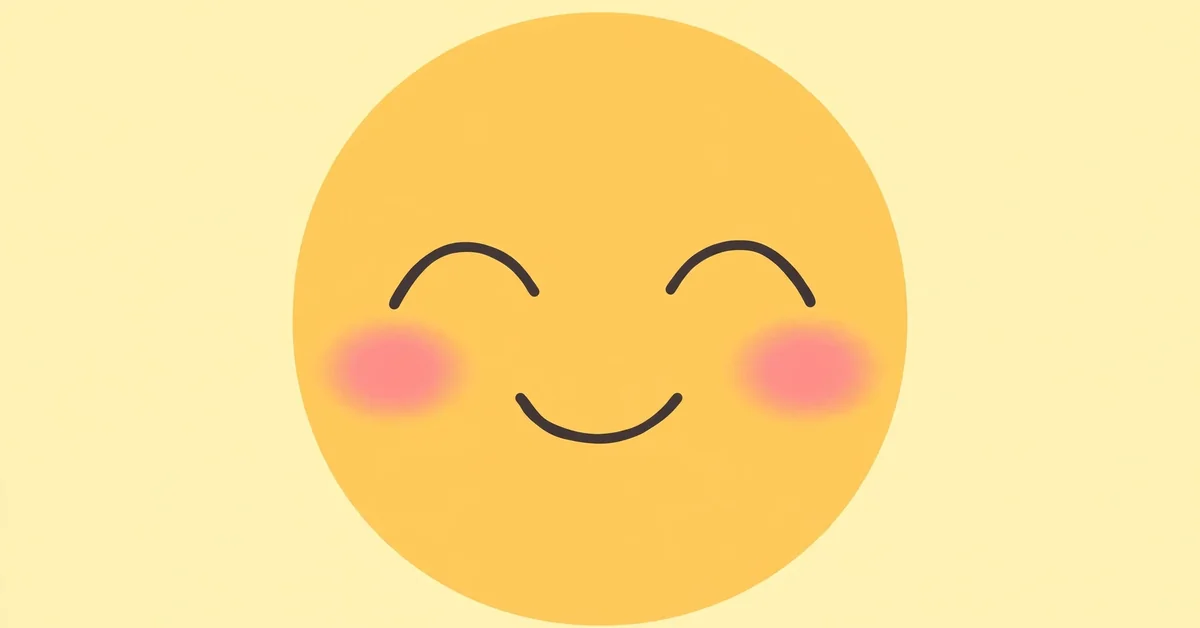
😊 is the smiling face with smiling eyes and rosy cheeks. The design reads like a real, pleased smile — eyes squinted happily, a blush of warmth. Its meanings are straightforward:
- Genuine friendliness. The default smile for kind messages: “Thanks so much 😊.”
- Gratitude and appreciation. 😊 is the thank-you smile — it adds warmth to plain words.
- Soft agreement. “Sounds good 😊” reads friendlier than “sounds good” alone.
- Shy pleasure. Complimented? “Aw 😊” is the blushing thank-you.
It is the most trusted smile on the keyboard. Where 🙂 might be ironic, 😊 is almost always sincere. When in doubt about tone, 😊 is the smile to choose.
That soft-blush warmth is what 😊 shares with its sweetest relative — the flushed emoji has the same rosy-cheeked DNA, aimed at embarrassed-delight moments instead.
😊 vs 🙂: The Smile That Isn’t Friendly
Here is the trap, and it catches people constantly.
😊 (smiling eyes, rosy cheeks) is a full smile. It reads warm, happy, and sincere to nearly every reader.
🙂 (slight smile, flat mouth, open eyes) is a much smaller smile — and a lot of people, especially younger readers, do not trust it. 🙂 has become the emoji of:
- Polite endurance. “Sure, I’ll handle the extra shift 🙂.”
- Quiet annoyance. “Great, the meeting moved again 🙂.”
- Passive-aggressive peace. “No worries at all 🙂” — when there are, in fact, worries.
Why? The flat mouth gives nothing away, and the wide eyes do not crinkle the way a real happy smile crinkles them. Anatomically, a smile without squinted eyes reads as performed, not felt.
So both of these can appear in the same sentence type — “Thanks 🙂” versus “Thanks 😊” — and land completely differently. If you learned emojis early and use 🙂 as a simple friendly smile, know that a share of your readers hear a tired sigh in it. 😊 is the safer daily driver.
Happy Emoji? What People Usually Mean
Thousands of people search “happy emoji” every month, so let’s settle it: there is no single emoji officially called “the happy emoji.” Searchers usually mean one of these:
- 😊 — warm, friendly happy. The most common answer.
- 😄 — big grinning happy, eyes closed, teeth showing — pure delight.
- 😁 — beaming happy, a bit cheeky.
- 🥰 — loved-up happy, floating hearts.
- ☺️ — the classic older smiley face; gentle and slightly nostalgic.
In everyday chat, “the happy emoji” is whichever one your generation defaults to. Grandparents send ☺️. Most adults send 😊. Teens often skip smiling faces entirely and use 😭 or 💀 to mean laughter — confusing, but real. For the laughing end of the happiness family, our happy emoji meme roundup collects the faces people actually share for jokes.
Quick guide: warm happy = 😊, excited happy = 😄, loving happy = 🥰, and “I am smiling through it” = 🙂.
Using 😊 at Work, With Friends, With Family
Each audience reads the smile a little differently:
At work. 😊 is safe in internal chats with people you know: “Got it, thanks 😊.” In first-contact emails, skip smiles — warmth should come from your words until the relationship exists. Never put 😊 in bad news, formal complaints, or anything legal. It reads as flippant there.
With friends. Full freedom. 😊 is friendly, and friends also get the playful layers — the dramatic 😊 after a tease, the bashful 😊 after a compliment. Friends also decode your 🙂 correctly, because they know your habits.
With family. Older relatives treat 😊 (and ☺️) as pure, literal happiness — send freely. Do know that some parents’ group chats read a bare 🙂 as “something is wrong.” If your parent texts “everything fine 🙂”, there is a real chance they mean it warmly and just picked the flatter face. Ask before worrying.
In dating chats. 😊 is sweet and safe early on. Heavy 😊 use reads earnest and kind; if you are aiming for flirty, the smile family is not your toolset anyway.
With strangers. A first reply to a kind comment with “thank you 😊” is universally fine — the smile’s job there is to show the thanks are real, not typed on autopilot. In buy/sell groups and neighborhood chats, 😊 signals you are a friendly stranger, not a suspicious one. Just do not pair it with pressure (“still available? 😊😊” after two ignored messages reads as desperate, not warm).
Smile Combos for Warm Messages
Small stacks that stay kind in every context:
- 😊🙏 — grateful thank-you.
- 😊✨ — happy and a little sparkly; good for good news.
- 😊🌸 — gentle, soft happiness; birthdays and spring posts.
- 😊👋 — cheerful hello or goodbye.
- 😊💛 — warm friendship (yellow is the friendship heart).
- 😊☕ — cozy contentment; slow mornings and catch-ups.
Avoid combining 😊 with sarcasm markers (🙃, 😉 in teasing chains) unless the reader knows you well — mixed signals are how a warm smile turns into a confusing one.
Smile Emoji FAQs
Is 😊 passive-aggressive?
Almost never — that reputation belongs to 🙂. 😊 has smiling eyes and rosy cheeks, and readers across generations read it as sincere. If you want to be safely kind, this is the smile to send.
What does 😊 mean from a girl?
In most cases, simple warmth: friendliness, thanks, or pleased agreement. It is a polite, happy face — not a secret code. Read the words around it for anything more.
What is the “smiley face emoji” people mean?
Usually 😊 or the classic ☺️. “Smiley face” is the old name for the whole yellow-face family, and these two are its friendliest, most traditional members.
Why does 🙂 look rude to some people?
The smile is flat and the eyes do not crinkle, so it resembles a forced smile. Among younger users, 🙂 has picked up meanings like “I’m tolerating this.” It is the most misread emoji in the family.
Can I use 😊 in a work email?
In friendly internal messages, yes. In external, formal, or first-contact emails, write warm words instead. The smile belongs in chat far more than in email.
The Bottom Line
Smile with your eyes: 😊 means it, 🙂 might not. Pick 😊 for real warmth, save 🙂 for people who know your humor, and your smiles will land the way you sent them.

Hi, I’m Elena Brooks, a symbolism writer for Symboliism.com with a passion for spiritual growth numbers and their deeper meanings. I specialize in explaining awakening symbols, soul-path signs, and transformation numbers in a clear and inspiring way. My goal is to help readers understand the messages that guide their spiritual journey and personal evolution.