Pensive Emoji Meaning: Quiet Sadness, Not Anger
No message. No tear. Just a face with its eyes closed, thinking about what went wrong. The pensive emoji means quiet sadness — regret, disappointment, and reflection turned inward, not anger and not drama.
😔 is the softest of the sad faces. It does not cry out. It goes quiet. That quiet is exactly what it is for, and it is why this face needs its own guide, apart from its louder cousins.
What Does the Pensive Emoji Mean?
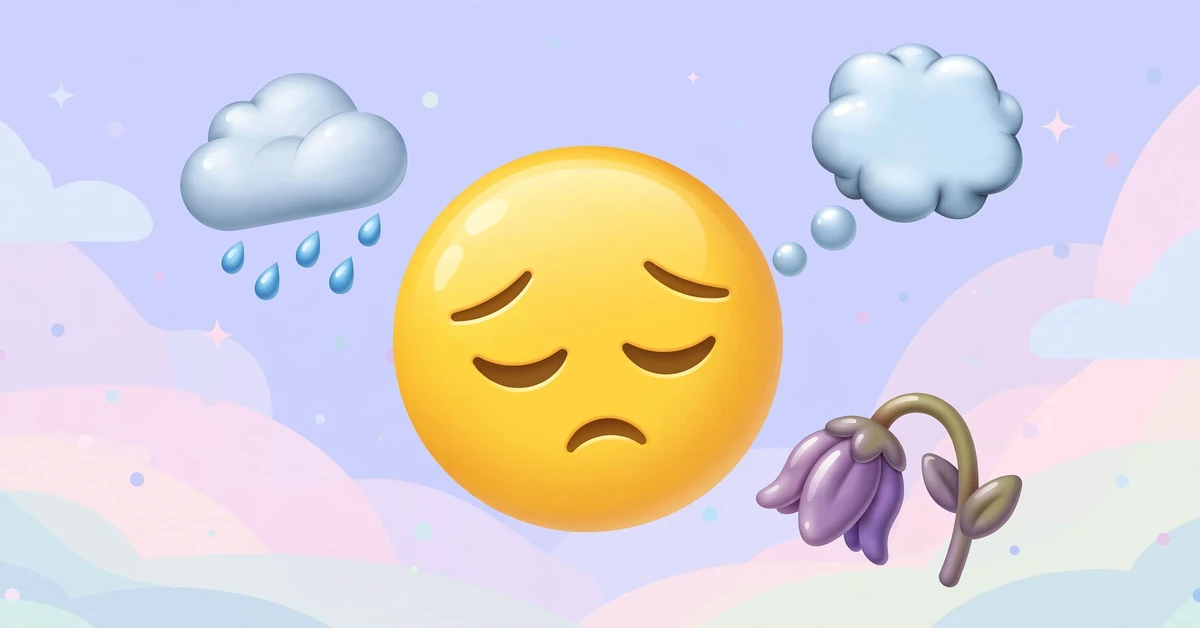
Look at the face closely. Eyes closed and cast down. Mouth small and flat. Brows slightly raised in the middle, the way real faces do when a thought hurts a little.
“Pensive” itself means deep in thought. So 😔 is sadness with thinking inside it:
- Regret. “I wish I had done that differently.”
- Disappointment. “That did not go the way I hoped.”
- Reflection. “I need a minute with this.”
It is rarely about other people. Anger points outward; pensive points inward. The sender is not blaming anyone. They are sitting with a feeling, quietly.
You will spot it under reflective posts, too: a photo from years ago, a quiet anniversary, a song that brings someone back. Under pictures like those, big loud emojis would break the mood. 😔 matches the low light of the moment. It says “this touched something in me” in the register of a whisper. Caption writers reach for it when the post is not sad news exactly, just a tender, thoughtful ache.
😔 vs 😢: Quiet Sad vs Tearful Sad
The two sad faces get swapped all the time, but they are not the same mood.
😔 keeps its eyes closed and its tear inside. It is the sadness of a long sigh — private, low, thoughtful. You send it after your own mistake, a missed chance, a plan that fell through in a small, heavy way.
The sad emoji 😢 wears one tear on its cheek. That tear is social: it asks to be seen. 😢 is for hurt feelings, sympathy, and moments you want a friend to notice and answer.
Quick test: if the feeling is “hold me,” that is 😢. If it is “leave me with my thoughts a moment,” that is 😔. Both are real sadness. They just face different directions — one toward people, one toward the self.
Watch them work in the wild. A friend loses a match they trained months for. In the group chat, they send 😔 — no words, no tear. They are not asking for a rescue. They are marking the weight of it. An hour later, replies full of kindness land, and out comes 😢 — now the feeling is shared, and the tear fits. Same person, same day, two different sadnesses. Choosing the right one is how people speak precisely without typing a word of explanation.
Regret and “I Messed Up” Moments
Regret is 😔’s home ground. You will see it after:
- “Sent the email to the wrong person 😔”
- “Missed the train by one minute 😔”
- “Forgot her birthday. Again 😔”
Notice these are small-to-medium wounds, mostly self-caused. 😔 does not beg and does not rage. It owns the miss with a lowered head. That honesty is why friends respond well to it: the face already did the hard part, which is admitting the fault.
It also fits quiet public posts — a tribute, a “thinking of you” note, a day marked in memory. Where 😭 would be too loud and 😢 too tearful, 😔 keeps the tone low and respectful.
Plenty of its work is even smaller than that. Plans change. A picnic meets rain. A show sells out. A friend moves away one week sooner than planned. None of it is tragedy, all of it is a small weight — and 😔 is sized exactly for it. People who would never post a crying face over cancelled plans will send this one without a second thought. It keeps sadness honest at low volume, which is where most sadness in real life actually lives.
😔 in Apologies
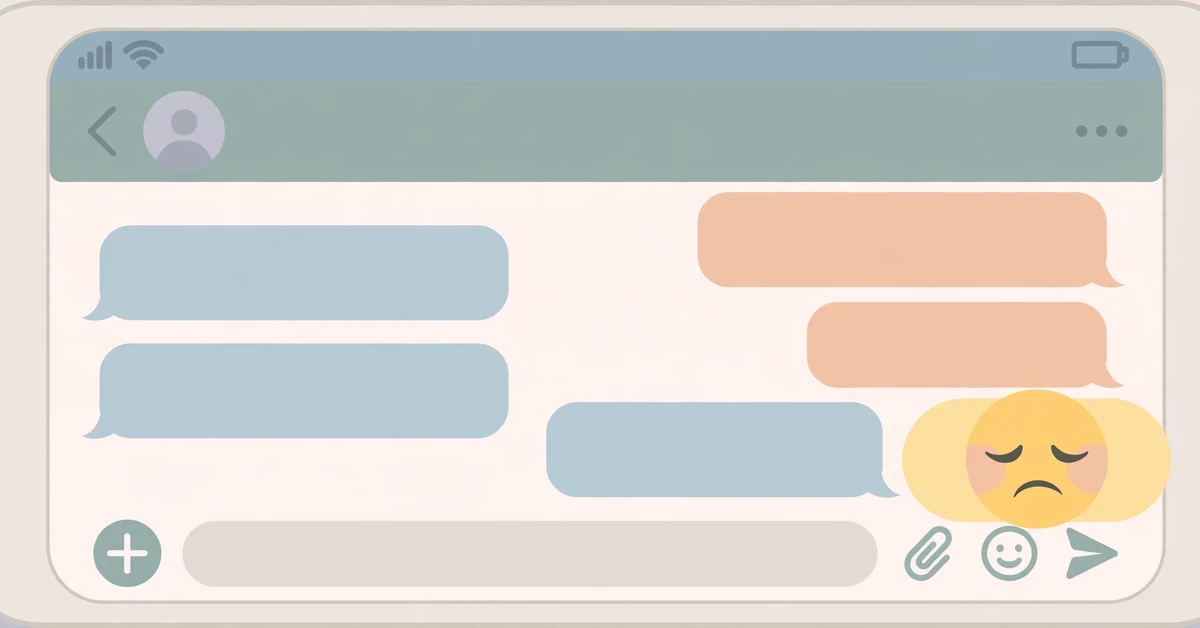
Few emojis soften an apology like this one. “Sorry I snapped earlier 😔” reads more sincere than a bare “sorry,” because the face shows the sender has sat with what they did.
It works because regret is believable. Anyone can type “sorry” fast. 😔 adds the pause — the thought — that shows the words cost something.
Still, it is a softener, not the apology itself. For real harm, write the full sentence: what you did, that you know it landed badly, what you will do next. Let 😔 carry the tone, not the whole repair. And never use it to dodge: “sorry you feel that way 😔” is not an apology, with or without the face.
At work, the same move heals small tears fast: “My bad on the missed file 😔 — fixed and resent.” Short, honest, owned. The face shows the miss registered; the second half shows it handled.
Replying to 😔 With Care
When someone sends 😔, they are usually not asking for advice. They are asking to not be alone inside the feeling. Replies that help:
- Sit with them. “Yeah. That one stings.” Simple agreement is comfort.
- Open a small door. “Want to talk, or want quiet company?” Either answer is fine.
- Do not fix fast. Quick solutions can feel like dismissal when someone is mid-reflection.
- Check back later. A next-day “still thinking of you” means more than ten instant pep talks.
If the quiet sadness shows up often, or the words around it darken, treat it as a sign to check in for real — a call, a visit, time together. Emojis hint; people help.
Pensive Emoji FAQs
What does 😔 mean in a text?
Quiet sadness with thought inside it — regret, disappointment, or reflection. It is inward and low-key, not angry and not tearful.
Is 😔 an angry emoji?
No. 😔 holds no anger at all. Its closed eyes and lowered head show sorrow and thought, never blame.
What is the difference between 😔 and 😢?
😔 is quiet and private, eyes closed, no tear. 😢 shows a tear and asks to be comforted. One reflects; the other reaches out.
When should I send 😔?
After your own mistakes, small losses, and letdowns — and inside gentle apologies. It suits low, thoughtful sadness best.
How do I reply to 😔?
With presence, not fixes. A kind line, an offer to talk or to sit in the quiet, and a check-in the next day.
The Quiet Takeaway
😔 is sadness at a whisper. Send it when a feeling needs a quiet minute, not a spotlight — and answer it with company, not cures.

Hi, I’m Lena Foster, a symbolism expert and content writer for Symboliism.com. I specialize in explaining the meanings behind symbols, numbers, and signs in a simple, engaging way. I love turning complex spiritual and cultural symbolism into clear, easy-to-read guides that help readers understand the messages around them.