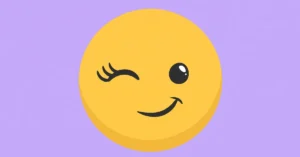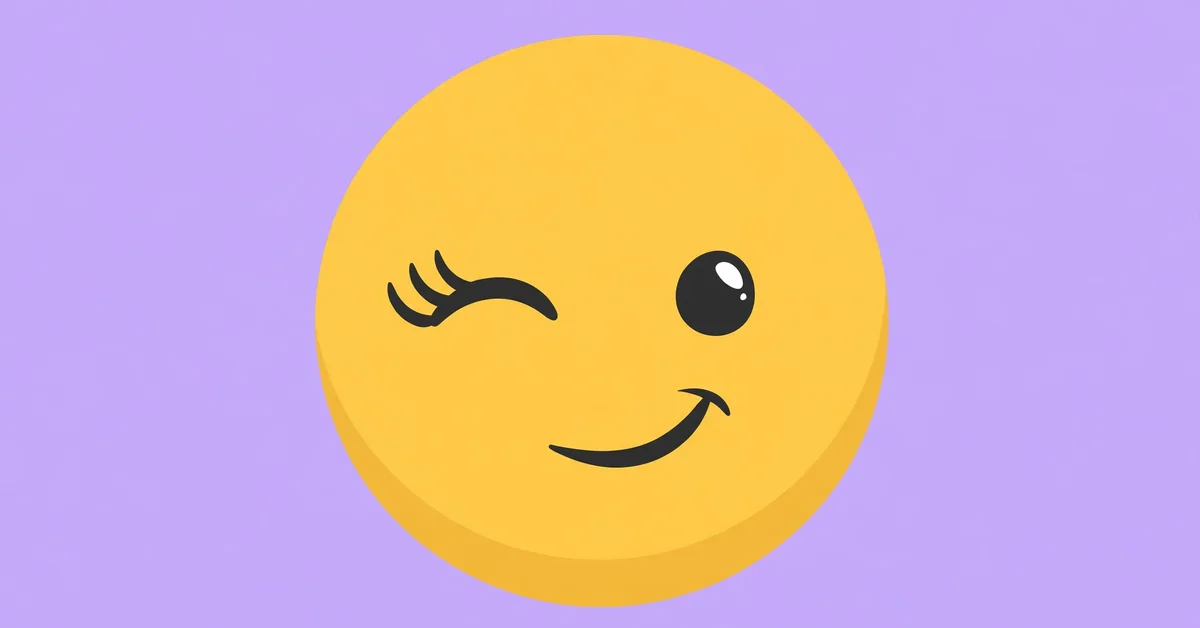
A wink in real life lasts half a second. In a text, it does serious work — the wink emoji 😉 softens jokes, marks sarcasm, and yes, sometimes flirts.
Most of the time, though, a wink is joke insurance: proof that the line before it was not serious. The flirting is real, but it is only one of the wink’s three jobs.
What Does the Wink Emoji Mean?
One eye closed, the other open, a small knowing smile. The wink has meant the same thing for centuries, on faces and now on screens: “You and I understand each other.”
That shared-secret feeling powers all its uses:
- “I’m kidding” — the joke marker
- “Just between us” — the inside-joke signal
- “I like where this is going” — the flirt
Which one you received depends on the chat, the person, and what came right before it. The next three sections split the cases apart.
There is also a fourth, quieter job: softening a request. “Could you cover my shift Friday? 😉” The wink admits the ask is a favor and keeps it light — a small social cushion. It is neither a joke nor a flirt, just friendliness doing admin work. Many everyday winks are exactly this.
😉 the Joke-Saver: “I’m Kidding”
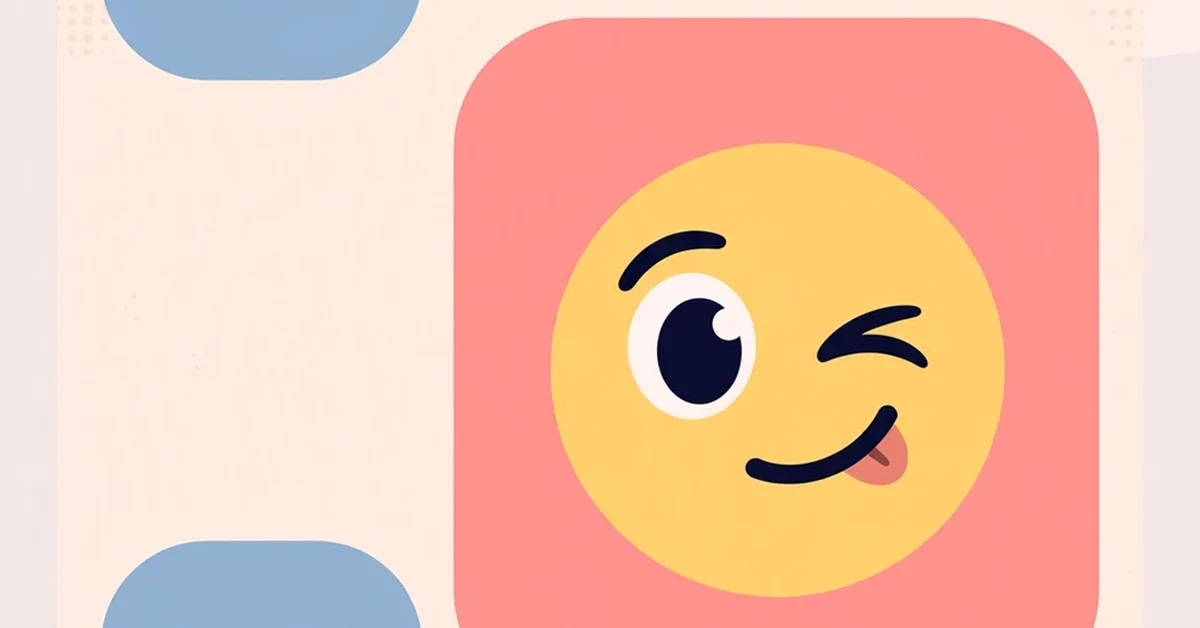
Text has no tone of voice. A dry line that would land as a joke out loud can read like an insult on a screen. The wink is the fix.
Watch what it does:
- “Great parking job.” — a complaint
- “Great parking job 😉” — a tease between friends
Same words. The wink flips them. It works for sarcasm, roasts, fake complaints, and plans nobody will ever do (“Let’s just move to the beach 😉”).
That is why comedians of the group chat use it constantly. It is the raised eyebrow, the grin, the “you know I’m playing” — all things plain text cannot carry on its own.
Roasts show the mechanism best. A group roast lives one inch from a real insult, and the wink is often that inch. “Nice of you to finally join us 😉” pokes the late friend and forgives him in the same breath. Remove the wink, and the same line starts an argument. It is punctuation with social skills — the smallest peace treaty in the keyboard.
It also runs cover stories. Planning a surprise party, friends deploy the wink as code: “He’s running late 😉” means “stall him, we’re not ready.” Everyone in the chat is in on it except the guest of honor. The wink turns an ordinary lie into a shared mission — one more proof that its deepest meaning is always “you and I know something.”
😉 the Flirt: Reading It Right
Yes, sometimes a wink is a wink. Reading it correctly is about patterns, not single messages.
Signs it leans flirty:
- It comes from someone who chats with you often and warmly
- Compliments sit nearby in the conversation
- The wink arrives again and again, not just once
Signs it is just playfulness:
- It follows an obvious joke or plan
- The person winks at everyone, all the time
- The topic is logistics, not feelings
This playful confidence is the same energy younger users group under rizz — the wink is its oldest tool. One wink, though, proves nothing. A pattern of them might.
And if you’re not sure which it is, stay playfully neutral. Reply to the message, not the mystery: keep the banter light, skip the grand interpretation. A real flirt will make itself clear over time — a single wink never has to carry that decision.
When a Wink Feels Wrong
The wink has one big weakness: it cannot rescue a message that should never have been sent.
- Apologies. “Sorry I forgot your recital 😉” is worse than no emoji. The wink says you are not even sorry.
- Serious news. Winking near illness, loss, or bad results reads as mocking.
- Work authority. A wink from a boss about deadlines or pay feels off in a way that’s hard to name — skip it upward and downward.
- Strangers. From someone you don’t know, a wink can feel pushy instead of playful.
The rule underneath all four: if the message would upset someone without the wink, the wink will not save it.
Public winks deserve their own warning. A wink in a one-to-one chat is a whisper; the same wink in a big group or a public comment is a performance. Everyone can see it, everyone can misread it, and screenshots travel. If you would not wink at that person across a crowded room, do not do it in a crowded thread.
Wink vs Blink: 😉 in Captions
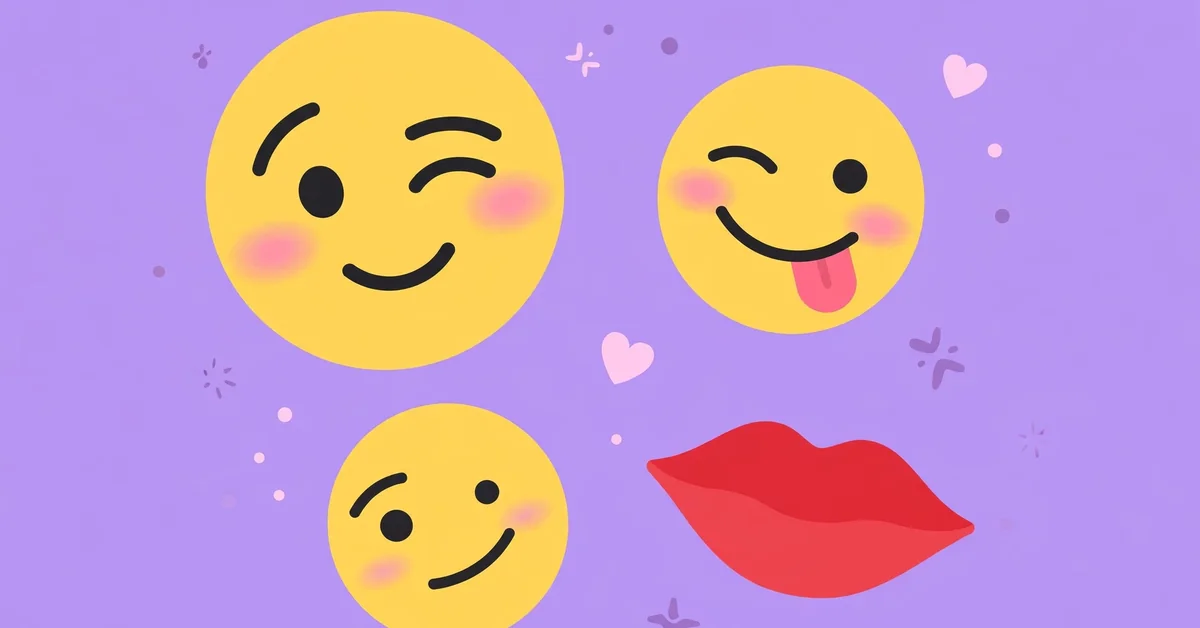
In captions, the wink works like a stage whisper. Brands and creators drop it after playful promises — “Dessert menu drops Friday 😉” — to make the reader feel let in on something.
It also softens calls to action. “You know what to do 😉” is the wink doing its secret-sharing job at public scale.
For a shyer flavor of playful, the flushed emoji covers the blushing end — 😉 is sly, 😳 is bashful. Pick based on the energy you want.
Creators use it in one more place: the tease. “New flavor Friday. You know the one 😉” — the wink tells fans they are insiders now. It builds a tiny secret between the poster and the audience, which is the wink’s oldest job, done at scale.
And use one per post. A caption full of winks stops sounding playful and starts sounding like it’s trying too hard.
FAQs
Does a wink emoji always mean flirting?
No. Jokes are its main job. A wink usually marks “I’m kidding” or “we’re in on this.” Flirting is possible, but it needs a pattern of warm conversation around it before you should read it that way.
What does 😉 mean from a crush?
Probably playful interest — especially if it keeps showing up alongside compliments and long chats. Still, one wink is just one wink. Interest shows in the pattern, not the emoji.
What is the difference between 😉 and 😜?
😜 has a tongue out and crossed energy — it is sillier, louder, more clownish. 😉 is smoother and more controlled. Use 😉 for sly jokes and 😜 for goofy ones.
Can a wink be passive-aggressive?
Yes, in an argument. “Fine 😉” after a fight can read as smug rather than kind. Any emoji that softens jokes can also sharpen sarcasm when the mood is already sour.
Is 😉 okay at work?
In light team chats among equals, usually yes. In formal messages, to clients, or up the chain of command, it risks reading as unprofessional or too familiar. When unsure, go without.
The short version: read the wink by the relationship, not by the emoji. With close people, it is a smile. With everyone else, treat it as a small question that the rest of the chat has to answer.

Hi, I’m Lena Foster, a symbolism expert and content writer for Symboliism.com. I specialize in explaining the meanings behind symbols, numbers, and signs in a simple, engaging way. I love turning complex spiritual and cultural symbolism into clear, easy-to-read guides that help readers understand the messages around them.