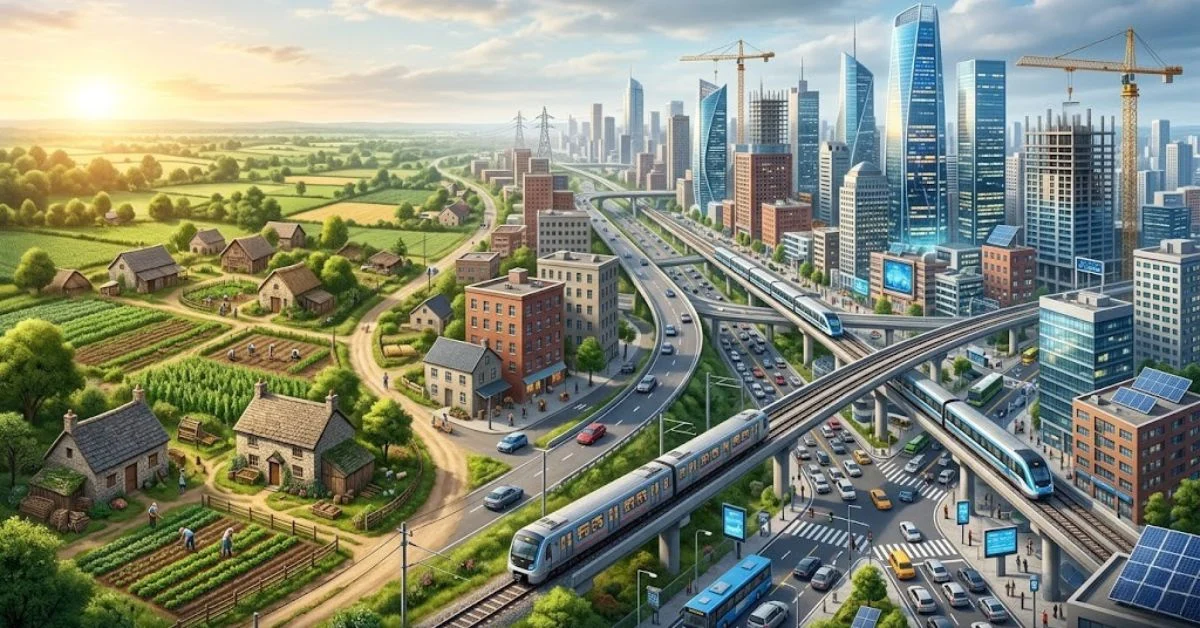
Have you ever noticed how small towns slowly turn into busy cities?
New roads appear. More houses are built. Businesses open. The population grows. Over time, what was once a quiet rural area becomes a thriving urban center.
This process is called urbanization.
In simple words, urbanization means the movement of people from rural areas to urban areas, leading to the growth and expansion of cities and towns.
People search for the meaning of urbanization for many reasons. Students encounter the term in geography, sociology, economics, and history classes. Others see it in news reports, government studies, or discussions about population growth and city development.
Understanding urbanization helps explain why cities grow, how societies change, and what challenges and opportunities come with modern development.
What Is Urbanization?
Urbanization is the process through which an increasing number of people move from rural areas to urban areas.
As more people settle in towns and cities, urban populations grow. New neighborhoods, roads, schools, hospitals, businesses, and transportation systems are developed to support this growth.
Simply put, urbanization is the expansion of urban living.
Urbanization Meaning in Simple Words
Urbanization means more people choosing to live and work in cities instead of villages or rural communities.
For example, if many families leave farming villages and move to a city for jobs, education, or healthcare, urbanization is taking place.
What Does Urbanization Mean?
The word “urbanization” comes from the word “urban,” which means related to a city or town.
Urbanization refers to the growth of cities and the increasing concentration of people in urban areas.
Urbanization Definition
A commonly accepted definition of urbanization is:
Urbanization is the process by which a growing proportion of a population lives in urban areas, resulting in the expansion of cities and towns.
This process often happens alongside industrialization, economic development, and infrastructure growth.
Urbanization Meaning in Geography
In geography, urbanization refers to changes in population distribution from rural regions to urban centers.
Geographers study urbanization to understand:
- Population density
- Human settlement patterns
- Urban expansion
- Land use changes
- Transportation networks
- Regional development
What Does Urbanization Mean in Geography?
In geographical terms, urbanization occurs when a larger share of a country’s population lives in cities rather than rural areas.
It is one of the most important demographic changes in the modern world.
Urbanisation Definition Geography
The geography definition of urbanization focuses on how cities grow physically and socially over time.
It examines how land is developed, how infrastructure expands, and how urban areas influence surrounding regions.
Urbanization Meaning in Sociology
In sociology, urbanization examines how city growth affects people and communities.
As urban areas expand, social structures, lifestyles, family patterns, and cultural practices often change.
Sociologists study urbanization because it influences:
- Social relationships
- Community development
- Education
- Employment
- Housing
- Quality of life
Urbanization and Social Change
Urbanization can create new opportunities while also bringing challenges such as overcrowding, housing shortages, and social inequality.
Urbanization Meaning in Economics
In economics, urbanization is closely connected to economic development.
Growing cities often create larger labor markets, attract businesses, and encourage investment.
Economists associate urbanization with:
- Employment opportunities
- Industrial growth
- Increased productivity
- Infrastructure development
- Rising incomes
Why Urbanization Matters to Economic Growth
Cities often become centers of innovation, trade, finance, and industry. As a result, urbanization can contribute significantly to national economic development.
Urbanization Meaning in History
Urbanization has shaped human civilization for centuries, but it accelerated dramatically during the Industrial Revolution.
Before industrialization, most people lived in rural communities and worked in agriculture.
As factories emerged, millions of people moved to cities seeking employment.
Urbanization Meaning During the Industrial Revolution
During the Industrial Revolution, urbanization referred to the rapid growth of cities driven by industrial jobs and manufacturing expansion.
Many modern cities grew significantly during this period.
Causes of Urbanization
Several factors contribute to urbanization.
Employment Opportunities
Cities generally offer more jobs than rural areas, attracting workers from different regions.
Better Education
Urban areas often provide greater access to schools, colleges, and universities.
Improved Healthcare
Many people move to cities to benefit from better medical facilities and healthcare services.
Industrialization
The development of industries creates employment opportunities that attract large populations.
Infrastructure Development
Roads, public transportation, communication systems, and utilities make urban living more attractive.
Urbanization Examples
Urbanization can be seen around the world.
Examples include:
- The expansion of major metropolitan areas
- Growth of large cities in developing countries
- Development of suburban communities
- Conversion of rural land into residential and commercial districts
Urbanization Meaning Example
Imagine a farming village where many residents move to a nearby city for better jobs.
As the city’s population grows, new housing projects, schools, roads, and businesses are built.
This is a practical example of urbanization.
Rapid Urbanization Meaning
Rapid urbanization occurs when cities grow very quickly over a short period.
While rapid growth can create economic opportunities, it can also place pressure on housing, transportation, and public services.
Common effects include:
- Traffic congestion
- Increased population density
- Housing shortages
- Greater demand for infrastructure
Unplanned Urbanization Meaning
Unplanned urbanization occurs when city growth happens faster than planning and development efforts.
This can lead to:
- Informal settlements
- Inadequate infrastructure
- Environmental challenges
- Overcrowding
Proper urban planning is important to manage growth effectively.
Urbanization and Environmental Impact
Urbanization can affect the natural environment in several ways.
Potential environmental impacts include:
- Air pollution
- Water pollution
- Waste management challenges
- Loss of green spaces
These concerns have increased interest in sustainable development and environmentally responsible urban planning.
Urbanization and Sustainable Development
Modern cities increasingly focus on sustainable development.
The goal is to support economic growth while protecting natural resources and improving quality of life.
Sustainable urban development often includes:
- Public transportation systems
- Green spaces
- Energy-efficient buildings
- Smart city technologies
Urbanization Synonym
Common synonyms and related terms include:
- Urban growth
- City expansion
- Urban development
- Metropolitan growth
- Urban transformation
- Urban expansion
Although the meanings are similar, each term may be used in slightly different contexts.
Counter Urbanization Meaning
Counter urbanization occurs when people move away from large cities and settle in smaller towns or rural communities.
This trend may occur because of lifestyle preferences, remote work opportunities, or housing affordability concerns.
De-Urbanization Meaning
De-urbanization refers to a decline in urban populations as people leave cities.
It is less common than urbanization but can occur during economic downturns or population shifts.
Global Urbanization Meaning
Global urbanization refers to the worldwide increase in urban populations.
Today, more people live in cities than ever before, making urbanization one of the defining trends of the modern era.
Planetary Urbanization Meaning
Planetary urbanization is a concept suggesting that urban influence now extends beyond traditional city boundaries and affects regions across the globe.
Urbanization Meaning for Kids
For children, urbanization can be explained simply:
Urbanization means more people moving to cities, causing cities to become larger and busier over time.
Frequently Asked Questions
What is urbanization meaning?
Urbanization is the process of people moving from rural areas to urban areas, causing cities to grow.
What does urbanization mean in simple terms?
It means the growth of cities as more people choose to live and work there.
What does urbanization mean in geography?
It refers to the increasing concentration of people in urban areas and the expansion of cities.
What does urbanization mean in sociology?
It refers to the social changes that occur as cities grow and populations become more urban.
What does urbanization mean in economics?
It refers to city growth that supports economic development, employment, and industrial expansion.
What does increased urbanization mean?
It means a larger percentage of the population is living in cities than before.
Conclusion
Urbanization is the process through which people move from rural areas to urban areas, leading to the growth of cities and towns. It plays an important role in geography, sociology, economics, and history because it shapes how people live, work, and interact.
From creating employment opportunities and supporting economic development to influencing infrastructure, transportation, and environmental sustainability, urbanization remains one of the most important forces shaping modern society.
Understanding urbanization helps us better understand the growth of cities, the movement of populations, and the future of communities around the world.
Read More About!
- What Does H1B Mean? Visa, Lottery, and Work Status Explained
- Timeshare Explained Simply: Meaning, Examples & Key Facts
- US Government Shutdown Meaning: What Gets Affected

Hi, I’m Lena Foster, a symbolism expert and content writer for Symboliism.com. I specialize in explaining the meanings behind symbols, numbers, and signs in a simple, engaging way. I love turning complex spiritual and cultural symbolism into clear, easy-to-read guides that help readers understand the messages around them.