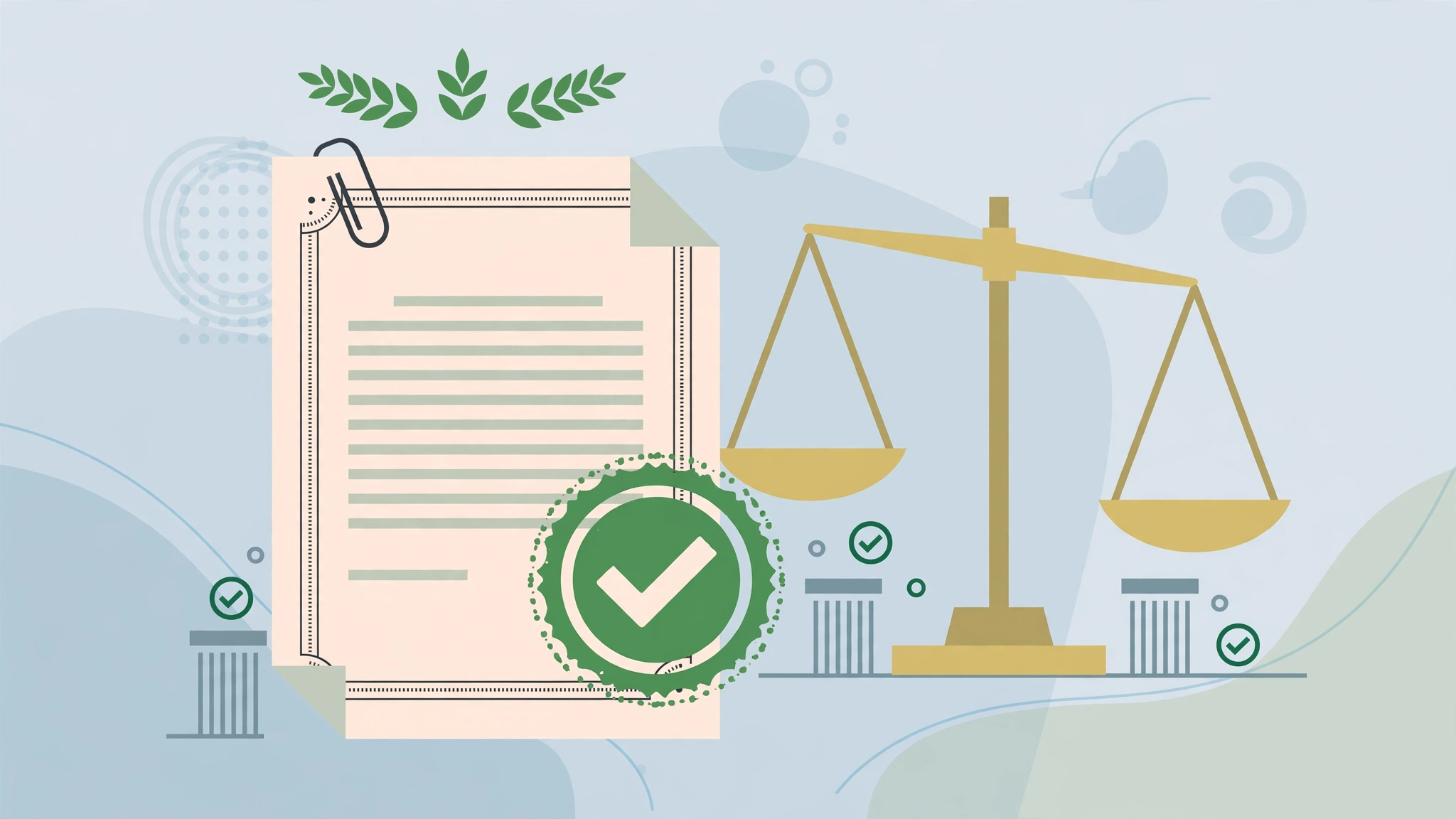
Validity is the quality of being valid — true and correct, or officially accepted. That is the quick answer. You will meet the word in three different worlds: airports (“check the validity of your passport”), classrooms and debates (questioning the validity of an argument), and laboratories (the validity of a test result). In every world it asks the same honest question: does this hold up? Is it sound, accepted, still in force? The key takeaway: validity means a thing is true, sound, or officially good — nothing that fails its own tests.
What does validity mean?
Validity is a noun built from the adjective valid, and its core sense is strength: a valid thing is strong enough to stand. Which test it must pass depends on context, so here is the whole map:
| Where you meet it | What validity means | Simple example |
|---|---|---|
| Documents and travel | Officially accepted, and still within its time limit | “The passport’s validity ends in March.” |
| Arguments and claims | Sound reasoning; truth that holds together logically | “She questioned the validity of his evidence.” |
| Research and testing | A study or test truly measures what it claims to measure | “The experiment’s validity was checked by other teams.” |
| Law and contracts | Legally binding and in force | “The court upheld the validity of the agreement.” |
Two ideas ride along in most of these rows: truth (is it correct?) and acceptance (do the relevant people recognise it?). A ticket can be genuinely printed and still lack validity after its date; an argument can be stylish and still lack validity in its logic.
Notice, too, how often validity arrives with dates attached. A visa, a special offer, a season ticket: each carries a validity period, the start and finish between which it counts. An argument’s validity plays by different rules — it has no expiry date. A sound proof written two thousand years ago is still sound today, which is why philosophers read ancient reasoning exactly as seriously as this morning’s.
Where does validity come from?
The family root is the Latin adjective validus, “strong” — from valere, “to be strong, to be well,” the same root that gives English valiant, value, and even farewell (be well). French carried it onward, and English kept the strength metaphor: a valid argument is too strong to knock down, a valid passport is too official to wave away. Validity simply names that standing-strong quality. It is a pleasing survival: two thousand years later, whenever a document is “still valid,” it is, in the oldest sense, still standing.
How to use validity in sentences
Three natural examples, one from each of the word’s everyday worlds:
“Before booking the flight, check the validity of your passport — many countries want six months left on it.”
“The committee doubted the validity of the survey, because only twelve people had answered it.”
“After the leak, lawyers examined the validity of the contract clause by clause.”
In travel and paperwork you will also meet its partner phrase, validity period — the stretch of time during which something counts, with an expiry date waiting politely at the end.
Similar words to validity
- Soundness — how well-built the reasoning is; validity for arguments, judged from inside.
- Legitimacy — acceptance by the rules or the people in charge; validity with a legal or social stamp.
- Correctness — simple accuracy; a fact can be correct without needing anyone’s official approval.
- Reliability — in research, giving the same result again and again; a partner of validity, not a twin.
- Credibility — whether people believe it; a claim can be valid yet lack credibility with a sceptical crowd.
When to use validity — and when a plainer word wins
Use validity when:
- You discuss documents, licences, offers, and tickets with deadlines attached (“validity ends…”).
- You test arguments, claims, studies, or test results for soundness.
- You write formally about law, science, or policy, where the word is standard.
Choose a plainer word when:
- You mean the checking itself — that is validation, the process, not the quality. (“Validation” validates; “validity” is what it finds.)
- Simple truth is the whole point: “Is that true?” usually beats “What is the validity of that statement?” in conversation.
- You only need the adjective: “a valid ticket” is shorter than “a ticket with validity.”
FAQs about validity
What is validity in simple words?
Validity means a thing truly holds up — it is correct, sound, or officially accepted. A passport, an argument, and a scientific test can all have it, or conspicuously lack it.
What does “validity” mean on a passport or ticket?
It is the official window during which the document counts. Before the start date it is not yet usable; after the expiry date it stops being accepted, however real the paper feels.
What is the difference between validity and validation?
Validation is the act of checking; validity is the quality the check discovers. A station machine performs validation of your ticket; the ticket itself either has validity or it doesn’t.
What does validity mean in research?
It asks whether a study or test measures what it claims to measure. A bathroom scale that reports your height with great precision would have excellent reliability and zero validity.
What does “your feelings are valid” mean?
It is the word’s warm modern use: your feelings are real, understandable, and deserve to be taken seriously — they count, even if someone later helps you look at the situation differently.
Final thoughts on validity
Validity began life meaning “strength,” and it never really changed jobs: it is still the word we reach for when asking whether a passport, a proof, or a whole study is strong enough to stand. Learn its worlds — documents, arguments, research, law — and it will never catch you out. Validity means true, sound, and officially standing: quality you can lean on.

Hi, I’m Nathan Cole, a symbols researcher and writer for Symboliism.com. I specialize in decoding money symbols, career numbers, and prosperity meanings. I love turning complex spiritual and financial symbolism into clear, practical guides that help readers understand the signs influencing their success, goals, and growth.