The sun emoji stands for sunshine, warm days, and a bright, happy mood. In short, ☀️ and 🌞 mean light, warmth, and good days ahead. People send it with morning texts, beach plans, and holiday posts. It is hard to read this emoji in a bad way.
There are two suns on your keyboard, though. One is plain. One has a smiling face. They do not quite do the same job, and picking the right one makes your message feel just right.
What Does the Sun Emoji Mean?
At its core, the sun emoji means the sun itself. It stands for a clear sky, warm air, and daylight. When a friend texts “Beach day ☀️”, the emoji is just the weather in picture form.
But the sun also carries a mood. It means cheer, hope, and a fresh start. The sun comes up each day, so people use it for new starts too. A text like “New day, new chance 🌞” says more than the words alone.
It can also be a small dose of praise. Calling someone “sunshine” is a sweet name for a person who lifts the room. Drop a sun emoji next to their name and it says the same thing.
So the sun emoji works on three levels. It can mean real sun. It can mean a bright mood. And it can mean a warm, kind person.
It also turns up in hard weeks, used gently. When a friend is going through a rough patch, a small 🌞 with “brighter days are coming” is a quiet way to send hope. It does not fix anything, and it does not pretend to. It just points at the morning after the storm, which is sometimes the kindest thing a text can do.
☀️ vs 🌞: Plain Sun or Smiling Sun?
The plain sun, ☀️, is a ball of light with rays. It has no face and no feelings. That makes it the safe pick for facts. Use it for weather news, trip plans, and posts about heat or light. “It hits 30 degrees today ☀️” reads clean and clear.
The sun with face, 🌞, is the same sun with a soft smile. That tiny face adds warmth and charm. It feels like a friend, not a fact. Use it in greetings, kind texts, and cute posts. “Morning, sleepyhead 🌞” feels like a hug in text form.
Here is a quick way to choose. If your post could sit in a weather app, pick ☀️. If your post could sit in a card for someone you like, pick 🌞.
Some people also meet the face one first and think it is a bit odd or smug. That is rare, but in a formal text, the plain sun is always the safer bet.
Good-Morning Texts and Weather Posts
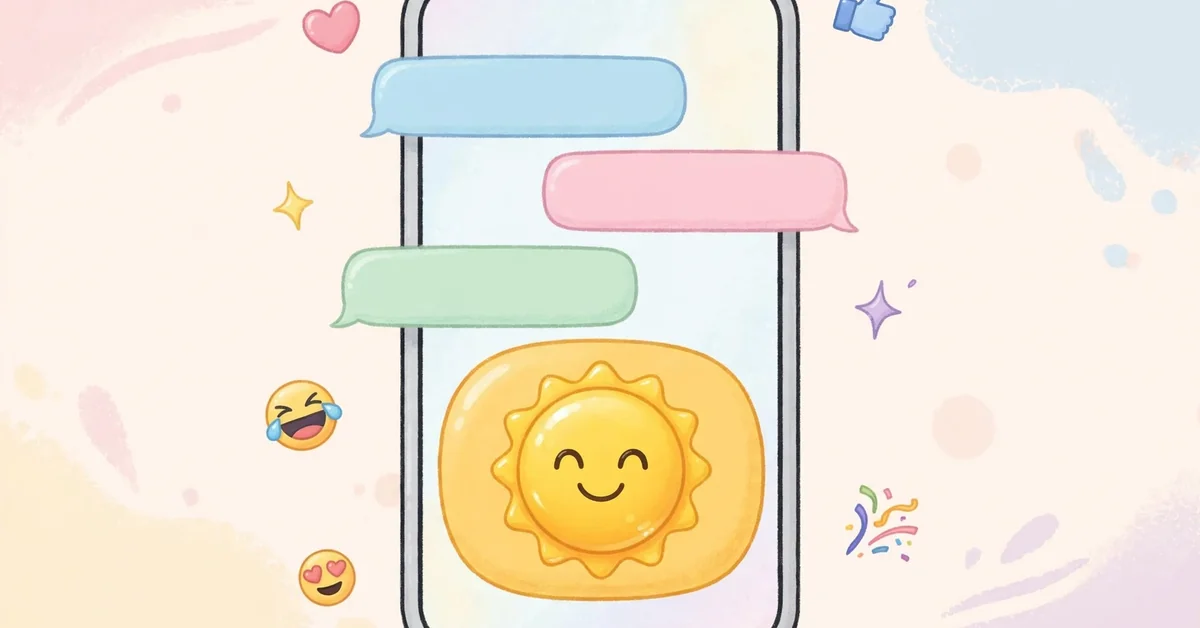
The sun emoji earns its keep in the morning. A plain “good morning” text is fine. Add 🌞 and it feels warm and awake. “Good morning! 🌞 Hope your day goes well” is a small gift to start a day.
It also works as a soft wake-up nudge. Parents send it to kids. Partners send it with a coffee emoji on slow weekend days. It says “I am up, I thought of you” with no pressure to reply fast.
In weather posts, ☀️ does the heavy lifting. It marks a sunny day at a glance. Travel pages pair it with dates and places. “Lisbon in June ☀️” tells you the vibe of the trip in one tap.
One small tip. In a sad or serious chat, a bright sun can feel out of place. Save it for light news and kind starts. Timing is part of the meaning.
Distance gives the sun one more job. When family lives in another time zone, a 🌞 in the chat is a small clock: “my morning just started, thinking of you.” Gardeners, farmers, and outdoor workers post ☀️ the same way, as a note that the day is good for work. A plain sun, shared at dawn, says the day has begun well.
Sun Combos for Summer Captions

The sun loves company. A few well-known pairs show up all summer long.
🌞 + 🌊 + 🏖️ is the full beach day. It works under any shore photo, even with no words at all.
☀️ + 🍦 is pure summer joy. Ice cream in the heat, days off school, long light evenings.
☀️ + 🌻 + 🐝 feels like a garden in June. It suits farm posts, flower photos, and slow country days.
🌞 + ☕ + 📖 is the calm morning set. A quiet start, a hot drink, and a good book.
Two more rows earn their place. ☀️ + 🌴 + 🍹 is the holiday post — palm shade, a cold drink, and no plans at all. And 🌧️ + 🌞 + 🌈 tells a tiny story: the rain stopped, the sun came out, and the day turned good. It is a fine caption for a photo taken right after a summer shower.
Keep combos short. Two or three emojis tell a clear story. Six in a row just look like noise, and the sun gets lost in the crowd.
🌞 vs 🌝: Sun Face, Moon Face
These two get mixed up a lot. 🌞 is the sun with a face. It is gold, round, and ringed with rays. It means day, light, and warmth.
🌝 is the full moon with a face. It is pale and soft, with a calm, sly smile. It means night, secrets, and a hint of mischief. People often send it as a joke, like “I saw what you did.”
A fast way to keep them apart: rays mean sun, no rays mean moon. If you want the full story of the night side, the moon phase emoji guide walks through each moon face and what it means.
Use 🌞 to open a day. Use 🌝 to close one with a wink. Send the wrong one and the joke still lands, but the time of day in your text turns upside down.
FAQs
What does the sun emoji mean in a text?
It means sunshine, warmth, and a happy mood. In a text it often just says “nice day” or “I feel bright today.”
Is 🌞 the same as ☀️?
Not quite. ☀️ is the plain sun, best for weather and facts. 🌞 has a smiling face, so it feels warmer and more personal.
What does it mean when someone calls you sunshine and sends 🌞?
It is a compliment. They see you as warm, kind, and good to be around.
Can I use the sun emoji at work?
Yes, in light chats about weather, leave, or morning greetings. Skip it in formal mail or bad news.
What emojis go well with the sun?
Waves, ice cream, coffee, flowers, and beach items all pair well. Keep it to two or three for a clean caption.
Conclusion
The sun emoji is one of the kindest symbols on the keyboard. Plain ☀️ is for facts and fine days; smiling 🌞 is for warmth and people. Pick by the feel of your message, and the little sun will do the rest.

Hi, I’m Elena Brooks, a symbolism writer for Symboliism.com with a passion for spiritual growth numbers and their deeper meanings. I specialize in explaining awakening symbols, soul-path signs, and transformation numbers in a clear and inspiring way. My goal is to help readers understand the messages that guide their spiritual journey and personal evolution.