The broken heart emoji 💔 means a heart that hurts. Send 💔 when love feels lost, or when sad news hits hard. After a breakup, it says what words cannot. When a pet dies or a friend moves far away, it carries real grief. But it also has a light side. People use it as a joke when a show ends or a snack runs out. Same emoji, two very different weights. The trick is knowing which one you are looking at.
What Does the Broken Heart Emoji Mean?
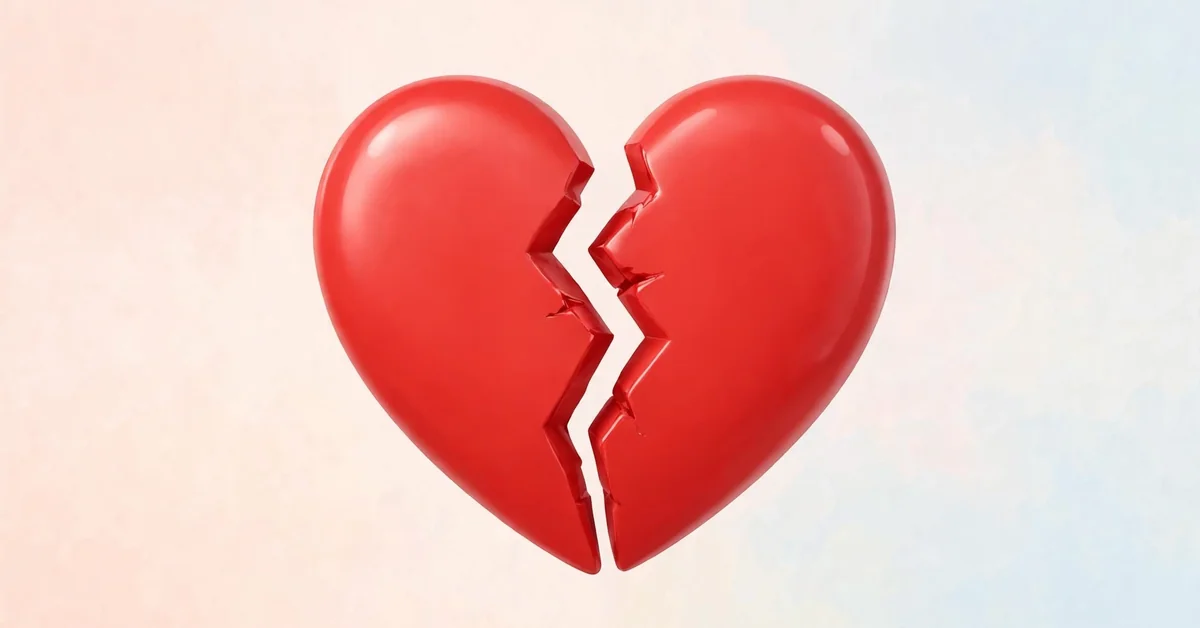
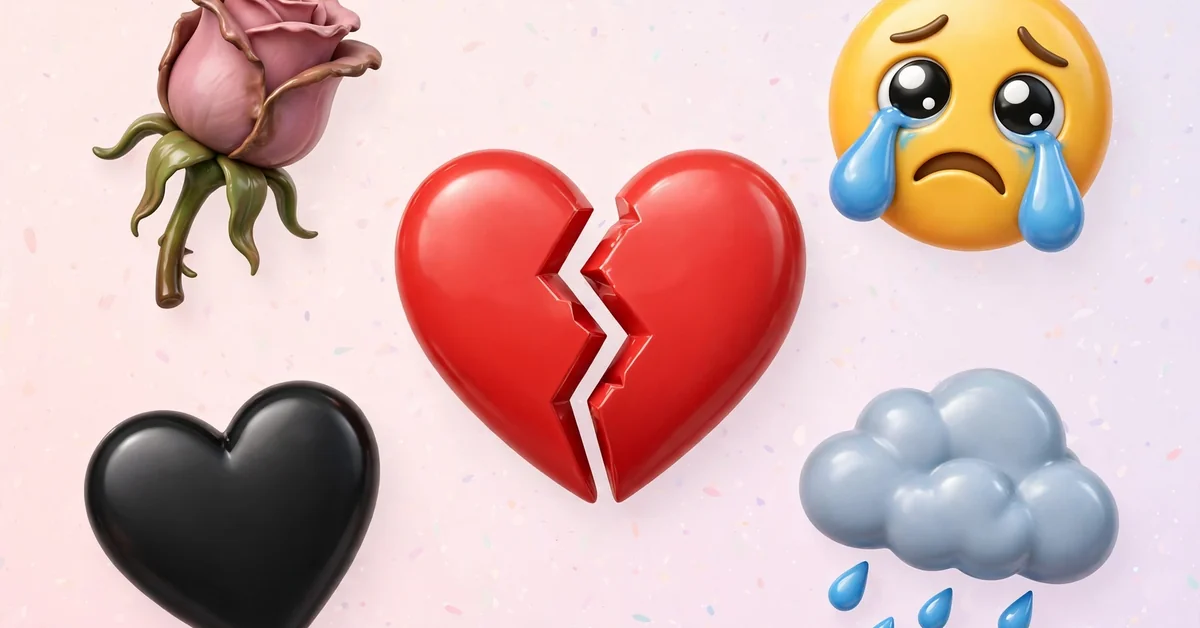
The picture says it all. A red heart, cracked down the middle. It is the clearest sign of heartbreak in the whole emoji set.
Most of the time, 💔 is about love that ended or love that hurts. A breakup. A crush who likes someone else. A long-distance bond that feels too far. It can also mark grief that has nothing to do with dating, like losing a loved one or hearing bad news from home.
Tone is what splits the meanings. With sad words and a real event, 💔 is heavy and honest. With a joke around it, 💔 is play. Read the full message, not just the emoji, and you will almost always know which heart you are holding.
One more clue: the company it keeps. 💔 beside 🥀, 😭, or a photo of two people points to real love lost. 💔 beside 🍟, 📺, or a laughing face points to play. Emojis travel in packs, and the pack tells the story before the words do.
💔 After a Breakup
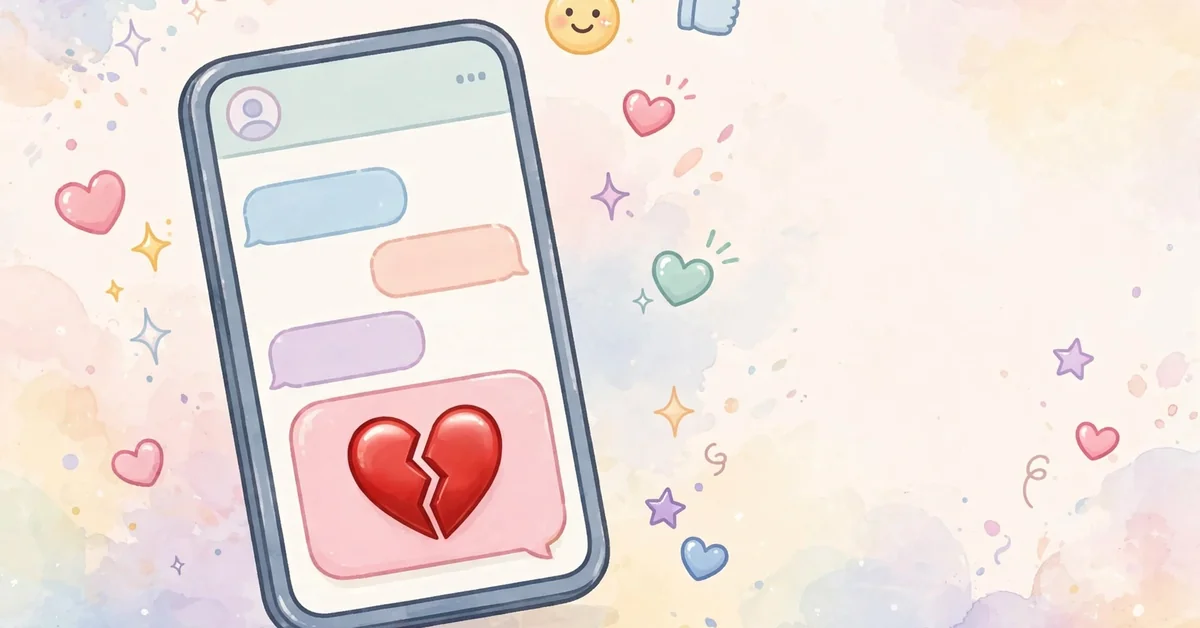
This is the home ground of 💔. When a bond ends, people post the crack and very few words. It tells friends, “I am not okay right now,” without a long speech.
You might see it in lines like:
- “Two years, and it is just over 💔”
- “He chose someone else 💔”
- “Trying to smile, but it hurts 💔”
If a friend sends you one of these, treat it as a door opening. They want care, not jokes. A kind reply, a call, or just sitting with them in the chat can mean a lot. Breakups feel lonely, and 💔 is often the first small flag a hurting person waves.
Public posts play by slightly different rules. A star or a friend may post 💔 with no caption at all, and let the emoji carry the whole announcement. Fans and followers read it at once, and the comments fill with care. It is a strange, modern kind of privacy: one small crack, shared with everyone, saying everything and nothing at the same time.
💔 for Loss and Sad News
Love is not the only thing that breaks a heart. 💔 shows up under posts about death, illness, and sad world news. It is a fast way to say, “This hurts, and I stand with you.”
Fans use it when a star they loved passes away. Whole towns use it after a fire or a storm. Parents use it on posts about sick kids. In each case, the emoji holds grief that plain text can feel too cold to carry. It asks for nothing fancy back — just a sign that someone else saw the pain and stood still with it for a moment.
Symbols of loss often travel in pairs. The dead rose emoji carries this same mood of love and loss, and you will often see the two side by side on sad posts. Together they say the thing no one wants to type out loud.
💔 the Dramatic, Joking Use
Now for the light side. Young users love a big reaction to a small pain. The last slice of cake is gone? 💔. Your team lost by one point? 💔. The store sold out of your size? Cue the crack.
Lines like these are pure play:
- “They cancelled my show 💔 how will I live”
- “No wifi on the flight 💔 tragic”
- “He ate my fries 💔 betrayal”
The joke works because the emoji is so grand. It takes a tiny hurt and dresses it up like the end of the world. Friends read the drama, laugh, and reply in kind. If the words around 💔 are silly, the heart is silly too. Context is king.
Fandom runs this joke at full speed. A beloved character leaves a show, and timelines flood with 💔. A team trades its star player, and out come the cracks by the thousand. None of it is a lie, exactly. Fans do feel a real pinch. They just wear it big, on purpose, together. That shared drama is half the fun of being a fan, and 💔 is its flag. The same goes for dropped phones, closed cafes, and lost save files — the crack scales to any tragedy, real or wildly overstated.
Kinder Replies to a 💔
When a 💔 lands in your chat and it is real, your reply matters. You do not need a poem. You need warmth and room.
Try replies like these:
- “I am here. Take all the time you need.”
- “That is a lot to carry. Want to talk, or want quiet company?”
- “You do not have to hold it together with me.”
Skip the quick fixes. “Plenty of fish” and “just move on” tend to sting. Ask what they need, then do that thing. Send food. Make the call. Check in again in two days, when the crowd has gone and the quiet gets loud. A kind reply will not mend the crack, but it tells the person they are not holding the pieces alone.
Just as useful is knowing what to leave out. Skip the detective work — who did what, and whose fault was it. Skip the rush to set them up with someone new. Skip “at least” lines, like “at least you learned a lot.” Pain does not want a bright side in week one. It wants a witness, a meal, and time. Offer those, and you have already said the kindest thing there is to say.
FAQs
What does 💔 mean in a text?
Most times it means heartbreak or deep sadness. With jokes around it, it can just be playful drama.
Is 💔 only about breakups?
No. People use it for grief, loss, sad news, and big let-downs of all kinds.
What does it mean when a girl sends 💔?
It means her heart hurts, about love or about life. Read her words with it, then reply with care.
How do I reply to a real 💔?
Be kind and plain. Say you are there, ask what they need, and check in again later.
Can 💔 be a joke?
Yes. Over-the-top pain about small things, like a sold-out snack, is a common joke between friends.
Conclusion
The broken heart emoji carries real pain and playful drama in one small crack. Read the words around it, match the weight, and reply like it matters — because to the sender, it does.

Hi, I’m Nathan Cole, a symbols researcher and writer for Symboliism.com. I specialize in decoding money symbols, career numbers, and prosperity meanings. I love turning complex spiritual and financial symbolism into clear, practical guides that help readers understand the signs influencing their success, goals, and growth.