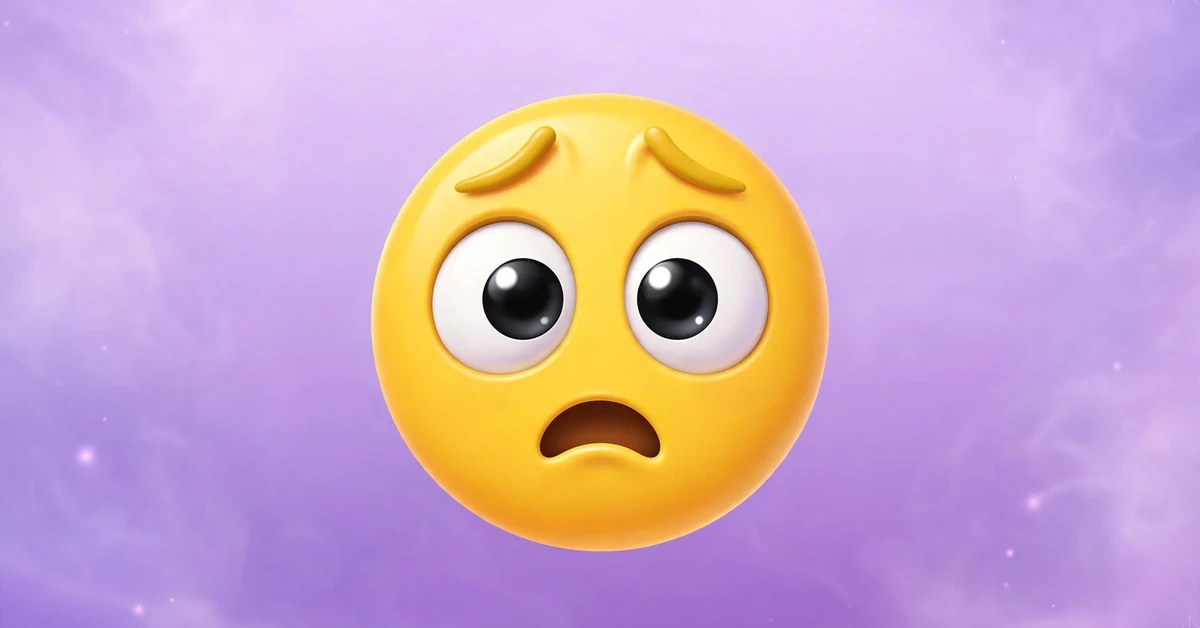
The scared emoji 😨 is the face of everyday fear — the worry before a big test, the “oh no” at an unexpected bill, the nervous laugh when a spider drops from the ceiling. It is not the same as 😱: where the screaming face is a theatrical, full-volume freak-out, 😨 is quieter, smaller, and far more human.
Most people reach for 😨 when fear feels ordinary rather than cinematic. It says “this worries me” instead of “I am about to scream.” That middle ground is exactly why it shows up so often — and why reading it correctly matters.
What Does the Scared Emoji Mean?
The face tells the story: wide worried eyes, an open frown, sometimes a drop of sweat on the cheek. Nobody designed it for horror movies. They designed it for the thousand small frights of normal life.
People send 😨 for:
- Nerves before something big. Exams, job interviews, medical results. The fear is real but manageable — and the emoji admits it lightly.
- Small shocks. A loud noise in the kitchen at midnight. A phone buzzing with a message from an unknown number.
- Worry about someone else. “She hasn’t texted back 😨” is concern wearing a joke’s clothes.
- Playful exaggeration. “The gym coach saw me skipping leg day 😨” — nobody is actually afraid.
The emoji softens what it says. Typing “I’m scared” sounds heavy. Typing “I’m scared 😨” sounds honest but survivable. That softening is the whole point of the emoji: it lets people name fear without turning the chat into a crisis.
It also travels well across generations. Younger users pair it with memes and irony; older users send it straight. Either way, the reading is almost always the same: mild to medium fear, handled with a shrug.
😨 vs 😱: Scared or Screaming?
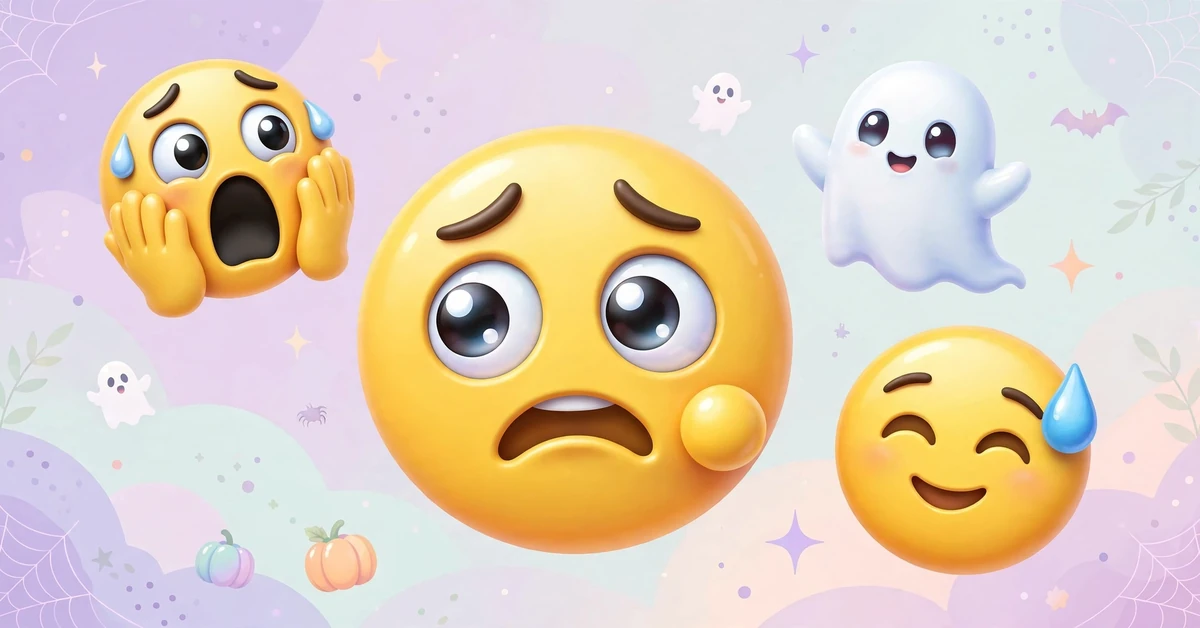
These two get mixed up more than any other fear pair, so let us settle it once:
😨 Scared — quiet fear. Worried eyes, small frown, a bead of sweat. The feeling is “I’m nervous.” Think pre-test jitters, an awkward conversation ahead, or walking past a dark alley. It is proportional to real life.
😱 Screaming — loud terror. The famous Munch-painting hands-on-cheeks pose. The feeling is “EVERYTHING IS HAPPENING.” Think horror movies, jump scares, or discovering the group chat saw your draft message. It is theatrical on purpose.
A simple test: if the situation would make you raise your voice, pick 😱. If it would make you bite your lip, pick 😨.
They combine too. “Finals week 😨😱” reads perfectly — start nervous, end screaming. People stack them to show fear escalating, which neither emoji quite captures alone.
For the full breakdown of the scream itself — its movie roots, meme life, and when it tips into comedy — our screaming emoji guide covers 😱 end to end. The short version: 😨 worries, 😱 performs.
Everyday Scares: Tests, Bills, Spiders
😨 lives in the ordinary. Nobody needs a haunted house to use it — Tuesday is scary enough.
- The test text. “Exam in 10 minutes 😨” is the most classic use on earth. Students send it in group chats like a distress signal, and friends answer with the same face back. Communal dread, emoji edition.
- The money scare. An unexpected charge. A bill higher than the estimate. “Just checked my bank app 😨” needs no further words.
- The nature jump-scare. Spiders, wasps, the cat knocking something off the shelf at 2 a.m. Small creatures, big reactions.
- The social scare. Seeing your boss’s name pop up on a Sunday. Realizing you left someone on read for three days. 😨 is the face of “this might be bad.”
- The weather scare. Storm warnings, a flight through turbulence, the power flickering. Nature reminds everyone who is in charge.
What connects them all: none is life-threatening, but each spikes the heart rate. 😨 is the honest caption for that spike. It says “I felt it too” — which is why group chats run on it. One 😨 invites five more, and suddenly everyone is scared together, which somehow helps.
Parents have their own version. “Kids are quiet 😨” is a whole horror genre in four words. Any parent reads it instantly: quiet children are always up to something.
Scared-Emoji Humor in Memes
😨 has a second career as a comedy prop, and it is arguably the bigger one. The worried little face is funnier than it has any right to be.
The classic format: pair 😨 with something completely harmless. “The Wi-Fi dropped for two seconds 😨” or “He said ‘we need to talk’ about the pizza order 😨.” The joke is the gap between the face’s worry and the situation’s safety.
It also stars in relatable-post captions: “Me walking into the gym in January 😨” or “POV: the teacher says ‘pair up’ 😨.” The humor works because everyone has felt exactly that low-grade dread. Recognition is the whole punchline.
One caution: meme irony can confuse older readers. A parent seeing “Love you, be safe 😨” might read genuine fear where a teen meant a joke. When the audience spans generations, a word or two of context saves a worried phone call.
When 😨 Signals Real Anxiety
Sometimes the worried face is not a joke, and the difference usually hides in the words around it.
Signs it is casual:
- Paired with 😂 or obvious exaggeration
- The “threat” is trivial — a spider, a test, a text left on read
- The chat tone was already light
Signs it is real:
- It follows a genuinely stressful message, stated in words
- The replies are supportive, not laughing
- It appears alone, without any joking emoji nearby
“You’ve been quiet, everything okay? 😨” from a friend is worth answering honestly. Dismissing real worry as a meme is the one true misuse of this emoji.
If someone sends 😨 about something serious — health news, a family emergency, money trouble — skip the jokes. “That’s a lot, I’m here” beats any clever reply. The emoji asked for a witness, not an audience.
Scared Emoji FAQs
What does 😨 mean in a text?
Everyday fear or worry — nerves, a small shock, or playful exaggeration. It is milder than 😱 and more emotional than 😟.
Is 😨 the same as 😱?
No. 😨 is quiet, realistic fear (biting your lip). 😱 is loud, theatrical terror (screaming). Use 😨 for nerves, 😱 for freak-outs.
What does 😨 mean from a girl or guy?
The same thing — worry or joking fear. Context decides the weight. Paired with jokes, it is playful; paired with serious news, it is genuine.
Why does 😨 sometimes have sweat on it?
The sweat drop is part of the design on most platforms — it signals nervousness, the “cold sweat” of worry. Some platforms show the face without it.
Can I use 😨 at work?
Carefully. “Deadline moved up 😨” reads fine among friendly coworkers. To a boss or a client, skip the face and use words — “this timeline worries me” lands better.
The Bottom Line
The scared emoji is fear at human scale. Save 😨 for the worries of real life — nerves, small shocks, and honest “oh no” moments — and reach for 😱 only when the situation deserves an actual scream.

Hi, I’m Oliver Grant, a symbols and numbers researcher at Symboliism.com. I specialize in decoding the hidden meanings behind spiritual signs, numerical patterns, and everyday symbols. I love turning complex symbolism into simple, clear explanations that help readers understand the messages guiding their life, intuition, and decisions.