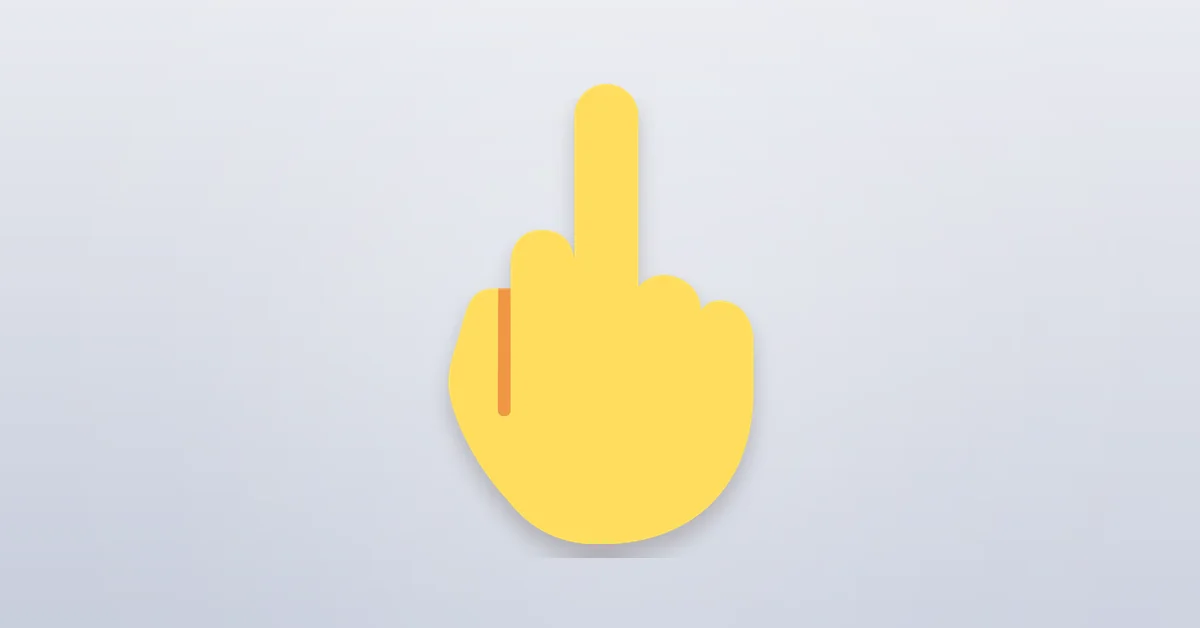
The middle finger emoji 🖕 copies the world’s best-known rude hand sign. It means “back off” said the rough way — an insult, a curse, or a joking jab, all in one raised finger. People send it to curse traffic, tease close friends, or show real anger when words run out. The gesture is old, bold, and never neutral. This guide explains where 🖕 lands as a joke, where it lands as a fight, and where it can cost you far more than a chat. Read it once, and you will never send it by accident.
What Does the Middle Finger Emoji Mean?
The picture is a hand with one finger raised — the middle one. In much of the world, that sign is an insult. It says, in the crudest short form, “I have no respect for you.” People call it flipping the bird, giving the finger, or flipping someone off.
The emoji keeps every bit of that force. 🖕 is not a mild frown or a shrug. It sits at the top of the rude scale for hand signs, which is why it is both popular and risky. A few things it commonly carries:
- A curse: aimed at a thing, like a broken car or a rained-out game.
- A joke insult: aimed at a close friend, wrapped in laughs.
- Real anger: aimed at a person, with heat behind it.
Which one you are sending — or getting — depends on the chat, the bond, and the words around it. The finger itself never changes. The meaning around it does all the work.
The sign is no modern toy, either. Writers in ancient Greek and Roman times were already joking about the raised middle finger more than two thousand years ago. It marched through armies, markets, and ball games ever since. That long, rude history is why the emoji needs no label. Show it anywhere on earth and most people read it before they think. Few pictures carry that much force in that little space.
🖕 Between Friends: Joking Insults
Among close friends, 🖕 can be pure play. It is the emoji version of shoving a mate’s shoulder. Someone wins the game by one lucky point, and out comes the finger, plus a wall of laughing faces.
Joke uses sound like this:
- “You beat my high score AGAIN 🖕😂 rematch now”
- “Monday can take this one 🖕”
- “He got the last slice. Again. 🖕🍕”
Notice the safety gear: laughs, silly targets, and bonds that are already strong. The joke works because both sides know the love under it. It also helps that the aim is often at things — Mondays, games, luck — not at the friend’s heart. Keep the target light and the laughs loud, and 🖕 stays a toy. Point it bare, with no joke in sight, and it stops being one in a hurry.
Games give the joke a home. Locker-room chats, card nights, and online matches all run on this kind of teasing, and 🖕 is their flag. The loser gets the finger, the winner gets the crown emoji, and both sides know the score resets at the rematch. Inside a game frame, the finger is nearly weightless. The same chat, minus the game, is where weight returns — which is why smart players keep the finger on the field.
🖕 in Real Anger
Strip the laughs away, and 🖕 is a hard slap of a symbol. Sent mid-fight, it tells the other person the talk is over and respect is gone. It is a step past the angry emoji — that face still argues, while the finger walks out of the room.
Real-anger uses look bare:
- A lone 🖕 with no words at all.
- 🖕 after a cold, short line like “Whatever. Done.”
- 🖕 aimed at a named person in a group chat.
If one lands on you, the wise move is to slow down, not strike back. A finger-for-finger reply locks the fight in. Ask what went wrong, or let the heat pass and talk later. And if your own thumb is hovering over 🖕 in real anger, pause. You can unsend an emoji. You cannot unsend how it made someone feel, and screenshots outlive every storm.
Where 🖕 Will Get You Banned or Fired
Here is the part most guides skip: this emoji has real-world teeth.
At work, 🖕 can count as harassment or rude conduct, even sent “as a joke” to a coworker. Chats are saved. Screens get shared. People have lost jobs over messages they typed in ten seconds and meant for one set of eyes.
On platforms, rules vary, but abuse reports stick. A 🖕 aimed at another user can draw warnings or bans, above all when it comes with slurs or threats.
In deals and service chats, it ends things. No refund policy covers an insulted agent, and no client stays after one.
The rule of thumb is simple. If the chat could ever be read by a boss, a judge, or a crowd, keep your fingers down. Anger fades. Records do not.
Softer Ways to Say It
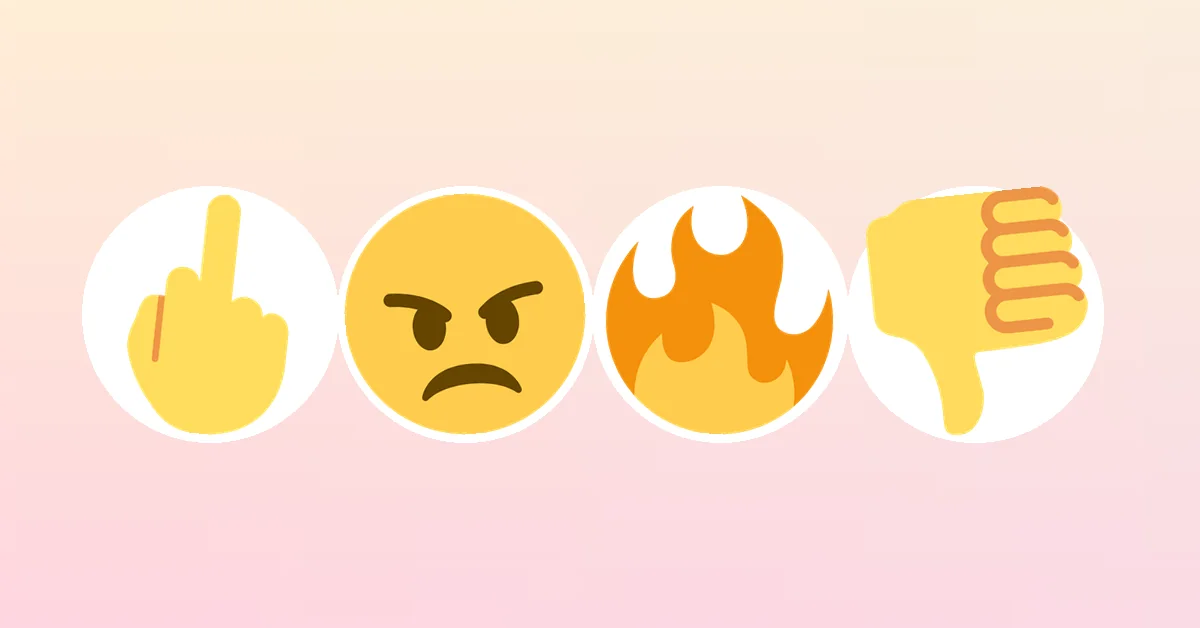
Most times you reach for 🖕, you do not need its full blast. You need to vent, tease, or say “no way” with some spice. Softer tools do that job:
- 🙄 Eye roll: “Oh, please.” Annoyed, not at war.
- 😤 Face with steam: huffy and fired up, still talking.
- 🚫 Prohibited sign: a flat “nope” with no insult at all.
- 🤦 Facepalm: for when the mess is too much for words.
And when the mood is a joke with friends, a plain line like “I hate you (affectionate)” lands the tease with zero risk. Save 🖕 for the rare chats where you are sure — truly sure — it will be read as play. That list is shorter than most people think, and there is no shame in keeping it short.
FAQs
What does 🖕 mean?
It copies the rude hand gesture known as flipping the bird. It works as an insult, a curse, or a joke between friends.
Is the middle finger emoji ever friendly?
Yes, between close friends with laughs around it. The bond and the jokes are what make it play instead of insult.
Can I get in trouble for sending 🖕 at work?
Yes. It can be treated as rude conduct or harassment, and work chats are saved. People have lost jobs over less.
What is a softer swap for 🖕?
Try 🙄 for annoyance, 😤 for huffy anger, or 🚫 for a plain no. They vent without the insult.
Why do people call it “flipping the bird”?
It is an old nickname for the gesture. Like the sign itself, the name is slang, and no one agrees where it began.
Conclusion
The middle finger emoji is the keyboard’s loudest insult, and it can still be a toy between the right friends. Know your chat, know the cost — and keep 🖕 holstered anywhere a screenshot could travel.

Hi, I’m Lena Foster, a symbolism expert and content writer for Symboliism.com. I specialize in explaining the meanings behind symbols, numbers, and signs in a simple, engaging way. I love turning complex spiritual and cultural symbolism into clear, easy-to-read guides that help readers understand the messages around them.