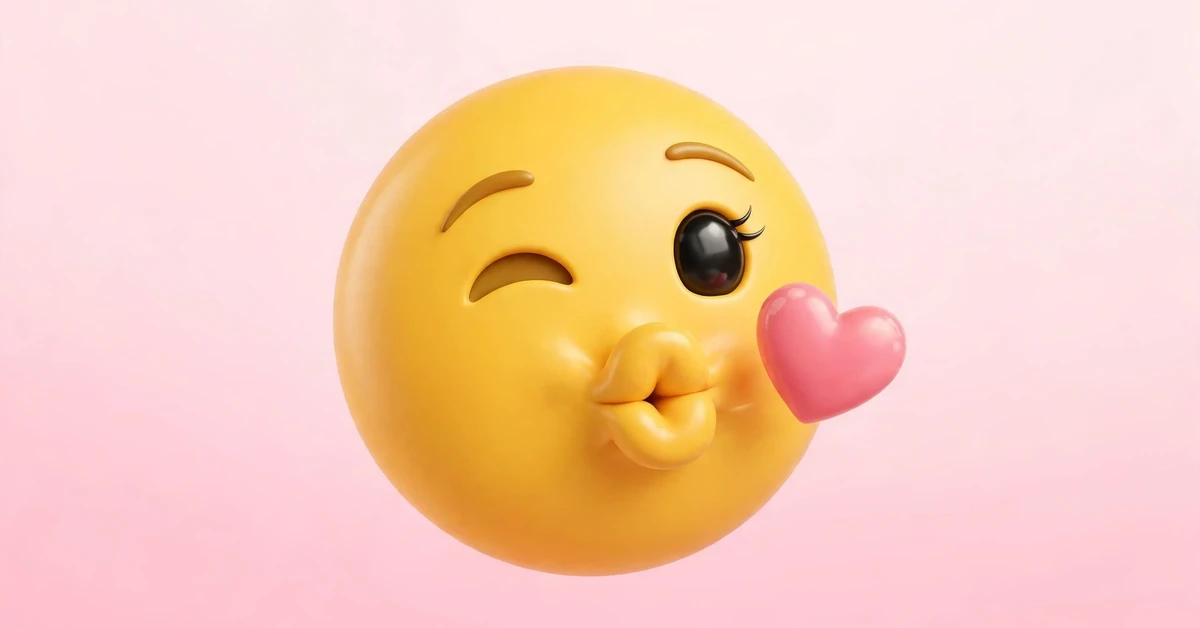
The kiss emoji — 😘 or 💋 — usually means affection, and the flavor depends on the face: 😘 the blowing kiss is warm and often friendly, while 💋 the lipstick mark is bolder and more romantic. Most of the time it is sweet, not scandalous. The trick is reading which kind of sweet.
Kisses in text carry real social weight, which is why this question comes up so often. One small emoji can mean “love you,” “thank you,” “goodnight,” or “I’m flirting” — and the wrong read can make a chat awkward fast. Here is how to get it right.
What Does the Kiss Emoji Mean?
Strip it to the essentials: a kiss emoji sends affection through the screen. Beyond that, three ingredients decide the meaning — the face, the sender, and the moment.
The face. 😘 shows a winking face blowing a kiss, with a small heart flying off. It reads playful and tender. 💋 shows just a lipstick kiss mark — no face, no wink — and it reads more intense, more romantic, sometimes more daring.
The sender. From a partner, either face is romantic. From a grandmother, 😘 is pure love. From a friend, 😘 is usually friendly warmth. The same emoji from a near-stranger is a different story entirely.
The moment. “Goodnight 😘” is gentle. “You looked amazing tonight 💋” is not subtle. Context is the real dictionary here.
One thing it almost never means: nothing. People do not send kiss emojis by accident. Even the friendliest 😘 is a small deliberate gesture — which is exactly why it feels nice to receive.
😘 vs 💋: Face or Mark?
The two kisses split the work, and most confusion comes from swapping them:
| 😘 Blowing kiss | 💋 Kiss mark | |
|---|---|---|
| Look | Winking face + flying heart | Red lipstick lips alone |
| Vibe | Playful, tender, warm | Bold, romantic, dramatic |
| Typical use | Goodnight, thanks, friendly love | Romance, passion, flirty posts |
| Risk level | Low — rarely misread | Higher — can feel intense |
😘 is the everyday kiss. It signs off conversations, sweetens thank-yous, and says goodnight. It is the kiss most people send most often, and the safest of the two.
💋 is the statement kiss. It shows up in romantic captions, flirty messages, and dramatic sign-offs. It carries lipstick, history, and a little theater. A 💋 from a partner is lovely. A 💋 from someone you met yesterday deserves a raised eyebrow.
When in doubt, 😘 is the answer. It is the kiss that offends nobody and warms everybody.
Friendly Kiss vs Flirty Kiss
This is the question behind the question, so let us answer it directly.
Signs it is friendly:
- It comes from family or a long-time friend
- It sits at the end of a normal message — “see you Sunday 😘”
- The chat history is warm but not romantic
- It appears alongside other friendly emojis (❤️, 🥰 in family chats)
Signs it is flirty:
- It comes from a crush or someone new
- It follows a compliment about how you look
- The chat has romantic tension already
- It is a 💋, not a 😘 — the bold face raises the stakes
The gray zone is real friendship with expressive people. Some friends sign everything with 😘 the way others sign with “x.” If someone kisses every message, the kisses are punctuation, not proposals. Look at the pattern, not the pixel.
If you are unsure about a kiss you received: mirror the energy back at the same level. A friendly “😘” returned keeps things warm without escalating. And if a kiss feels wrong — too much, too soon, from the wrong person — you are allowed to let it sit unanswered. No reply is also a reply.
The Thank-You 😘
One of the kiss emoji’s best jobs has nothing to do with romance: gratitude.
- “Thanks for the ride 😘” — warmer than a plain thanks, still completely friendly.
- “You saved me 😘” — relief plus affection, the group-chat classic.
- “Appreciate you 😘” — the modern thank-you note, signed with a kiss.
This use is huge among friends and family, and it is almost always 😘 rather than 💋. The blowing kiss says “I’m grateful and I like you.” The lipstick mark would oversell a simple thank-you.
It also softens requests. “Can you cover my shift 😘” is still a big ask, but the kiss makes it a friendly one. (Whether it works depends on the friendship, not the emoji — but it never hurts.)
Cultures differ here, and it is worth one honest line: in some families and friend groups, kisses fly freely; in others, they are reserved for romance. Neither is wrong. Read the room you are actually in.
Kiss Emoji Family: 😗 😙 😚 😘
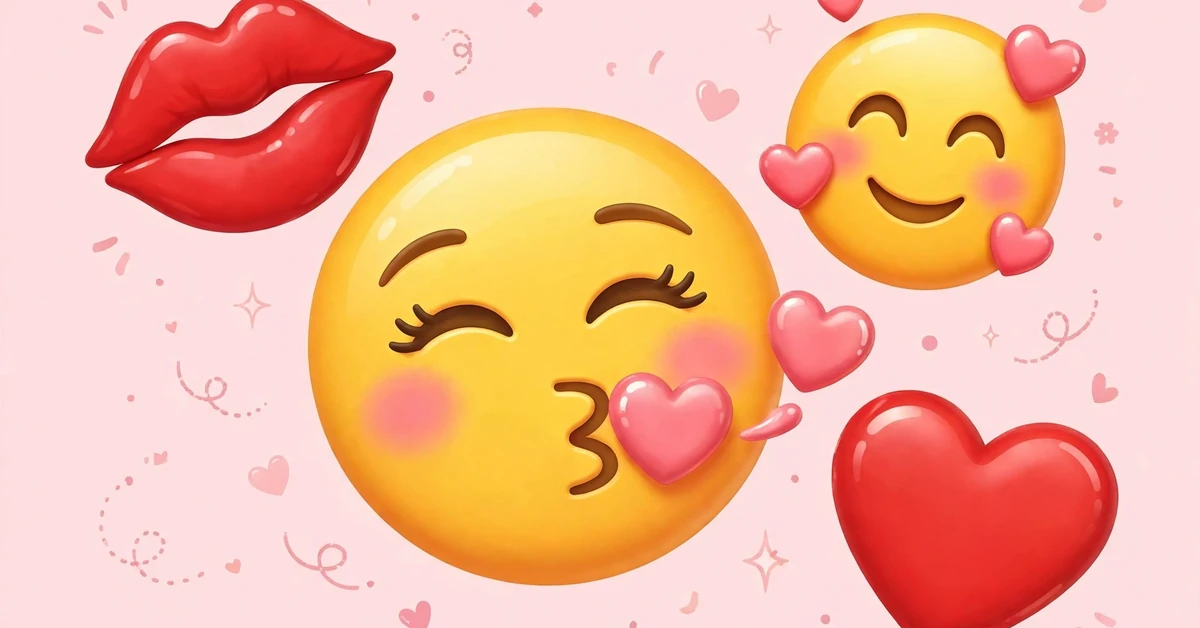
😘 is not alone — it has siblings, and they form a gradient from neutral to affectionate:
- 😗 Kissing face — the plain one. Neutral lips, no heart, no wink. The most businesslike kiss: “k, bye.” It can read flat or even annoyed depending on context.
- 😙 Kissing face with smiling eyes — the happy one. Warm and content, like a kiss given with a smile. Friendly, rarely romantic.
- 😚 Kissing face with closed eyes — the tender one. Peaceful and sweet, often used for goodnight or quiet affection. Close to 😘 in warmth.
- 😘 Face blowing a kiss — the full package. Wink, heart, motion. The most expressive of the family.
And one cousin to keep separate: 🤌 the chef kiss is not a kiss at all — it is an Italian hand gesture for “perfect.” If someone sends 🤌 about your cooking, they are praising the food, not kissing you. Our chef kiss emoji guide covers that gesture properly.
For the family as a whole: start at 😗 for neutral, climb to 😘 for real warmth, and save 💋 for romance. The gradient is the whole etiquette.
Kiss Emoji FAQs
What does 😘 mean from a guy?
Depends on the relationship. From a partner, it is romantic. From a friend, it is usually friendly — many men use 😘 the way others use a warm sign-off. A 💋 from a new guy is bolder and worth reading carefully.
What does 💋 mean?
A kiss mark — more romantic and dramatic than 😘. It shows up in flirty texts, romantic captions, and passionate sign-offs. It is the kiss with the most confidence.
Is the kiss emoji flirty?
Sometimes. 😘 is often just friendly, especially among friends and family. 💋 leans flirty. The sender and the moment decide more than the emoji does.
What is the difference between 😘 and 😚?
😘 blows a kiss actively (wink + flying heart) — expressive and warm. 😚 is a gentle kissing face with closed eyes — tender and calm, often a goodnight.
Can I send 😘 to a friend?
Yes — it is one of the most common friendly uses. “See you later 😘” between friends is normal in most circles. If your friend group is not a kiss-emoji group, match their energy instead.
The Sweet Summary
Kiss emojis are small gestures with real weight. Read the face, the sender, and the moment — 😘 for everyday warmth, 💋 for romance — and your kisses will always land as intended.

Hi, I’m Elena Brooks, a symbolism writer for Symboliism.com with a passion for spiritual growth numbers and their deeper meanings. I specialize in explaining awakening symbols, soul-path signs, and transformation numbers in a clear and inspiring way. My goal is to help readers understand the messages that guide their spiritual journey and personal evolution.