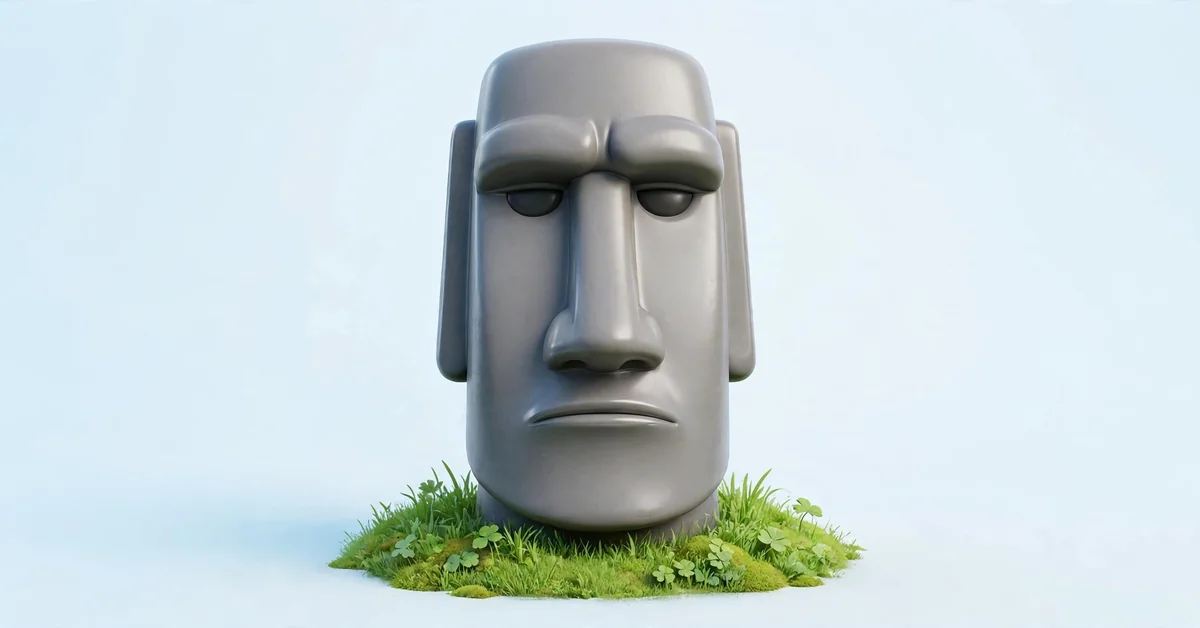
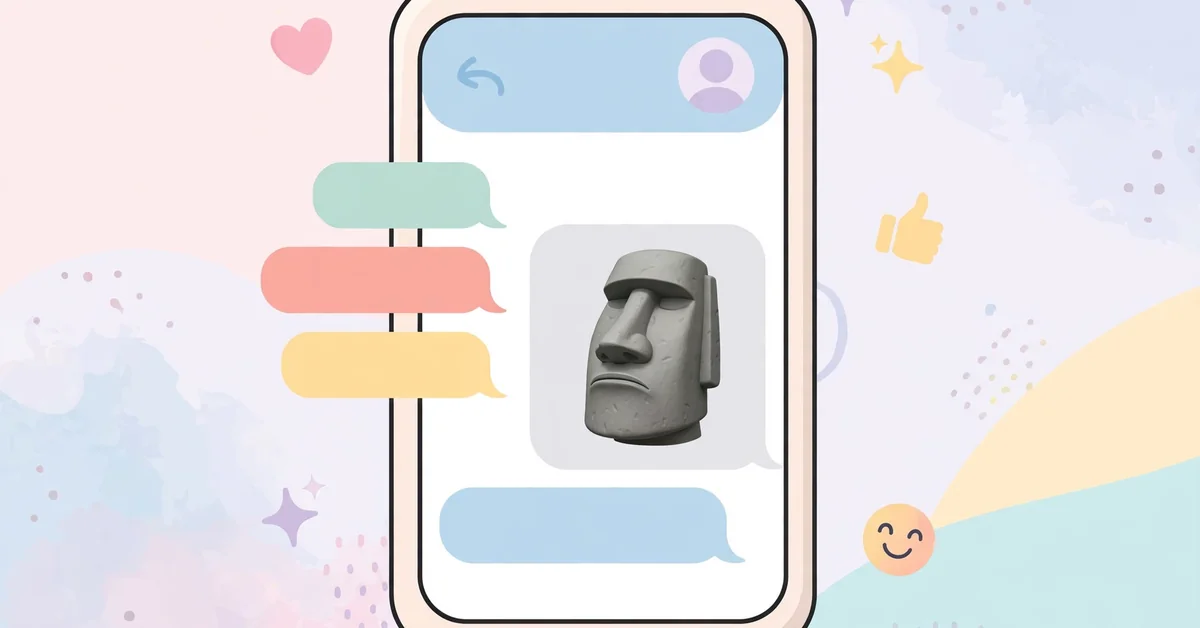
The moai emoji 🗿 shows a huge stone head with a flat, still face. In chats today, 🗿 means deadpan — bored, unimpressed, or calm beyond belief. It sits in comments like a statue while the drama dances around it. The stone is real, by the way. It comes from Easter Island, and it is older than the internet by about a thousand years. This guide starts at the real statue, then follows the stone into its second life as one of the web’s favorite meme faces.
What Is the Moai Emoji, Really?
Before the meme, there is the stone. Moai are the giant stone statues of Easter Island, a small island in the Pacific. Local people carved them long ago, each one standing many meters tall, with long faces that watch the sea.
The emoji keeps the look: gray stone, heavy brow, closed mouth, no smile. It joined the emoji set to stand for the place and its statues, the way other emojis stand for real landmarks.
That honest start is what makes the joke work. A face that watched the ocean for centuries does not blink at your small drama. The stone’s calm is the whole gag. When you know the history, the meme gets even funnier — a thousand years of silence, now judging your group chat.
Here is a detail most people miss: many moai are not just heads. Full bodies lie buried under the soil, which is why photos of the island show heads poking out of the grass like they were planted there. The island’s own name for itself is Rapa Nui. Over the years the statues were toppled and later raised again, and teams still study how such heavy stones ever moved. A meme with a real past beats a meme from nowhere — the stone brings its own weight, in every sense.
🗿 the Meme: Deadpan and Unbothered
Deadpan is comedy with no face at all, and 🗿 is its king. Drop the stone after a wild line, and it says, “Noted. Moving on.” No laugh, no gasp, no care.
It shows up like this:
- “He said he is busy but posted from the club 🗿”
- “She wants the moon and the stars and a discount 🗿”
- “New policy: no fun allowed. Fun: 🗿”
The stone never argues. It just stands there, flat and done. That stillness is why people love it. Words can overdo a reaction. A stone cannot. It is the shrug of emoji, minus the shoulders.
There is a cousin worth knowing: the plain 🗿 reply with nothing after it at all. No period. No second line. The emptiness is the punchline — the stone has ended the topic by standing on it. Reply-all chains fear it. Once the stone drops, anyone who types after it looks like they are arguing with a mountain, and mountains do not lose arguments. Sports chats know it well: a manager’s wild excuse after a loss gets stoned in seconds, flat and final.
Why 🗿 Is All Over TikTok Comments
TikTok made the stone a star. Short videos thrive on a fast joke and a faster reply, and 🗿 lands in one tap. Creators use it to play the bored judge of their own clips. Viewers use it to answer a wild take without typing a word.
A few comment habits stand out:
- The witness: a drama clip gets a single 🗿. Case closed.
- The deadpan caption: “Just me being humble 🗿” under the loudest post alive.
- The sound bit: some audios pair a punchline with the stone for a beat of pure flatness.
The stone also travels well across languages, since no words need to survive the trip. A face that says nothing works the same in every comment section on earth. That wordless reach is rare, and it is a big part of why 🗿 keeps climbing.
Group chats and game servers run the same play. A friend drops a take so bad that words would be a waste, and five stones appear in a row. No caps, no quote-marks, just geology. The pile-on is gentle, though — the stone judges the take, not the friend, and the chat moves on in seconds. Discord servers even keep 🗿 as a house reaction, the default stamp for “heard it, unimpressed, next.” Birthday raids use it too — thirty stones deep — to bury a mate in pure, loving judgment.
🗿 vs 😐 vs 😑: Stone-Face Family
Three flat faces, three flavors of unbothered. Here is the quick split.
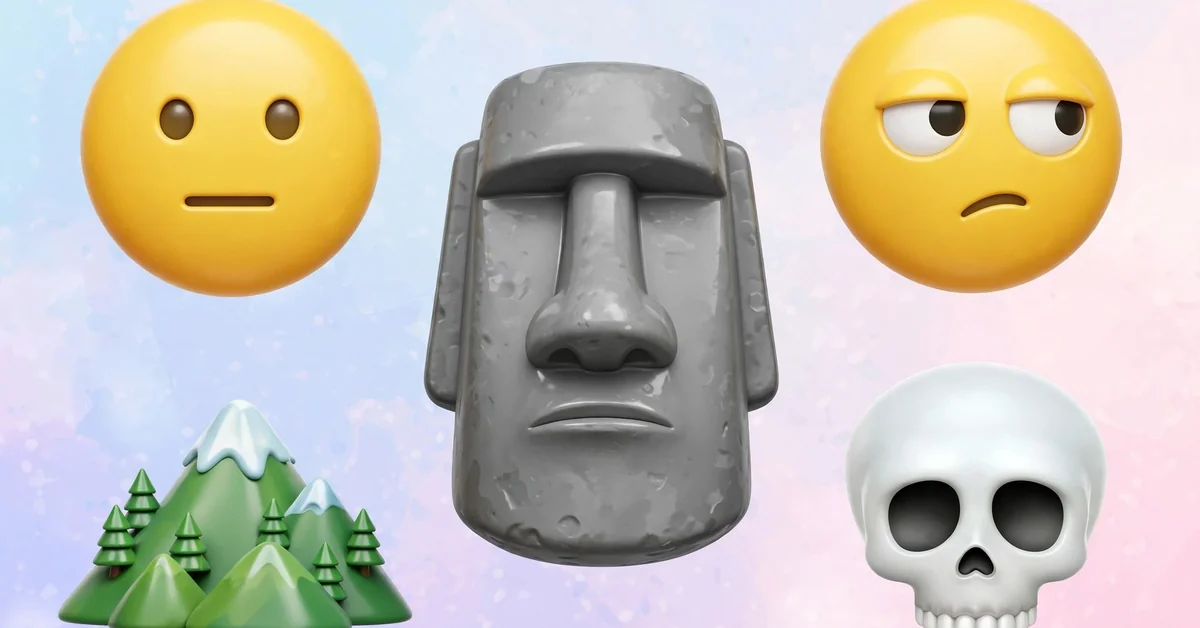
🗿 Moai: ancient, heavy, and meme-flavored. The unbothered judge. Best for deadpan jokes and comment-section drama.
😐 Neutral face: plain and mild. The everyday blank. Best when you just do not know what to say.
😑 Expressionless face: flat with a hint of annoyance. The tired sigh in face form. Best for “really?” moments.
The moai sits with the deadpan crowd, which also includes its famous cousin, the annoyed emoji — flat face, same shrug energy, smaller stone. Reach for 🗿 when the joke is the stillness itself. Reach for the other two when you want the feeling without the meme attached.
Using 🗿 Without Context (Don’t)
The stone has one rule, and it is this: it needs a setup. A bare 🗿 in an empty chat is a puzzle, not a joke. The receiver sees a statue and wonders if you are calling them old, dull, or carved from rock.
Give the stone a stage:
- Pair it with the line it judges.
- Keep it in chats where memes are already welcome.
- Do not aim it at real pain. A stone beside a friend’s bad news reads as cold.
Work chats are a poor stage too. Deadpan needs shared humor to land, and humor is thin on the ground in a budget thread. Save 🗿 for friends, comments, and captions — the places where stillness gets the laugh it deserves. Everywhere else, a plain face or a plain sentence will carry your meaning without the mystery. The stone rewards timing more than any other emoji on the board.
FAQs
What does 🗿 mean on TikTok?
It means deadpan and unbothered. Commenters drop it to judge a wild video with a stone face.
Is the moai emoji based on a real place?
Yes. Moai are the great stone statues of Easter Island in the Pacific, carved long ago.
Is 🗿 an insult?
It can sting if aimed at a person in anger, but it is usually just a meme face for dry jokes.
What is deadpan humor?
Jokes told with a flat face and no smile. The stone face is its perfect emoji.
Can I use 🗿 at work?
Probably not. Meme faces land badly in work chats, where no one shares the joke’s context.
Conclusion
The moai emoji turned a thousand-year-old statue into the web’s coldest face. Give it a good setup, keep it playful, and 🗿 will say more with stone than words ever could.

Hi, I’m Oliver Grant, a symbols and numbers researcher at Symboliism.com. I specialize in decoding the hidden meanings behind spiritual signs, numerical patterns, and everyday symbols. I love turning complex symbolism into simple, clear explanations that help readers understand the messages guiding their life, intuition, and decisions.