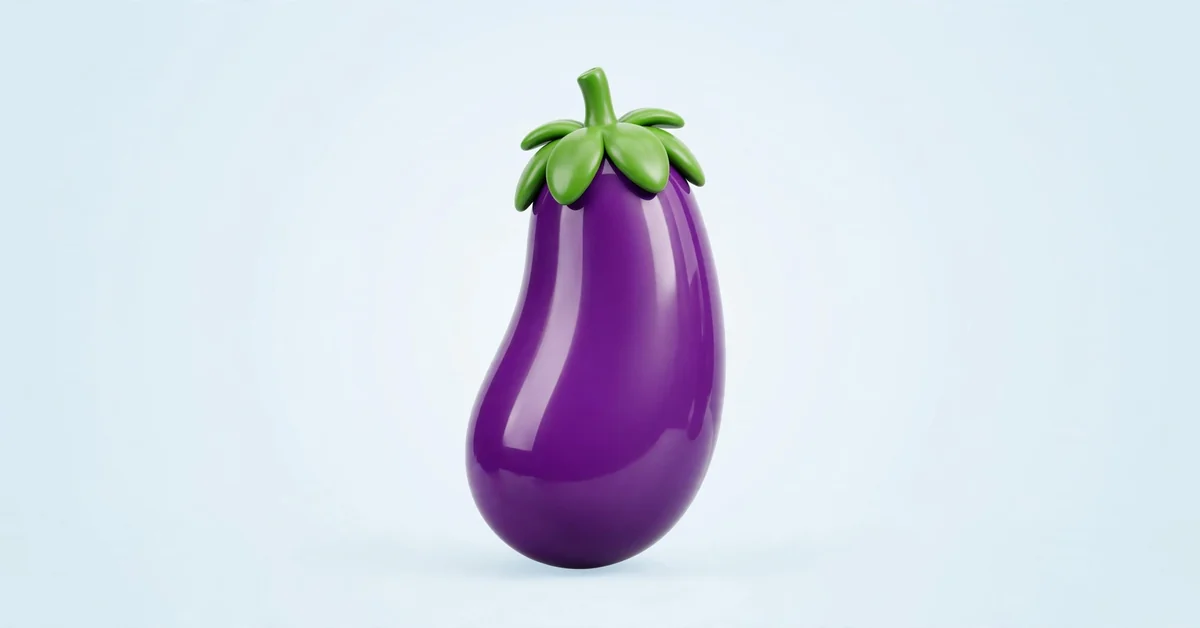
The eggplant emoji 🍆 is a glossy purple vegetable with a famous secret. In online slang, 🍆 stands for male anatomy — that is the plain fact behind almost every search for it. The long shape made it a joke stand-in years ago, and the joke grew so big that a major platform once banned the emoji from its search. Cooks still use it for real food, of course. This guide covers both lives of 🍆 with a straight face: no blushes, no graphic talk, just the facts you need before you send it.
What Does the Eggplant Emoji Mean?
Start with the simple truth. The emoji shows an eggplant — the long purple vegetable also called an aubergine in many parts of the world. It joined the emoji set as food, next to the corn, the mushroom, and the sweet potato.
Then the internet got hold of it. Shape jokes are old, and this shape was an easy pick. Bit by bit, 🍆 took on a slang sense in jokes and teasing chats: a cheeky stand-in for the male body part it loosely resembles. That sense is now so well known that for many readers, it is the first meaning that comes to mind — even when a cook meant dinner.
So, like its fruit-and-veg partner the peach emoji, this emoji lives a double life. The words around it decide which life you are in. A recipe card? Dinner. A teasing joke with no food in sight? The slang, nearly every time.
Why 🍆 Became Slang
Slang loves a stand-in. People have always swapped plain words for playful pictures and code names, and emoji handed that habit a whole new toolbox. The eggplant won its role for simple reasons: the shape is close, the color stands out, and everyone can picture the joke at once.
Media sped it up. Songs, shows, and memes used 🍆 in its cheeky sense, and each use taught more readers the code. Before long, you did not need the joke explained. The purple vegetable did the talking by itself.
There is a naming quirk worth knowing. In Britain and many other places, the vegetable is called aubergine, and the emoji carries the same slang there too. The code crossed borders because the picture, not the word, does the work. That is also why the slang is so sticky: you cannot unsee a shape. Not even a little, not even at the farmer’s market.
The Emoji That Got Banned From Search
Here is the story that sets 🍆 apart from every other food emoji. In 2015, Instagram blocked the eggplant emoji from its search. You could post it, but you could not search for it — the platform treated it as too tied to cheeky content to sit in the search bar.
The move made headlines, and it had a funny side effect. News of the ban taught millions more people the slang sense. The emoji meant to be hushed became the most famous vegetable on the internet.
Other platforms have watched 🍆 with care since then. The lesson for the rest of us is plain: this is the one food emoji the whole internet has agreed to watch. If a platform with millions of users treats it as loaded, your group chat will too. Send it like you know that. Search bars are stricter now than chat boxes are. If you run a food page, test your tags: a bare eggplant tag may hide your post from search on some apps, through no fault of your cooking. Pair it with the dish name and you are safe.
🍆 in Real Cooking Posts
With all that said — people really do cook eggplants. The vegetable stars in dishes around the world: smoky dips, baked pasta, stir-fries, curries, and grilled sides. Food bloggers use 🍆 on recipes every day, and in that crowd it means lunch, full stop.
Cooking posts have a few habits that keep the meaning clean:
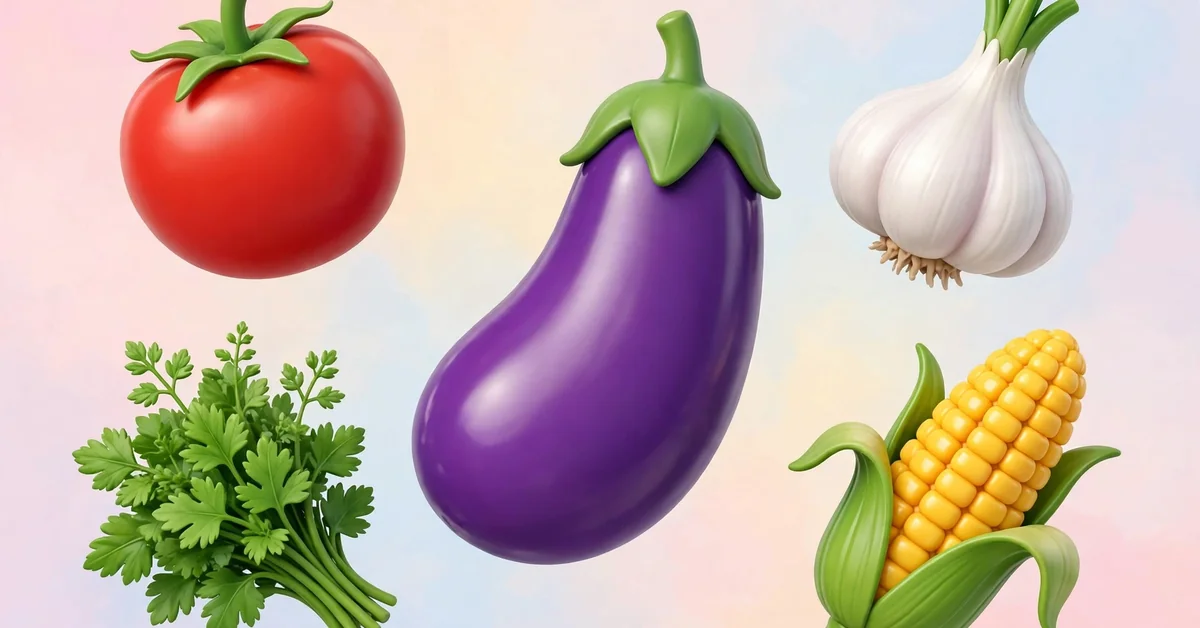
- They pair 🍆 with other food emojis, like 🍅 🧄 and 🌿.
- They sit next to dish names, times, and oven temps.
- They show up on food blogs and market pages, not in teasing chats.
If you run a food page, you do not have to give the emoji up. A cluster of veg around it makes your meaning plain at a glance. Readers are smart. In a recipe, they taste dinner, not a joke.
The dish list backs this up. Baba ganoush, the smoky dip, wears 🍆 like a name tag. So do eggplant parmesan, stuffed aubergine, and spicy stir-fries from half the kitchens on earth. Travel posts use it at markets, stacked in purple piles. Gardeners use it on harvest day. When the emoji stands in a crowd of cooks, dishes, and gardens, nobody blinks. Food is its day job, and it still clocks in every single day.
Sending 🍆 Safely: Read the Context
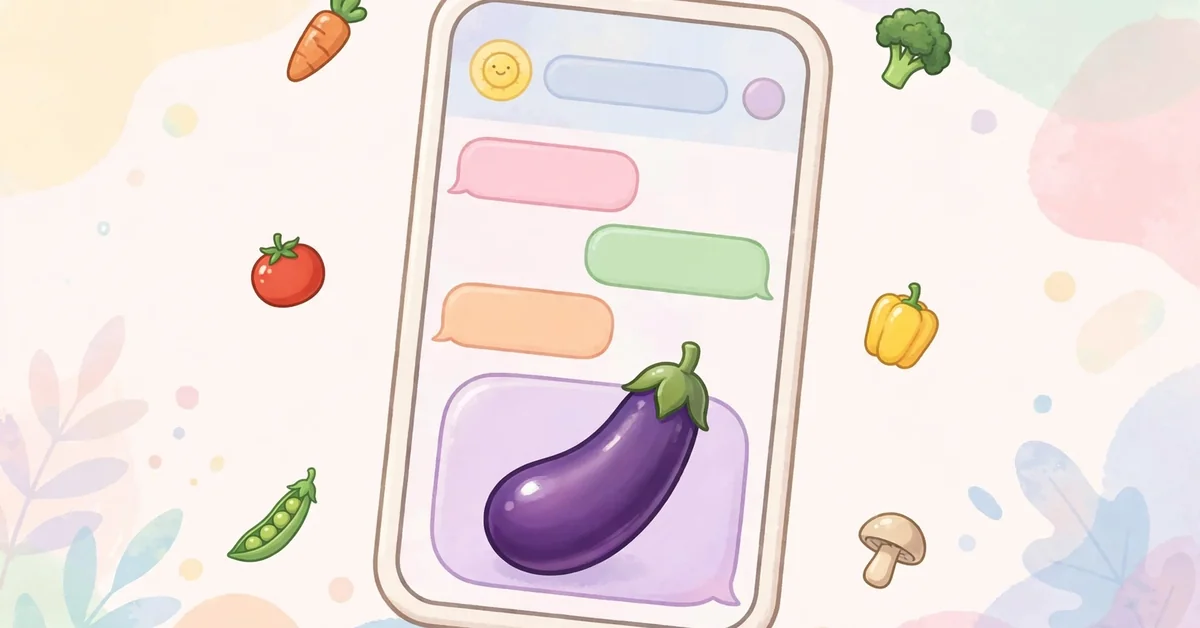
The safe rule with 🍆 is context, context, context. Before you tap it, run a quick check.
- Who will read it? Close friends who share your humor — fine. Coworkers, clients, or your aunt — think again.
- What else is in the message? Food words pull it toward dinner. A lone 🍆 with a wink does not.
- Where will it sit? A private chat is one thing. A public comment under a stranger’s post is quite another.
When the check feels shaky, swap the emoji for the word. “Eggplant parm tonight” never raised an eyebrow in history. And if someone sends you a 🍆 that feels off, you are allowed to say so. A light “Wrong chat for that one” ends it without a scene. Knowing the code is not the same as having to play along.
Sent one by mistake yourself? It happens — a thumb slips, autofill strikes. Own it fast with a plain line: “That was meant to be the recipe one.” A quick laugh at your own slip closes the case far better than silence. Everyone has a rogue emoji story. Yours will be forgotten by lunch.
FAQs
What does 🍆 mean in slang?
It is a cheeky stand-in for male anatomy, picked for its shape. That sense drives most searches for it.
Why was the eggplant emoji banned from search?
In 2015 Instagram blocked it from search because the slang use had grown so strong on the platform.
Is 🍆 ever just about food?
Yes. Recipes, markets, and cooking blogs use it as a plain vegetable, often beside other food emojis.
What is an aubergine?
It is the same vegetable — the name used in Britain and many other places. The emoji shows that plant.
Should I use 🍆 at work?
No. Even with food in mind, the slang sense is too well known. The word is always safer.
Conclusion
The eggplant emoji is a vegetable with the wildest second life on the keyboard. Know the slang, respect the context, and let cooks keep their dinners — 🍆 explained is 🍆 tamed.

Hi, I’m Elena Brooks, a symbolism writer for Symboliism.com with a passion for spiritual growth numbers and their deeper meanings. I specialize in explaining awakening symbols, soul-path signs, and transformation numbers in a clear and inspiring way. My goal is to help readers understand the messages that guide their spiritual journey and personal evolution.