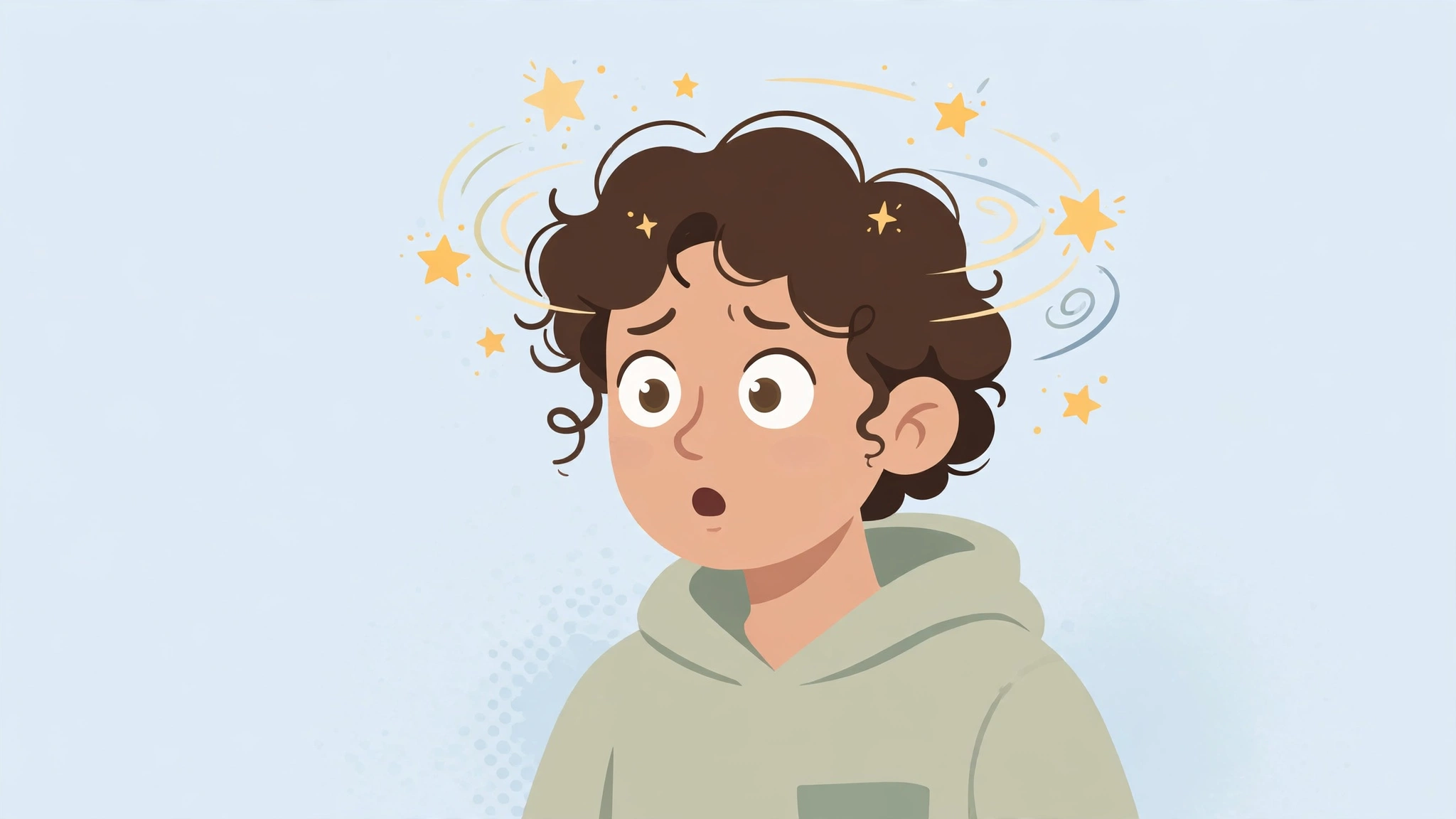
Dazed means feeling stunned, foggy, and unable to think clearly for a short while — as if your brain needs a few seconds to catch up with your body. That is the quick answer.
Maybe you have felt it: you wake up suddenly from a deep nap and do not know what time it is, a camera flash blinds you, or shocking news leaves you standing still, blinking, saying nothing. That blank, slow, spaced-out moment is exactly what dazed describes, and it usually passes within seconds or minutes.
The key takeaway: dazed is a brief, shaken confusion — awake, but not fully switched on.
What does dazed mean?
In simple words, a dazed person is stunned and temporarily confused: unfocused eyes, slow reactions, thoughts that feel wrapped in cotton wool. It is an adjective, and it describes a state that comes and goes — nobody is dazed all day. Strong light, loud noise, pain, sudden fear, or even happy shock can all switch it on for a moment.
| What can leave you dazed | How it feels |
|---|---|
| A sudden bright light or camera flash | Blinded for a moment; eyes watering, brain a step behind |
| Waking up too fast from deep sleep | Heavy head; unsure of the day, the place, the plan |
| A knock, fall, or hard spin | Ringing ears; the room seems to tilt and wobble |
| Shocking news, good or bad | Mind goes blank; words arrive slowly |
It helps to see dazed on a scale. Ordinary tired confusion sits at the light end. Dazed is one step stronger. A far deeper, more serious shutdown — where a person barely responds at all — is called a stupor, and that state belongs in a doctor’s hands, not in everyday chat.
Where does dazed come from?
Dazed grows from the Middle English verb dasen, which meant to be stunned or bewildered. Word historians believe it most likely came from an Old Norse root, dasa-, meaning to become weary or tired — think of Vikings’ words drifting into English during centuries of trade and settlement. To be honest, the trail is probable rather than proven; short everyday words often traveled by mouth long before anyone wrote them down. What is certain is the modern push: the phrase “dazed and confused” was fixed in the world’s ear by a famous 1960s rock song, and it still means totally spaced out today.
How to use dazed in sentences
Here are three natural examples, each showing a different flavor of the word:
“After the flash went off, he stood there dazed, blinking at the cameras.”
“She woke from her nap so dazed that she asked what day it was.”
“The boxer looked dazed after the punch, but he stayed on his feet.”
Notice that dazed usually describes how someone looks or feels right after something happened — a flash, a fall, a shock. It fits storytelling better than stiff formal writing, where “disoriented” or “confused” might be chosen instead.
Similar words to dazed
- Stunned — stronger than dazed; shock has frozen you completely for a moment.
- Groggy — heavy and sleepy-dulled, usually from waking, illness, or medicine.
- Disoriented — lost about where you are or what is happening; the more formal, medical-flavored cousin.
- Bewildered — confused by something puzzling, with no physical shock involved.
- Zoned out — the casual slang twin; your mind quietly wandered off without any jolt.
When to use dazed — and when another word fits better
Use dazed when:
- Someone looks blank and slow right after a surprise, a flash, or a bump.
- You describe the foggy first seconds after waking suddenly.
- You write stories, captions, or match reports where short, vivid words shine.
Choose a different word when:
- The problem is not understanding, not shock — confused or puzzled is the honest choice.
- The world itself seems to spin — that is dizzy; dazed clouds your thinking, not your balance.
- Someone stays dazed for many minutes, especially after a head injury — stop choosing words and get medical help; lasting dazedness can be a warning sign.
FAQs about dazed
What is the difference between dazed and confused?
Dazed is a fog over your whole mind and body — slow, blank, and shaken, usually after a jolt. Confused is narrower: your mind works fine, but the information in front of you does not make sense yet.
Is dazed the same as dizzy?
Not quite. Dizzy is about balance — the room spins. Dazed is about clarity — your thoughts run slowly and your eyes will not focus. A hard fall can deliver both at once, which is why people mix them up.
How long does being dazed last?
Usually seconds to a few minutes. The fog lifts as your senses settle. If dazedness lasts much longer, keeps coming back, or follows a blow to the head, treat it seriously and see a doctor promptly.
What does “dazed and confused” mean?
It is a playful double-phrase for being completely spaced out — stunned and muddled at the same time. A hit 1960s song burned it into everyday English, and people still use it with a smile.
Can you call someone dazed at work?
Gently, about a moment — “you look dazed after that long meeting” — it is friendly. As a label for a person, though, it sounds unkind, so keep it for brief states, never for someone’s character.
Final thoughts on dazed
Dazed names that honest, human pause between a jolt and clear thinking: the blink after the flash, the fog after the nap, the silence after the news. It is brief, it is normal, and it almost always clears on its own. Dazed means briefly stunned and spaced out — awake, but not yet fully arrived.

Hi, I’m Daniel Pierce, a writer at Symboliism.com who specializes in love symbols, relationship numbers, and their hidden meanings. I break down romantic signs, soulmate numbers, and emotional symbolism in a simple, relatable way. My goal is to help readers understand the deeper messages behind love, connection, and the symbols that guide our relationships.