You may meet this word in an old poem, a British place name, or a line such as “the vale below was filled with mist.” It sounds soft and slightly old-fashioned, and that feeling is part of its meaning.
A vale is a valley, especially a broad, low valley pictured in literary or poetic English. It is not a special scientific landform with strict borders. It is the warmer, more storied cousin of the plain word “valley.”
When a writer chooses “vale,” the landscape usually feels gentle, green, and remembered as much as seen. People also meet the same spelling in Latin vale, meaning “farewell,” but that is a separate word covered briefly below.
What does vale mean?
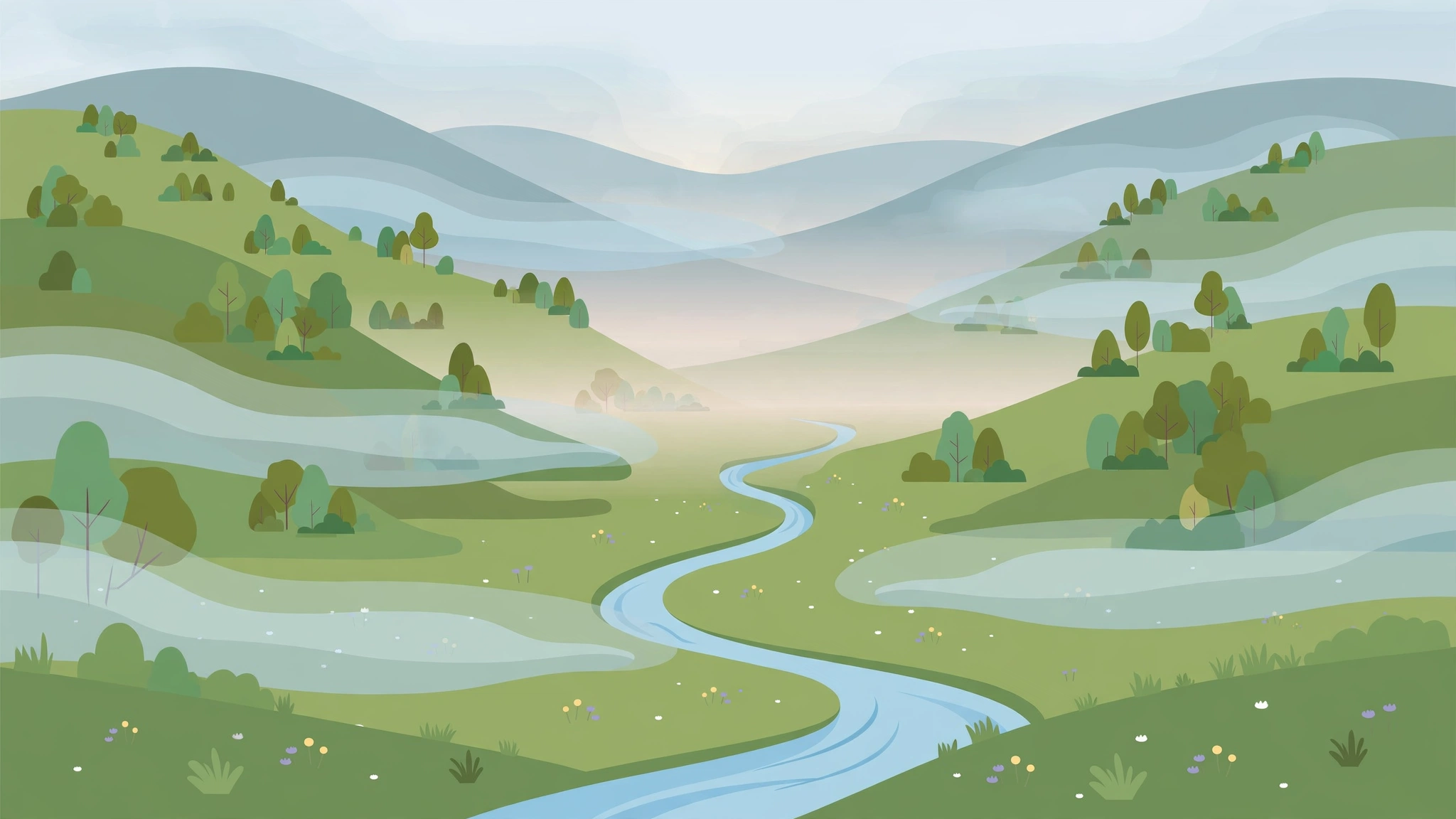
A vale is low land lying between hills or mountains, often with a river or stream running through it. In modern everyday English, “valley” is the normal word. “Vale” survives mainly in poetry, literature, hymns, fantasy writing, and established place names. It suggests a settled, fertile lowland rather than a dramatic canyon.
The word often carries a mood. A valley can be any long depression in the land, measured by geologists and mapped without emotion. A vale sounds inhabited: farms in the bottom, mist at dawn, a church tower above fields, perhaps a road following the river. Writers choose it when the scene matters, not just the shape of the ground.
| Use | Meaning | Example |
|---|---|---|
| Literary noun | A valley, especially broad and low | Mist rested in the vale at sunrise. |
| Place names | Part of the name of a district or valley | The Vale of York lies between higher ground. |
| Figurative use | A place or period of sorrow, as in “vale of tears” | The old hymn calls earthly life a vale of tears. |
| Latin vale | “Farewell” or “be well,” a separate Latin word | He ended the letter with vale. |
That last row is a spelling twin, not another English sense of the valley word. If you see vale at the end of a Latin letter, it is a goodbye. If you see “the vale” in an English landscape description, it is the low land itself.
Where did the word vale come from?
English “vale” came through Old French val from Latin vallis, meaning a valley. It has been in English for many centuries, but “valley” gradually became the everyday choice. “Vale” remained in names, poetry, and elevated prose, where its slightly old sound was useful rather than a drawback.
British place names preserve it well. The Vale of Glamorgan, the Vale of York, and the Vale of Evesham name real districts of low, often fertile land. In such names, “Vale” is capitalized because it belongs to the proper name. The word tells visitors what kind of country to expect: open lowland framed by higher ground.
The Latin farewell is different. Latin valē is the command form of valēre, “to be well,” so it literally wishes someone health: “be well.” It only looks like the English valley word. Keeping the two apart is the one honest complication in this small word’s story.
How to use vale
Use “vale” as a noun for a valley when a literary or place-name tone fits. It usually appears with “the,” or capitalized inside a proper name. It can also sound natural in travel writing that wants a reflective mood. Read these examples aloud and you will hear the difference from plain “valley”:
- From the ridge, we watched evening light settle over the vale.
- Their farm sits in the Vale of Evesham, near the river.
- The novel opens in a green vale where every family knows the miller.
In ordinary conversation, most people would simply say “valley.” “Vale” is best saved for writing, names, quotations, and scenes where its old, gentle color is welcome. It is not slang, and it is never an insult.
Synonyms and similar words
- Valley — the plain, everyday word for low land between hills; use this most often.
- Dale — a valley, especially in northern English and place names such as Yorkshire Dales.
- Glen — a narrow valley, strongly linked with Scotland and Ireland.
- Dell — a small, secluded hollow or wooded valley.
- Lowland — land that is low compared with nearby country; broader than one valley.
When to use vale and when not to
Use “vale” when:
- You are writing poetry, fiction, hymns, or reflective travel prose.
- The accepted place name already contains Vale.
- You want low, green, settled country rather than a stark landform.
- You use the fixed expression “vale of tears” in a literary sense.
Choose another word when:
- You write directions, science, or news; “valley” is clearer.
- The landform is a deep, steep gorge or canyon; those words are more exact.
- You mean the Latin farewell; mark it as Latin or simply write “farewell.”
- A playful modern tone would make “vale” sound unintentionally grand.
Tone note: “vale” is soft, formal, and slightly old-fashioned. That is a strength in the right sentence and a distraction in the wrong one. Let the setting decide.
Frequently asked questions
Is a vale exactly the same as a valley?
In basic meaning, yes: a vale is a valley. The difference is tone. “Valley” is neutral and everyday, while “vale” sounds literary, poetic, or rooted in a place name.
Why do so many British place names contain Vale?
Because the word survived in the naming of low districts, often fertile farmland between hills. Names such as the Vale of York describe the country itself and were kept as those districts became established.
What does “vale of tears” mean?
It is a literary expression for earthly life seen as a place of sorrow and trial. You will meet it in hymns, sermons, and older writing, not in ordinary conversation.
Does vale mean goodbye?
Only in Latin. Latin valē means “be well” or “farewell.” The English word “vale” meaning a valley comes from a different Latin word, vallis, even though the spellings look alike.
Can I use vale in normal speech?
You can, and people will understand you, but it may sound poetic or old-fashioned. In everyday speech, “valley” is the natural choice unless you are quoting a name or aiming for a literary effect.
Conclusion
A vale is a valley with a story: low, green land carried into modern English by poems, hymns, and British place names.
Choose “valley” for plain facts and “vale” when you want the landscape to feel gentle, old, and remembered.

Hi, I’m Lena Foster, a symbolism expert and content writer for Symboliism.com. I specialize in explaining the meanings behind symbols, numbers, and signs in a simple, engaging way. I love turning complex spiritual and cultural symbolism into clear, easy-to-read guides that help readers understand the messages around them.