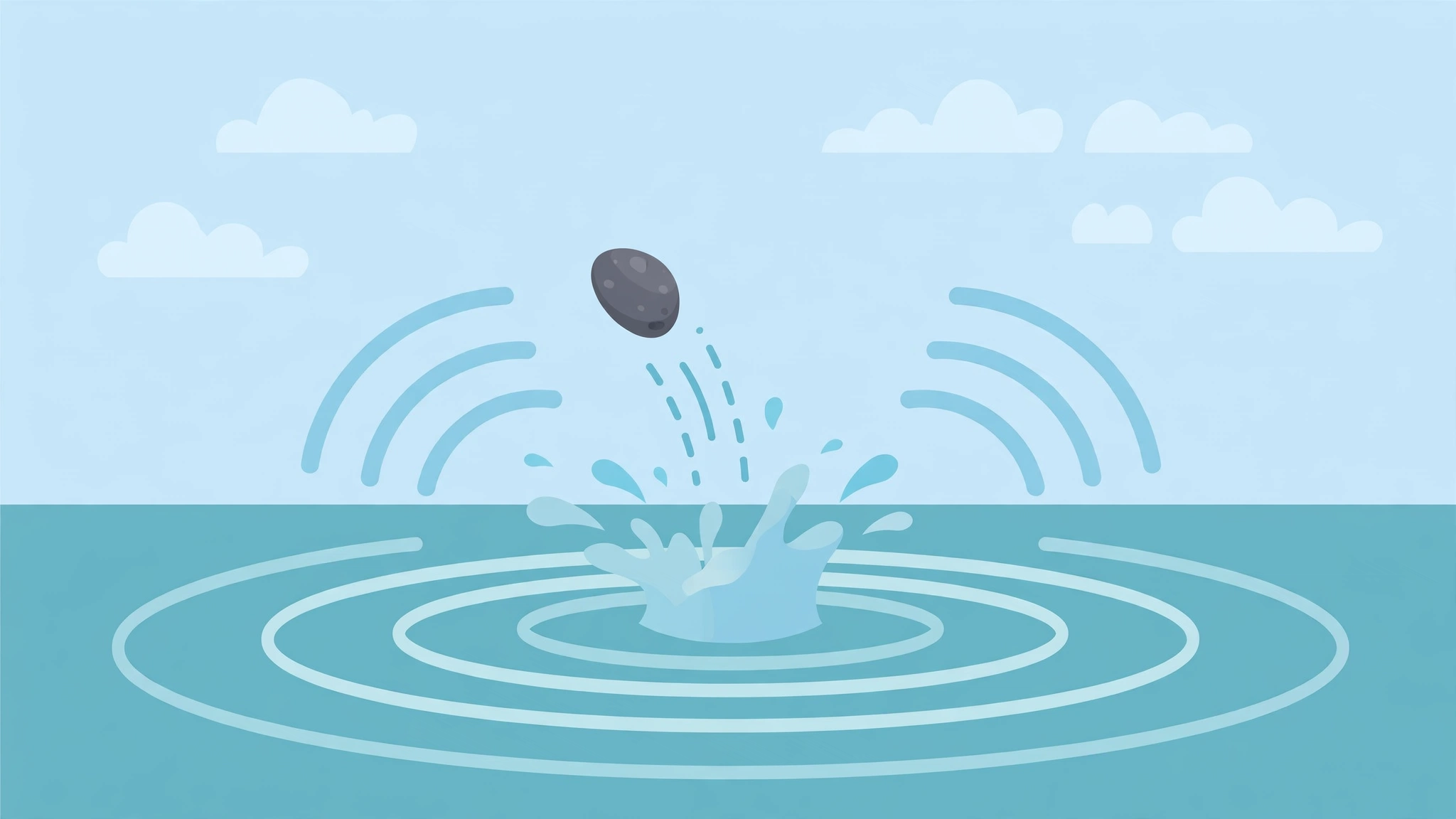
Plunk is the sound of something dropping: a short, hollow thud when a stone falls into water, keys land in a puddle, or you let yourself collapse into a soft chair. Plunk is a playful little sound-word — plunk! — and it doubles as a verb: you can plunk a stone, plunk the strings of a banjo, or plunk yourself down after a long day.
Children learn it from picture books, musicians use it on the porch, and almost everyone has “plunked down” money for something they simply had to have.
The key takeaway: plunk names the hollow sound of a drop — and the dropping, plucking, or sitting that makes it.
What does plunk mean?
At heart, plunk imitates a sound: a brief, hollow knock, deeper than a plink and rounder than a plop. As a verb it means to drop or fall with that sound, to pluck a stringed instrument, or to sit down heavily. It can also stand alone as a cheerful sound-effect word in stories and comics.
| Sense | What happens | Simple example |
|---|---|---|
| Sound / drop | Something falls with a short, hollow thud | The stone went plunk into the pond. |
| Music | Strings are plucked, especially banjo or guitar | He sat plunking his banjo on the steps. |
| Sit heavily | You drop your whole weight into a seat | She plunked down into the armchair. |
| Pay (informal) | Money is put down at once, often with a sigh | He plunked down forty pounds for the old bike. |
Every sense keeps the same cheerful clumsiness. Nothing plunks gracefully; that is exactly the word’s charm.
Where does plunk come from?
Plunk is an honest echo: English speakers built it in the early 1800s purely to imitate the sound itself — what language experts call onomatopoeia. It arrived in American English, in the same playful family as plonk, plink, and thunk, and banjo players quickly adopted it for the twang of a plucked string. To be fair, sound-words have fuzzy birth certificates: nobody invents a noise on a recorded date, so the early 1800s print trail is simply the first time the echo was caught on paper. Cousins like British plonk show how different regions tuned the same drop to slightly different pitches.
How to use plunk in sentences
Here are three natural examples, covering the drop, the music, and the chair:
“She threw the pebble too high, and it went plunk, straight down into the middle of the pond.”
“Grandad sat on the porch, plunking away at his banjo while the cat slept through every note.”
“After the long hike, I plunked myself onto the sofa and did not move for an hour.”
Notice how often plunk partners with down and into — the word loves a landing place.
Similar words to plunk
- Plop — a softer, smaller, wetter drop: a raindrop plops; a stone plunks.
- Plink — a higher, thinner ping, like a coin on glass or ice in a drink.
- Thud — a dull, heavy impact with no water involved; plunk’s serious older brother.
- Twang — the ringing, springy sound of a stretched string being released.
- Plonk — the British cousin: the same dropping sound, and slang for cheap wine.
When to use plunk — and when it sounds too playful
Use plunk when:
- You tell stories, write for children, or describe everyday sounds with a smile.
- You talk about casual banjo, guitar, or ukulele playing — “plunking away” means relaxed, happy practice.
- You chat informally about paying at once: “I plunked down the deposit.”
Choose a different word when:
- You write formally: deposited, set down, or paid sound steadier than plunked.
- The fall is dangerous or serious — plunk always sounds comic, never grave.
- You describe a trained musician’s performance: say plucked or strummed to show respect for skill; plunking implies cheerful amateur thumping.
FAQs about plunk
Is plunk a real word?
Yes — plunk has stood in dictionaries since the early 1800s as both a verb and a noun. It began as an imitation of the sound itself, and imitative words count as real words once everyone understands them.
What is the difference between plunk and plop?
Plunk is deeper, hollower, and usually involves something heavier — a stone, a set of keys. Plop is soft and small, the sound of a drop of water or a dollop of cream landing gently.
What does “plunk down” mean with money?
To plunk down money means to pay it all at once, usually on the spot and sometimes a little reluctantly: “He plunked down two hundred dollars for the guitar before he could change his mind.”
Which instrument do you plunk?
Above all, the banjo — plunking is the classic word for its cheerful finger-plucked twang. Guitar, ukulele, and mandolin players get “plunked” too, usually when they are practising happily rather than performing.
Is plunk the same as British plonk?
Nearly. Plonk is the British-tuned cousin for the same dropping sound, and it also earned a second life as slang for cheap wine. Plunk stays the more musical, American-flavoured spelling.
Final thoughts on plunk
One more everyday moment belongs to this word: the beginner at a piano or guitar, picking out notes one clumsy finger at a time. Teachers smile and call it plunking — not polished playing, but the honest first music of learning. Every skilled player’s story starts with those brave little plunks.
That is plunk: one of the happiest small words in the language — a stone kissing a pond, fingers teasing a banjo string, and you, landing in the best chair in the house. Say it aloud once and the meaning is yours forever.
Wherever something drops with a hollow little knock, plunk is the word that sounds exactly like it.

Hi, I’m Lena Foster, a symbolism expert and content writer for Symboliism.com. I specialize in explaining the meanings behind symbols, numbers, and signs in a simple, engaging way. I love turning complex spiritual and cultural symbolism into clear, easy-to-read guides that help readers understand the messages around them.