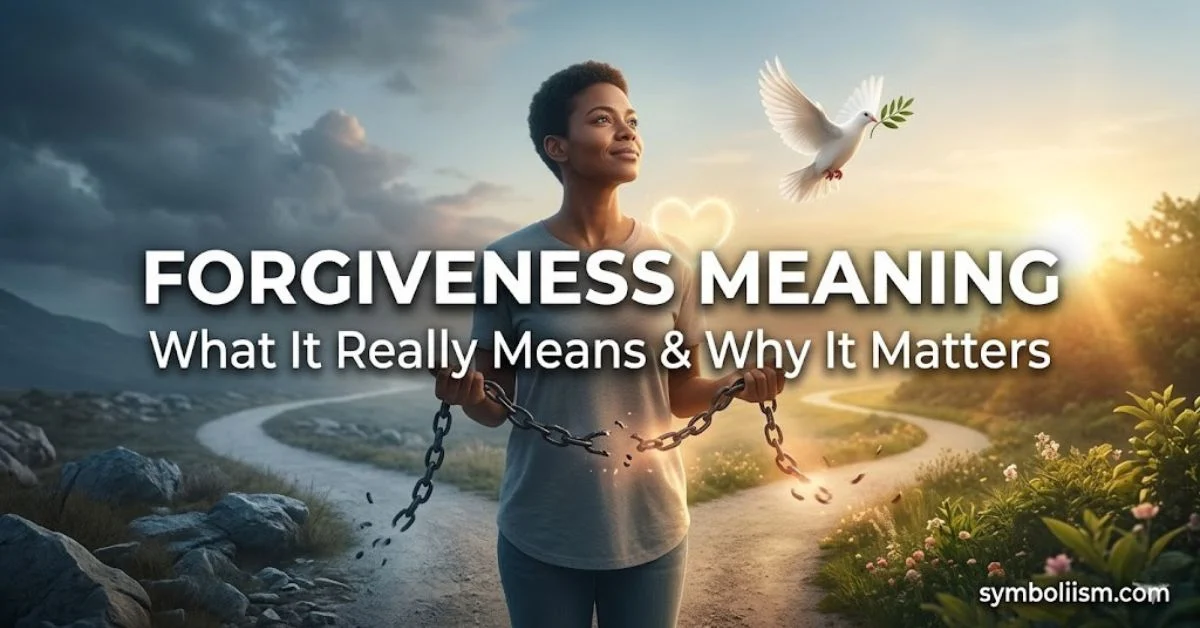
Forgiveness means choosing to let go of resentment and the desire for revenge after being hurt. It does not mean forgetting, excusing harmful behavior, or trusting someone again immediately.
Just forgive and move on.
You’ve probably heard that advice before. But what does forgiveness actually mean? Does it mean forgetting the pain, rebuilding trust, or pretending nothing happened?
These questions are why so many people search for forgiveness meaning. In simple terms, forgiveness is not about denying the hurt it’s about refusing to let it control your future.
If you’re seeking healing, exploring faith, or trying to forgive yourself, this guide will help you understand what forgiveness truly means.
What Is Forgiveness?
The simple meaning of forgiveness is this:
Forgiveness is the choice to release resentment toward someone who hurt you, without allowing that hurt to control your future.
In everyday language, forgiveness means letting go of the emotional weight of anger and bitterness.
It is not saying:
- What happened was okay.
- It didn’t hurt.
- Nothing needs to change.
Instead, forgiveness says:
I refuse to let this pain define the rest of my life.
That is why forgiveness is often connected with emotional healing, inner peace, and personal growth.
Simple Definition of Forgiveness
If you’re looking for a short answer, here it is:
Forgiveness is the decision to stop holding onto resentment and choose peace instead.
This simple definition of forgiveness captures its heart.
Forgiveness involves:
- Mercy,
- Compassion,
- Understanding,
- Acceptance,
- Emotional release.
It does not require forgetting.
It does not erase accountability.
And it does not remove healthy boundaries.
What Does the Word Forgiveness Mean?
The word forgiveness comes from the idea of giving up a claim against someone.
Over time, it became closely linked with mercy and reconciliation.
Today, when people ask, What does forgiveness mean? they are usually asking one of three things:
Emotional Meaning
How do I let go of anger and hurt?
Spiritual Meaning
What does forgiveness teach us about grace, mercy, and healing?
Relational Meaning
Can I forgive someone without rebuilding the relationship?
The answer to all three begins with understanding that forgiveness is primarily an internal choice.
It changes your relationship with the pain.
Not the facts of what happened.
Forgiveness Meaning Example
Definitions are helpful.
Real life makes them easier to understand.
Example 1: A Friend Breaks Your Trust
A close friend shares something private that you asked them to keep confidential.
You feel betrayed.
Months later, you decide to let go of your resentment.
You no longer replay the anger every day.
You may choose to be careful with trust in the future, but you stop carrying bitterness.
That is forgiveness.
Example 2: A Parent Makes Mistakes
A parent says something hurtful during an argument.
The words stay with you.
Over time, you acknowledge the pain, set healthier boundaries, and release the desire to punish them emotionally forever.
That is forgiveness too.
Example 3: Forgiving Yourself
You make a decision you deeply regret.
You accept responsibility.
You learn from it.
You stop defining yourself by your worst moment.
That is self-forgiveness.
True Forgiveness Meaning
Many people wonder what true forgiveness actually looks like.
True forgiveness is not forced.
It is not instant.
And it is not pretending.
True forgiveness means acknowledging the hurt while choosing not to live under the control of resentment.
It often includes:
- Recognizing the pain honestly,
- Accepting reality,
- Releasing the desire for revenge,
- Choosing emotional freedom,
- Moving toward healing.
Some days it feels easy.
Other days it feels impossible.
That does not mean you have failed.
Forgiveness is often a process rather than a single decision.
What Forgiveness Is Not
Understanding what forgiveness is not can be just as important.
Forgiveness is not:
- Forgetting what happened,
- Excusing abuse,
- Approving harmful behavior,
- Ignoring your emotions,
- Removing consequences,
- Pretending trust still exists,
- Giving someone unlimited access to your life.
These misunderstandings prevent many people from embracing forgiveness.
They fear that forgiving means surrendering their dignity.
It doesn’t.
Healthy forgiveness can exist alongside wisdom, boundaries, and accountability.
Does Forgiveness Mean Forgetting?
This is one of the most searched questions about forgiveness.
The answer is simple.
No.
Forgiveness does not mean forgetting.
You may remember exactly what happened.
The memory itself is not the problem.
The problem is when resentment continues to control your emotions long after the event has passed.
Forgiveness changes the emotional charge attached to the memory.
It allows you to remember without constantly reliving the pain.
In fact, remembering can sometimes protect you from repeating unhealthy patterns.
The lesson stays.
The bitterness begins to fade.
Does Forgiveness Mean Reconciliation?
Another common misunderstanding is that forgiveness automatically restores relationships.
It doesn’t.
Reconciliation and forgiveness are different.
Forgiveness is a choice you make.
Reconciliation requires participation from both people.
It usually depends on:
- Accountability,
- Changed behavior,
- Rebuilt trust,
- Honest communication,
- Mutual effort.
You can forgive someone who:
- Never apologized,
- Never accepted responsibility,
- Is no longer in your life,
- Is unwilling to change.
Forgiveness frees your heart.
Reconciliation rebuilds a relationship.
Sometimes both happen together.
Sometimes they do not.
And both outcomes can be healthy.
Why Forgiveness Matters
Holding onto anger for a long time can affect how we think, feel, and relate to others.
Forgiveness does not erase the past.
But it can help us move forward.
People who practice forgiveness often describe experiencing:
- Greater inner peace,
- Less emotional exhaustion,
- Reduced bitterness,
- More compassion,
- Improved relationships,
- Increased emotional resilience,
- A stronger sense of hope.
Forgiveness cannot change yesterday.
But it can shape what happens next.
Self-Forgiveness Meaning
For many people, forgiving themselves is harder than forgiving others.
We replay old mistakes.
We think about what we should have said, what we should have done, and the choices we wish we could take back.
Over time, guilt can turn into shame.
Guilt says:
I did something wrong.
Shame says:
There is something wrong with me.
That difference matters.
What Is Self-Forgiveness?
Self-forgiveness means accepting responsibility for your actions while choosing not to punish yourself forever.
It is not making excuses.
It is not avoiding accountability.
Instead, it means saying:
I cannot change the past, but I can learn from it and choose who I become next.
Self-forgiveness often involves:
- Admitting your mistakes,
- Taking responsibility,
- Making amends when possible,
- Learning from the experience,
- Practicing self-compassion,
- Moving forward with wisdom.
Why Self-Forgiveness Matters
Without self-forgiveness, many people remain trapped in cycles of regret and self-criticism.
They struggle to believe they deserve happiness, peace, or another chance.
Healthy self-forgiveness helps you:
- Build emotional resilience,
- Develop self-acceptance,
- Reduce unnecessary shame,
- Improve mental well-being,
- Support personal growth.
Forgiving yourself does not erase responsibility.
It allows healing to begin.
Spiritual Meaning of Forgiveness
The spiritual meaning of forgiveness reaches beyond human relationships.
Across many traditions, forgiveness is seen as a path toward inner freedom.
At its heart, spiritual forgiveness means:
Releasing resentment so your heart has room for peace, compassion, and healing.
Many people describe forgiveness as a spiritual turning point.
It helps them let go of emotional burdens they have carried for years.
Spiritually, forgiveness encourages us to choose:
- Mercy over revenge,
- Compassion over hatred,
- Understanding over bitterness,
- Hope over despair.
It reminds us that carrying anger indefinitely often hurts the person carrying it the most.
Forgiveness as Inner Freedom
Forgiveness is not about changing what happened.
It is about changing your relationship with what happened.
You stop allowing past pain to decide how you live today.
That shift often brings:
- Emotional release,
- Greater clarity,
- A deeper sense of peace,
- Renewed purpose.
Divine Forgiveness Meaning
Many people also seek to understand divine forgiveness.
Divine forgiveness refers to the mercy and grace offered by God.
It reflects the belief that human beings are capable of renewal.
No mistake has to become the final chapter of a person’s story.
Divine forgiveness reminds people that:
- Failure is not the end,
- Repentance matters,
- Mercy is possible,
- Hope remains available.
For believers, this understanding often becomes a source of comfort during difficult seasons of life.
Forgiveness Meaning in the Bible
Forgiveness is one of the most important themes found throughout Scripture.
When people search for forgiveness meaning in the Bible or what does forgiveness mean in the Bible, they are usually asking:
How does God want us to respond when we are hurt?
In the Bible, forgiveness is closely connected with mercy, grace, repentance, and love.
Biblical forgiveness means choosing to release offenses rather than allowing bitterness to take root in the heart.
It encourages believers to:
- Show compassion,
- Extend mercy,
- Seek peace,
- Pray for wisdom,
- Leave ultimate justice to God.
Forgiveness in the Bible Is Not Passive
The Bible does not present forgiveness as pretending evil never happened.
Instead, biblical forgiveness recognizes pain honestly while refusing to be consumed by hatred.
This distinction matters.
Forgiveness is an act of strength.
Not denial.
Does Forgiveness Mean Reconciliation in the Bible?
Not always.
The Bible values reconciliation, but reconciliation requires more than one willing person.
Trust often needs time to rebuild.
Healthy boundaries still matter.
A person may forgive while recognizing that restoring closeness is not currently wise or safe.
Forgiveness Meaning in Christianity
The forgiveness meaning in Christianity is deeply rooted in grace.
Christians believe forgiveness reflects the mercy God has shown to humanity.
Rather than focusing on revenge, believers are encouraged to choose love, humility, and compassion.
Forgiveness in Christianity often means:
Extending mercy even when resentment feels justified.
This does not mean ignoring injustice.
It means refusing to let anger become the ruler of the heart.
Many Christians view forgiveness as:
- An act of faith,
- A reflection of grace,
- A pathway toward spiritual maturity,
- A response to God’s mercy.
Grace and Forgiveness Meaning
Grace and forgiveness are often mentioned together, but they are not identical.
What Is Grace?
Grace is receiving kindness that has not been earned.
Forgiveness is releasing the offense that created a barrier.
Together, they reveal something powerful:
People can be held accountable while still being treated with dignity and compassion.
Grace softens harshness.
Forgiveness releases resentment.
Both invite healing.
What Does Forgiveness Mean in Islam?
Forgiveness also holds an important place in Islam.
When people ask, What does forgiveness mean in Islam?, they are often seeking to understand how mercy and justice work together.
In Islamic teaching, forgiveness is connected with:
- Mercy,
- Repentance,
- Compassion,
- Patience,
- Personal responsibility.
Believers are encouraged to seek Allah’s forgiveness sincerely while also showing forgiveness toward others when appropriate.
This balance is important.
Forgiveness does not eliminate justice.
Nor does justice eliminate mercy.
Instead, both work together to encourage personal growth and social harmony.
What Does Forgiveness Mean for Kids?
Children understand forgiveness best through simple examples.
A child-friendly definition might be:
Forgiveness means choosing not to stay angry forever after someone makes a mistake and tries to make things right.
For example:
Imagine your friend accidentally breaks your favorite pencil.
They apologize.
You still feel upset at first.
But eventually, you decide not to hold that mistake against them forever.
That is forgiveness.
Teaching children about forgiveness can help them develop:
- Empathy,
- Kindness,
- Communication skills,
- Emotional awareness,
- Healthy boundaries.
Children also need to learn that forgiveness does not mean allowing others to keep hurting them.
Being kind and protecting yourself can exist together.
A Gentle Reminder About Forgiveness
There is no perfect timeline for healing.
Some wounds take longer than others.
If forgiveness feels difficult, that does not make you bitter, weak, or broken.
It makes you human.
Sometimes forgiveness arrives quickly.
Sometimes it comes in small steps.
What matters is not perfection.
What matters is the willingness to move toward peace rather than allowing pain to have the final word.
Forgiveness Meaning Synonyms
People often look for forgiveness meaning synonyms to better understand what forgiveness feels like in real life.
No single word captures its full meaning, but several closely related ideas help paint a clearer picture.
Common forgiveness synonyms include:
- Mercy
- Compassion
- Grace
- Clemency
- Pardon
- Understanding
- Acceptance
- Benevolence
- Kindness
- Tolerance
While these words are related, they are not identical.
For example, pardon often refers to releasing someone from punishment, while compassion focuses on responding to suffering with kindness.
Forgiveness sits at the intersection of both justice and mercy.
It acknowledges the hurt while choosing not to remain trapped in it.
Related Concepts That People Often Confuse With Forgiveness
Understanding forgiveness becomes easier when we separate it from other emotional experiences.
Empathy
Empathy means understanding another person’s feelings or perspective.
It allows us to recognize that people are complex and imperfect.
Empathy can support forgiveness, but forgiveness does not require fully understanding why someone acted the way they did.
Compassion
Compassion is the desire to respond to pain with care rather than cruelty.
Forgiveness often grows from compassion.
When we recognize our shared human imperfections, extending grace becomes easier.
Acceptance
Acceptance means acknowledging reality as it is.
It says:
This happened. I cannot change the past.
Acceptance is often the first step toward healing.
You cannot forgive what you continue to deny.
Trust
One of the most common questions people ask is:
Does forgiveness mean trust?
No.
Trust and forgiveness are different.
Trust is earned.
Forgiveness is chosen.
Someone may genuinely forgive another person while deciding that trust must be rebuilt slowly through consistent actions.
Accountability
Forgiveness and accountability can exist together.
Choosing forgiveness does not mean removing consequences.
People can be treated with dignity while still being responsible for their choices.
Revenge
Revenge seeks to repay pain with pain.
Forgiveness seeks freedom from the endless cycle of resentment.
Choosing forgiveness does not mean you stop caring about justice.
It means you stop allowing bitterness to shape your future.
Practical Ways to Practice Forgiveness
Forgiveness is rarely a single moment.
More often, it is a process.
These steps can help.
1. Be Honest About the Hurt
Avoid minimizing your pain.
Acknowledge what happened and how it affected you.
Healing begins with honesty.
2. Allow Yourself to Feel
Anger, sadness, disappointment, grief, and confusion are normal responses.
Ignoring emotions does not make them disappear.
3. Decide What Forgiveness Means to You
Remember:
- Forgiveness is not forgetting.
- Forgiveness is not approval.
- Forgiveness is not pretending.
- Forgiveness is not forced reconciliation.
Define forgiveness in a way that supports healing and healthy boundaries.
4. Set Boundaries When Needed
Protecting yourself is not the opposite of forgiveness.
Sometimes the healthiest choice is creating distance from harmful behavior.
5. Practice Self-Compassion
Speak to yourself with the same kindness you would offer a close friend.
Healing takes time.
There is no deadline.
6. Focus on Growth
Ask yourself:
What can this experience teach me?
Pain cannot always be avoided.
But growth can emerge from it.
Frequently Asked Questions
Is forgiveness positive or negative?
Forgiveness is generally considered positive because it supports emotional well-being, healthier relationships, and inner peace.
However, forgiveness should never be used to excuse abuse or remove necessary boundaries.
Is forgiveness a sign of weakness?
No.
Forgiveness often requires tremendous courage.
Holding onto anger can feel easier than choosing compassion.
Forgiveness is often a sign of emotional strength and maturity.
Can you forgive without an apology?
Yes.
Many people forgive even when the other person never says sorry.
Forgiveness is often about freeing yourself from resentment rather than waiting for someone else’s permission to heal.
Is forgiveness common in everyday life?
Absolutely.
People practice forgiveness in marriages, friendships, workplaces, families, and communities every day.
It is part of learning how to live alongside imperfect people.
Does forgiveness mean forgetting?
No.
You can remember the lesson while releasing the bitterness attached to it.
Does forgiveness mean reconciliation?
Not always.
Reconciliation requires trust, accountability, and mutual effort.
Forgiveness is something one person can choose independently.
What does true forgiveness mean?
True forgiveness means acknowledging the hurt while choosing not to let resentment control your life.
It does not erase the past.
It changes your relationship with it.
Is it safe to forgive everyone?
Forgiveness and safety are different things.
You can forgive someone without maintaining contact with them.
Healthy boundaries remain important.
What does forgiveness mean to you?
The answer is personal.
For some, forgiveness means peace.
For others, it means closure.
For many, it means finally setting down a burden they have carried for far too long.
Final Thoughts
Forgiveness is not about forgetting, excusing harmful behavior, or giving endless chances. It means choosing to let go of resentment so it no longer controls your life.
If you’re exploring the simple meaning of forgiveness, its spiritual significance, or learning how to forgive yourself, the message remains the same:
Forgiveness is choosing peace over bitterness and healing over hurt.
You don’t have to trust immediately or reconcile in every situation. But you can choose not to let yesterday define your tomorrow and sometimes, that choice changes everything.
Read More About!
- Waxing Crescent Moon Meaning in Text and Spirituality
- Bird Keeps Flying Into Your Window? Spiritual Meaning Revealed
- Israel Meaning: Biblical Meaning Most People Miss

Hi, I’m Oliver Grant, a symbols and numbers researcher at Symboliism.com. I specialize in decoding the hidden meanings behind spiritual signs, numerical patterns, and everyday symbols. I love turning complex symbolism into simple, clear explanations that help readers understand the messages guiding their life, intuition, and decisions.