Fingers Crossed Emoji Meaning: Luck, Hope or a Little Lie?
The results page is loading. Your friend texts one small emoji: 🤞. The fingers crossed emoji means “I hope this goes well” — it is the luck emoji, sent when a result is out of your hands.
But this little hand has two faces. In front, it wishes for luck. Behind the back, crossed fingers have long meant a lie. One emoji, two stories. Here is how to read both.
What Does the Fingers Crossed Emoji Mean?
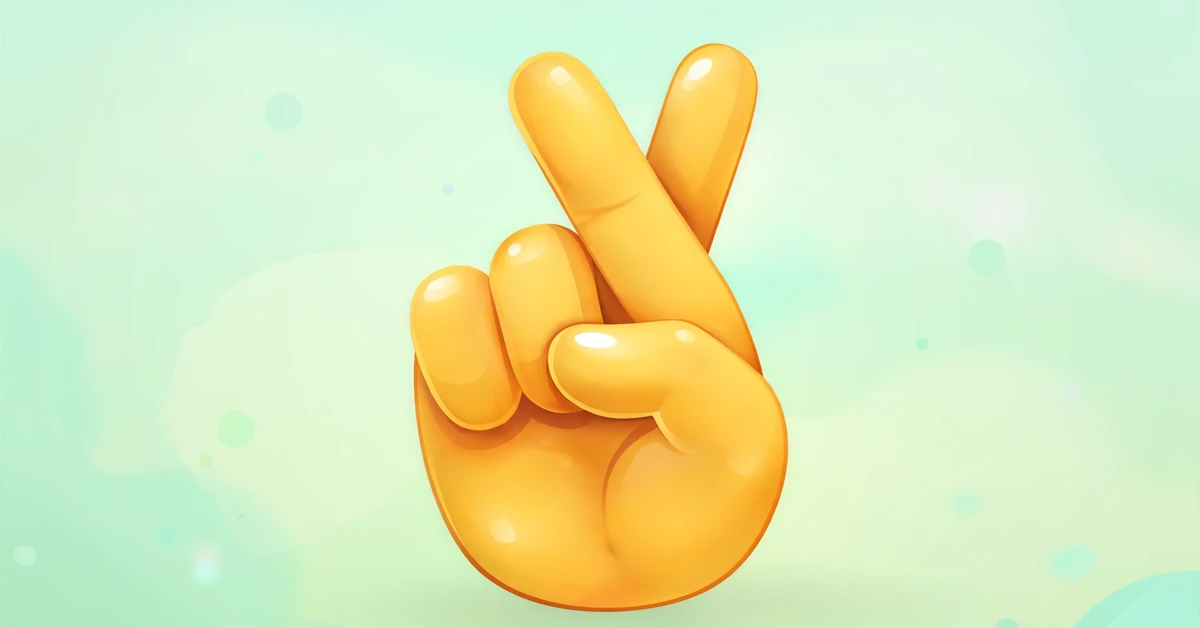
🤞 shows a hand with the index and middle fingers crossed over each other. People have made this gesture for a very long time to wish for luck or protection.
In chats today, it carries three main senses:
- Hope. “I really want this to work out.”
- Luck. A wish sent before news, scores, or results.
- A quiet lie. The old hidden sense, used as a joke.
Most of the time, it is pure hope. The emoji shows up next to big moments: exam grades, job news, game scores, medical results. The sender cannot control what comes next. All they can do is cross their fingers and send the wish to you.
The gesture itself is old. People crossed their fingers as a tiny sign of hope and protection long before phones existed — a small cross you could make with one hand, any time, in secret if you had to. Later it became a kids’ game gesture too: cross your fingers, make a wish. 🤞 carries all of that history in one small picture, which is why even people who never think about the gesture read it at once.
🤞 for Luck: Exams, Results, Games
This is where 🤞 earns its keep. A few classic scenes:
- “Results are out at noon 🤞” — hope before grades.
- “Interview went okay, now we wait 🤞” — hope after effort.
- “Please let it not rain on Saturday 🤞” — hope about weather.
- “One more goal, come on 🤞” — hope in a live game.
Notice the pattern. 🤞 comes after the work is done. You studied, you applied, you played. Now luck has the last word, and the emoji says so in one tap.
Sports fans may be its heaviest users. A penalty kick, a last-second shot, a photo finish — during those seconds, group chats fill with rows of 🤞🤞🤞, like a whole crowd holding its breath in text form. Nobody thinks the emoji changes the score. It is a ritual, the digital version of fans in a stadium crossing real fingers together. Shared hope is the point. When the moment passes, win or lose, those little hands show exactly who cared, and how much.
Words make it stronger. “Hope I passed 🤞” is clear. A bare 🤞 with no words can leave people guessing what you are hoping for. For the biggest hopes, people pair it with the praying emoji — the two are close cousins in the hope family.
🤞 the Sneaky Sense: White Lies
Now the other face. For ages, kids crossed their fingers behind their backs while telling a fib. The idea: the hidden cross “cancels” the lie, so it does not count.
That old trick lives on in jokes:
- “I totally studied all weekend 🤞” (sent from the beach)
- “Of course I remembered your birthday gift 🤞”
The tone is playful, not cruel. It works only when the other person can spot the joke. Sent to someone who takes your words at face value — a boss, a teacher, a new friend — the same emoji can read as a real confession. Use the sneaky sense with people who know your humor.
Reading it is a skill too. When the claim is about effort or chores — studying, cleaning, saving money — the lie sense is usually a joke about being human. When the claim is about feelings, take more care: “Of course I am not mad 🤞” can be a real crack in the wall. If you cannot tell, ask. A light “wait, real or joking?” has saved many chats.
Cultural Notes: Not Luck Everywhere
The crossed-fingers gesture is not warm in every place. In Vietnam, the same hand shape is a crude joke about body parts, and it is not a friendly wish at all. One honest line is enough: if you chat with friends there, send 🍀 or plain words instead.
Meanings also shift by age. Older users lean on the luck sense. Younger users play with the lie sense more, thanks to memes. When in doubt, read the words around the emoji. The words always tell you which face 🤞 is wearing.
Sending 🤞 With the Right Words
A few pairings that land well:
- Before news: “Whatever happens, we tried our best 🤞”
- For a friend: “Rooting for you 🤞 you have got this.”
- Light and funny: “Me, refreshing the results page 🤞”
- Big hope, both hands: 🤞🙏 when the wish really matters.
Avoid 🤞 for sad or serious news that has already happened. Luck talk fits the wait, not the loss. After bad news, kind words do the job better than any emoji.
One last trick: put 🤞 at the start of a message while the news is still open — “🤞 for tomorrow” — so the hope is the very first thing the reader sees. Position is part of the wish.
Fingers Crossed Emoji FAQs
What does 🤞 mean in a text?
Mostly hope or luck. The sender is waiting on a result and wishes it goes well. Next to a claim that sounds too neat, it can joke about a small lie.
Is 🤞 the same as the luck emoji?
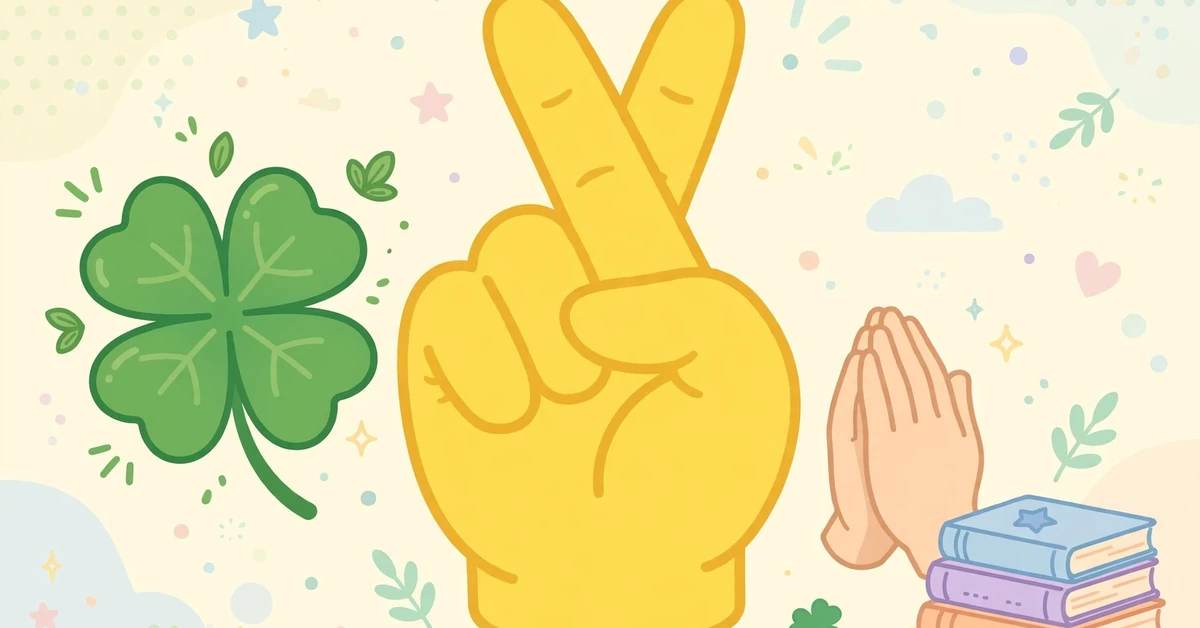
Yes, it is the main one. People also use 🍀 (four-leaf clover) for luck. 🤞 is more personal, because it shows the wish, not just the charm.
Can 🤞 mean lying?
It can, as a joke. Crossed fingers behind the back are an old sign for a fib. In chats it is almost always playful, not a real admission.
When should I not send 🤞?
Skip it after sad news, in formal work mail, and with people who may read the lie sense first. Words carry those moments better.
What emojis go well with 🤞?
🙏 for big hopes, 🍀 for extra luck, and 📚 or 💼 next to exam and job wishes. Keep combos short so the hope stays clear.
The Bottom Line
🤞 is hope you can hold in one hand. Send it while you wait, wish hard with words beside it, and save the sneaky sense for friends who get the joke.

Hi, I’m Lena Foster, a symbolism expert and content writer for Symboliism.com. I specialize in explaining the meanings behind symbols, numbers, and signs in a simple, engaging way. I love turning complex spiritual and cultural symbolism into clear, easy-to-read guides that help readers understand the messages around them.