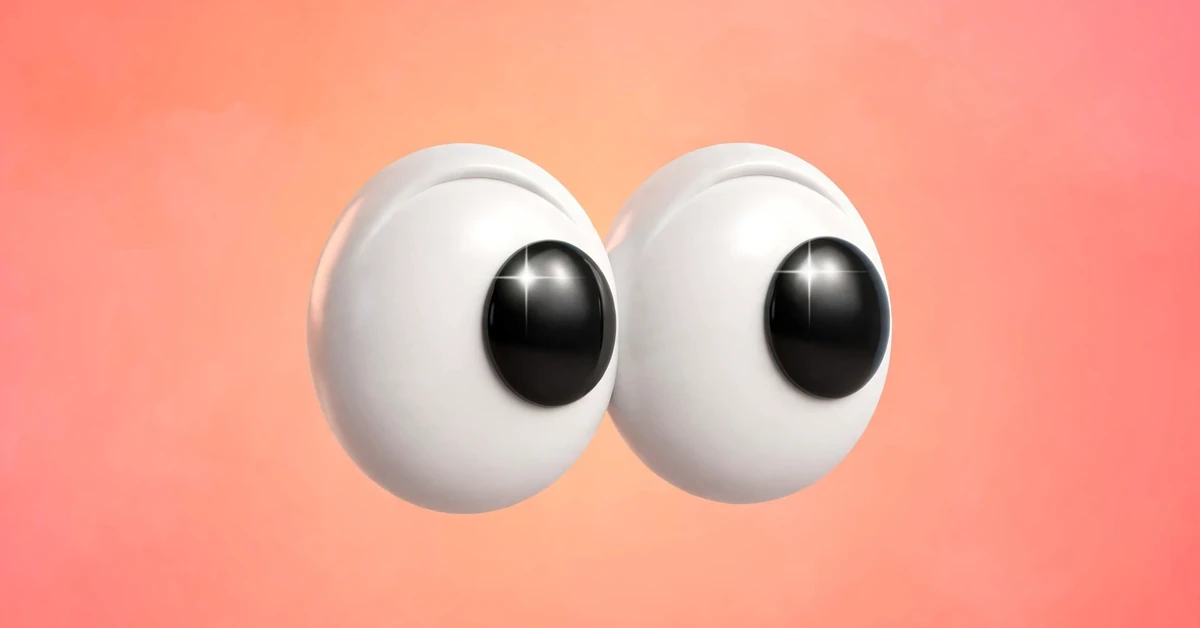
The eyes emoji 👀 means “I’m looking” — two eyes glancing sideways, the universal signal for noticing something, especially something juicy. It is less about sight than about attention: 👀 says “I saw that,” “I’m watching this unfold,” or “oh, interesting” — the raised eyebrow of the emoji world.
If the internet had a sound for leaning in, it would look like this. 👀 is pure reaction, and it is built for an audience.
What Does the Eyes Emoji Mean?
The design does the talking: a pair of eyes, pupils slid to the side, as if caught mid-glance. Nobody looks at something boring that way. The sideways slide is the meaning — attention with a tilt.
The core signals:
- Noticed. “Saw your post 👀” — awareness, acknowledged publicly.
- Curious. Something interesting is happening and a front-row seat has been taken.
- Suspicious. The glance can accuse: “You said the meeting was cancelled 👀.”
- Waiting. “Release date when? 👀” — eyes on the horizon, patience sold separately.
What unites them is theater. A plain “I noticed” is information; 👀 is performance. Sending it stages your reaction for everyone watching, which is why it thrives in public threads more than private chats.
It is also unusually honest as emojis go. Nobody sends 👀 by accident, and nobody misreads its direction. The eyes point the way the sender is looking — at the drama, at the hint, at the thing everyone is pretending not to see.
👀 the Comment-Section Emoji
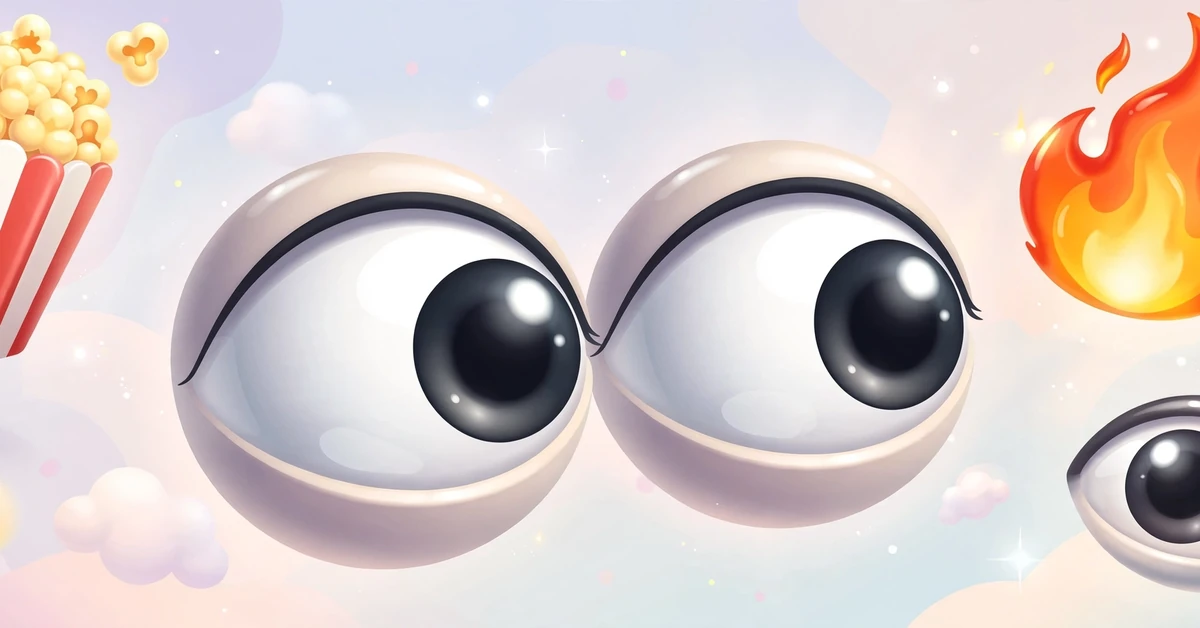
If 👀 has a home address, it is the comment section. Whole conversations run on this single glyph:
- The lurker’s flag. Under a brewing argument, a lone 👀 means “I have no side, only popcorn.” It claims a seat without entering the fight.
- The hype signal. Under a teaser or trailer, rows of 👀👀👀 mean the audience is locked in and waiting.
- The detective’s mark. Fans drop 👀 under cryptic celebrity posts, translating every blurry photo into evidence.
- The co-sign. A reply of 👀 under someone’s observation means “I see it too” — agreement with eyes instead of words.
Why does it dominate comments specifically? Because comments are public, and 👀 is a public-facing emoji. It performs attention for the whole room. In a private chat you would just say “wait, what?” In public, the glance says it better — and funnier.
It also has a rhythm. One 👀 is interest. Two is intrigue. A wall of them from different people turns a thread into a stadium: everyone watching the same thing, waiting for the next move. Brands know this, and teaser posts are designed to farm exactly that wall.
👀 for Tea, Drama and Hints
The sideways eyes have a natural home wherever the gossip lives — “tea” in internet slang, the good stuff people trade in group chats and comment threads.
- The hint drop. “Someone got engaged 👀” announces drama while pretending to withhold it. The eyes promise more is coming.
- The not-so-subtle callout. Posting 👀 under a friend’s vague status is the polite public way of saying “we all know who this is about.”
- The ship-watch. Fans use 👀 when two celebrities interact — one like, one follow, and the eyes arrive in formation.
- The receipt check. When someone claims they have screenshots, 👀 floods in: show us.
This is also where the “suspicious” reading lives. 👀 can be a smile or an accusation, and tea culture blurs them on purpose. The same glance that means “tell me everything” to a friend means “I see through you” to a liar. Tone, relationship, and what just happened in the thread decide — which is true of gossip itself.
Worth noting: the drama use is affectionate more often than hostile. Most 👀 in the wild is fandom, friendship, and play. The accusation mode exists, but it wears a different outfit — usually words first, eyes as punctuation.
👀 vs 👁️: The Practical Difference
People constantly wonder whether the pair and the single eye are interchangeable. They are not, and swapping them changes the message:
- 👀 Eyes — social, sideways, reactive. The look of a person noticing something in a crowd. Light, funny, public.
- 👁️ Single eye — symbolic, straight-on, deliberate. Feels focused and artistic, sometimes eerie. Used for witnessing and awareness.
A quick test: if you mean “I am watching this situation with interest,” send 👀. If you mean “I see you, specifically, and I am paying witness,” that is the single eye’s job. We break that one down fully in our eye emoji guide.
Timing differs too. 👀 reacts in the moment — it is a live response. 👁️ tends to stand as a statement, in posts and bios more than in replies. One is a glance; the other is a gaze.
And a separate boundary, because the searches overlap: neither of these is about an eye that is physically twitching. That health-adjacent symbol lives in its own guide. These two are about attention, not anatomy.
Using 👀 Without Sounding Creepy
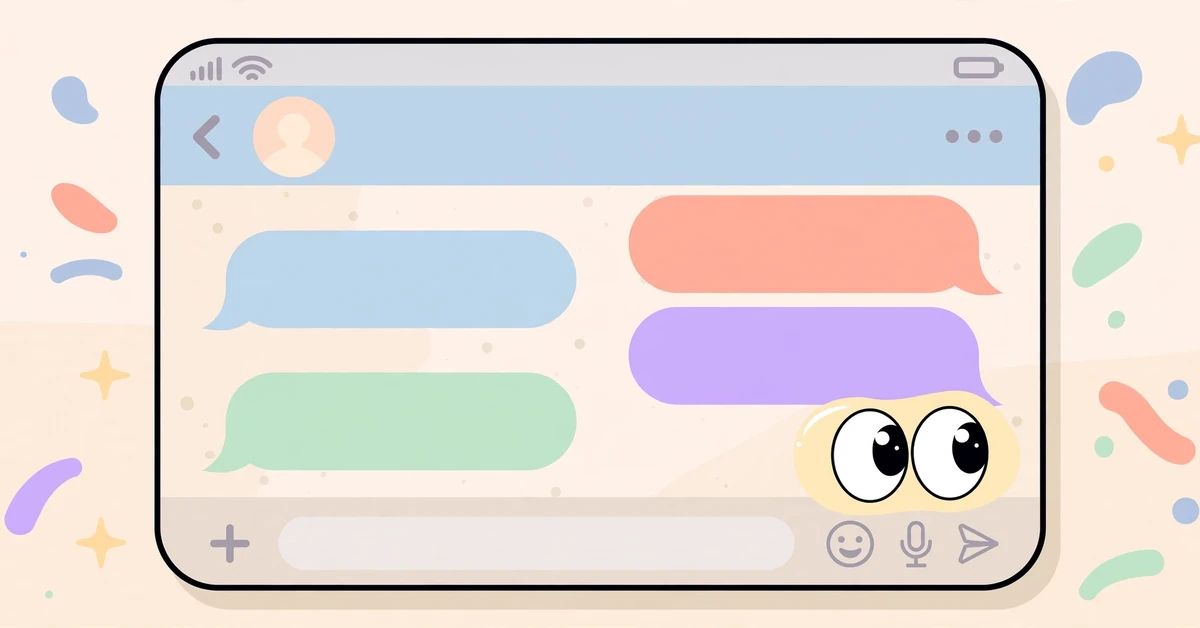
The eyes are friendly by default, but a sideways glance can land wrong. A few habits keep it clean:
- Context is everything. 👀 under a friend’s teaser is fun. 👀 as your entire reply to a stranger’s personal photo is a vibe nobody ordered.
- Do not send it solo to someone you barely know. Without words, it reads as surveillance. Add a sentence — “👀 okay this looks amazing” — and it becomes a compliment.
- In work chats, eyes mean “watching you.” Dropping 👀 under a colleague’s update can sound like monitoring. A 👍 or actual words are safer on the clock.
- Match the room’s energy. Fast, jokey threads welcome eyes. Serious announcements do not — a 👀 under someone’s hard news reads as entertainment-hunting, and people remember it.
The general rule: 👀 is for shared moments, not for people. Aim it at events, posts, and drama everyone can see, and it will almost always land as the friendly little glance it is.
Between friends, none of this applies much — inside jokes run their own rules. The eye survives on the strength of the relationship. As always, the chat history is the real instruction manual.
Eyes Emoji FAQs
What does 👀 mean in a comment?
Lurking with interest — “I’m watching this.” It claims a front-row seat for drama, teasers, or debates without taking a side.
What does 👀 mean from a guy or a girl?
Usually the same thing: interest, curiosity, or playful suspicion. In flirty contexts it can mean “I noticed you” — context and history decide.
Why do people send just 👀 with no words?
Because the glance is the whole message. It says “I see what’s happening here” faster and funnier than a sentence, especially in public threads.
Is 👀 flirty?
It can be. Under a selfie or a bold post, 👀 can mean “looking respectfully, respectfully intrigued.” It is a soft signal — interest, not a declaration.
What is the difference between 👀 and 👁️?
👀 is the social pair, glancing sideways — curious and reactive. 👁️ is the single symbolic eye — deliberate, focused, used for witnessing and awareness.
My Take
The eyes emoji is the internet’s leaning-in emoji. Send 👀 for shared drama, teasers, and playful suspicion — the moments when “I’m looking” is the best seat in the house — and add a word or two whenever the room does not know you yet.

Hi, I’m Nathan Cole, a symbols researcher and writer for Symboliism.com. I specialize in decoding money symbols, career numbers, and prosperity meanings. I love turning complex spiritual and financial symbolism into clear, practical guides that help readers understand the signs influencing their success, goals, and growth.