The blue heart emoji 💙 means loyalty, trust, and calm affection — the heart people send when they care deeply but the feeling is not romantic. It is the platonic heart: steady, cool-toned, and honest in a way the red heart’s intensity sometimes is not.
In a keyboard full of hearts that shout, 💙 is the one that keeps its voice down — and that restraint is exactly why people reach for it.
What Does the Blue Heart Emoji Mean?
Start with the color itself. Blue is the world’s most trusted color: uniforms, corporate logos, hospital scrubs, clear skies. The blue heart borrows all of that. It says: you can count on me.
The working definition: 💙 is care without heat. It carries genuine affection, minus the romance of ❤️ and minus the playfulness of 💗. When someone sends 💙, they mean it — they just don’t mean it that way.
Where it shows up most:
- Close friendships. The best-friend heart for many people — deep, loyal, permanent.
- Family bonds. Siblings, cousins, chosen family. Warm, but not Valentine’s warm.
- Supportive messages. “Proud of you 💙” lands softer than ❤️ and more serious than 💛.
- Everyday appreciation. Thank-yous, congratulations, good-luck wishes — the heart that fits anywhere.
The blue heart also has a temperature. Where ❤️ runs warm and 💛 runs bright, 💙 runs cool and calm. People send it when the moment needs steadiness: bad news handled gracefully, big wins celebrated without chaos, feelings that are settled rather than surging.
💙 for Friends: Loyal, Not Romantic
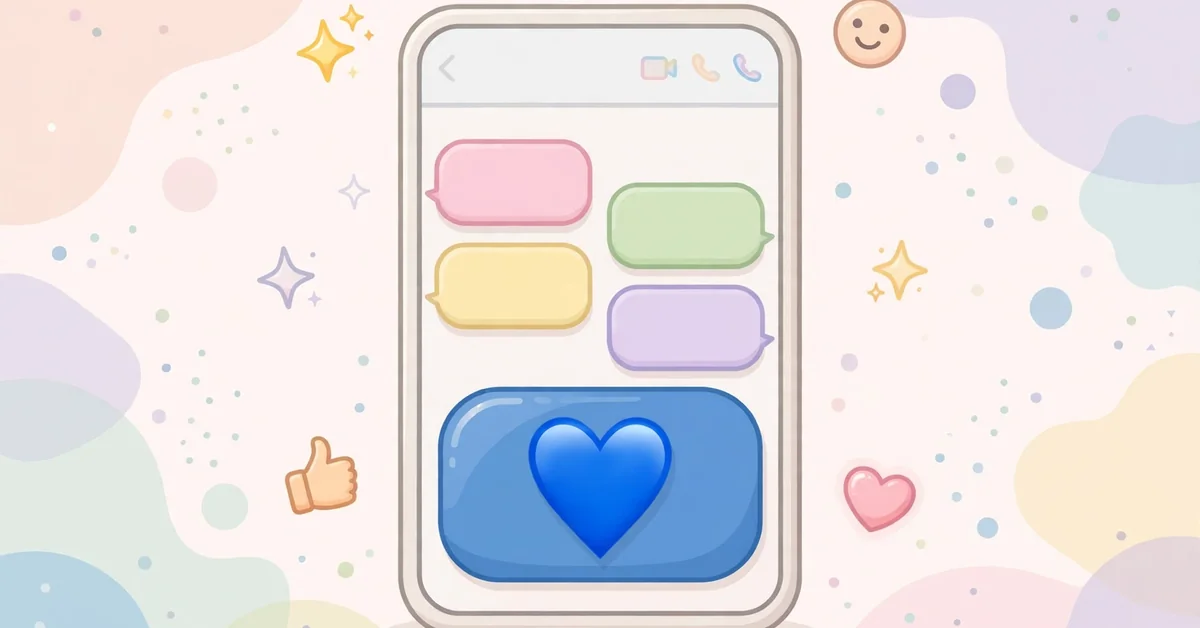
This is the blue heart’s most important job, so it deserves the full explanation: the friend-zone heart, worn with pride.
Every friend group has a heart-color etiquette, and 💙 is the workhorse. It says “you matter to me” while drawing a clean line around romance. For friendships that are deep but platonic — the decade-long best friend, the college roommate, the work wife — 💙 is the honest choice.
- The loyalty signal. “Ten years of this nonsense 💙” under a friendship anniversary post. The blue heart is how long friendships sign their names.
- The safe support. Checking in on a friend’s hard week: “here if you need anything 💙.” Caring, with no mixed signals.
- The group-chat glue. Blue hearts flow in friend groups the way inside jokes do — a shared language of steady affection.
- The boundary keeper. New friendships, professional friendships, friendships where clarity matters: 💙 says the right amount.
Is the blue heart always platonic? Mostly — that is its reputation, and reputations shape readings. But no emoji is a contract. A partner can send 💙 meaning “my calm, steady love for you,” and longtime couples do. The rule is simpler: blue is the heart’s quietest romantic option, so read the relationship first and the color second.
One pattern worth naming: people who always send 💙 and suddenly switch to ❤️ are usually saying something. Heart habits are real, and color changes get noticed.
💙 for Causes and Teams
No other heart color does civic duty like the blue one. 💙 is the heart of teams, causes, and collective identity:
- Sports teams. Blue is a team color for half the leagues on earth. Fan posts run on 💙 the way stadiums run on noise.
- Awareness causes. The blue heart anchors autism awareness campaigns, prostate cancer awareness, and water-conservation messaging — blue’s established territory in the awareness-ribbon world.
- Workplaces and brands. Companies with blue branding sign internal wins with 💙. It reads professional in a way ❤️ never could.
- Community pride. Cities, schools, and neighborhoods with blue in their colors claim the heart as a tiny flag.
This is the use that sets 💙 apart from every other heart in the family. Red hearts don’t do team loyalty. Yellow hearts don’t do awareness campaigns. The blue heart’s coolness — its lack of romantic heat — is precisely what makes it available for shared, public meaning.
If your cause or team is blue, the emoji is basically free branding. Use it.
💙 vs 🩵: Blue or Light Blue?
The family has a newer sibling, and the confusion is real: 💙 versus 🩵, the light blue heart.
- 💙 Blue heart — the classic. Trust, loyalty, calm, team colors. Deeper, more established, slightly more serious.
- 🩵 Light blue heart — the softer one. Gentle, airy, sweet. Newer to the keyboard, and it reads younger and lighter.
Most people treat them as near-synonyms, and honestly that is fine — the difference is a shade, not a meaning. But there is a subtle split forming: 💙 for steady loyalty, 🩵 for soft sweetness. Think of 💙 as the ocean and 🩵 as the sky.
Practical advice: if you are unsure which blue someone meant, treat them the same. Nobody has ever started a fight over blue-heart shades. The one exception is team colors — if the team is specifically light blue, use 🩵 and mean it.
And if you are choosing between blue and no heart at all: blue is almost never wrong. It is the least risky heart on the keyboard.
Blue Heart Combos for Captions

💙 plays well with others. A few combinations that always work:
- Friendship posts: “My people 💙✨” — the standard, and standard for a reason.
- Travel and sky: “Blue skies ahead 💙☁️” — the color does the captioning.
- Team wins: “Let’s gooo 💙🏆” — loyalty plus victory.
- Calm mornings: “Slow Sunday 💙☕” — the quiet-life aesthetic.
- Support posts: “You’ve got this 💙💪” — strength without noise.
What to avoid: stacking 💙💙💙💙 in romantic contexts where ❤️ was expected (it can read as a deliberate cool-down), and using it in genuinely formal messages — it is friendly, not corporate.
For the rest of the heart family — where blue sits among reds, pinks, and blacks, and how to pick between them — the heart emoji guide maps every color in one place.
Blue Heart Emoji FAQs
What does 💙 mean from a girl?
Usually loyal friendship or calm affection. From a close friend it means deep platonic care; from a partner it can mean steady, settled love. The relationship decides.
What does 💙 mean from a guy?
Similar — trust and loyalty without romantic heat. Men often use 💙 as their default caring heart precisely because it avoids mixed signals.
Is the blue heart friend-zoning someone?
Not exactly — it is more like honest labeling. 💙 says “I care about you” clearly and platonically. That is a kindness, not a rejection.
What is the difference between 💙 and 🩵?
Shade and softness. 💙 is the classic deeper blue — loyalty, trust, teams. 🩵 is lighter and sweeter. Most people use them interchangeably.
Can I send 💙 to my partner?
Yes. Many couples use 💙 for calm, steady love — the settled affection underneath the romance. It reads as deep trust, which is a compliment.
Steady as It Goes
The blue heart will never be the loudest heart in the chat, and that is its power. Send 💙 for the loyalties that last — friends, family, teams, and causes — and let its calm do the talking.

Hi, I’m Daniel Pierce, a writer at Symboliism.com who specializes in love symbols, relationship numbers, and their hidden meanings. I break down romantic signs, soulmate numbers, and emotional symbolism in a simple, relatable way. My goal is to help readers understand the deeper messages behind love, connection, and the symbols that guide our relationships.