The cross emoji ✝️ is a sign of Christian faith. People send it to share a blessing, mark a prayer, or remember someone they have lost. It is a small symbol with deep weight, so it is worth using with care.
This guide explains what ✝️ means, where it shows up online, and how to tell it apart from the other cross shapes on your keyboard that have nothing to do with faith.
What Does the Cross Emoji Mean?
The ✝️ emoji is the Latin cross, the main symbol of Christianity. It stands for faith in God, the love of Jesus, and hope that lasts past death. For many people it is the most sacred sign they know.
In chats, the cross emoji works like a quiet prayer. A friend posts bad news, and someone replies with ✝️ or 🙏 and a few kind words. It says “I am praying for you” without a long speech.
It also shows up in bios and names. People place ✝️ next to their name to say faith is part of who they are. Church pages use it in posts about services, feasts, and holy days.
One close cousin is ☦️, the Orthodox cross, which has three bars. It is used by Orthodox Christians. Both are signs of faith; they belong to different church traditions.
You will also meet the cross away from screens. Cross necklaces and church signs use the same shape, and photos of them often carry ✝️ in the caption to link the picture to the faith behind it. The emoji acts like a small label: this moment matters to me because of what I believe.
✝️ in Blessings and Prayers

The most common use of ✝️ online is the short blessing. “God bless you ✝️” is sent to friends starting a trip, a new job, or a hard week. It is a warm wish with roots in faith.
People also use it in prayer chains and group chats. When a group asks for prayers — for a sick parent, a safe birth, a lost pet — replies often carry ✝️ with the praying emoji. The pair reads as “hands folded, heart with you.”
On Sundays and holy days, the cross turns up in greetings. “Happy Easter ✝️” and Christmas posts often carry it. So do christening, wedding, and baptism photos, where it marks the faith at the heart of the day.
Keep blessings short and warm. A cross emoji with two kind lines means more than a long text copied from somewhere else.
During Lent and Easter time, you will see ✝️ in far more profiles and posts than usual. People add it to their names for the season, share daily prayers, and mark church events. It acts like a small banner for the season: faith is front and center in their feed right now. If you ask someone about the cross in their name at that time of year, that is most likely why.
✝️ for Remembrance
The cross emoji also marks loss. When someone dies, posts often carry ✝️ with their name and dates, like a small stone marker in text form. “Rest in peace, Grandpa ✝️” is a phrase many people know at a glance.
You will see it on memory pages and anniversary posts too. Each year on the day a loved one died, family members share a photo and a cross. It says the person is gone but not forgotten.
Cemeteries and war memorials use real crosses the same way. In text, ✝️ does that quiet work. It asks for no reply. It just stands there with respect.
If you send one for remembrance, keep the rest of the message plain and kind. This is never the place for jokes or loud emoji rows.
Not This Cross: ❌, ⚔️ and Other Look-Alikes
Several cross shapes sit near ✝️ on the keyboard, and they mean very different things. Mixing them up can cause real confusion.
❌ is the red cross mark. It means “no,” “wrong,” or “cancel.” It is the mark teachers put on wrong answers. It has no link to faith at all. Never use it in a blessing or a sad post.
⚔️ is two crossed swords. It means battle, games, and contests. Gamers use it for fights and war themes. It is about conflict, not church.
✖️ is a plain multiply sign, used for maths and “times” marks. 💠, ✳️ and other star-like shapes are just ornaments.
The rule is simple. If the post is about faith, prayer, or loss, the emoji you want is ✝️ — the single upright cross, gold or plain. Check the shape before you tap.
One more near match: ⛪ is the church building emoji, a chapel with a cross on top. It points to a place — a service, a wedding venue, a visit — rather than to faith itself. If you are talking about the belief, reach for ✝️. If you are talking about the building or the event, ⛪ fits better.
Using ✝️ Respectfully
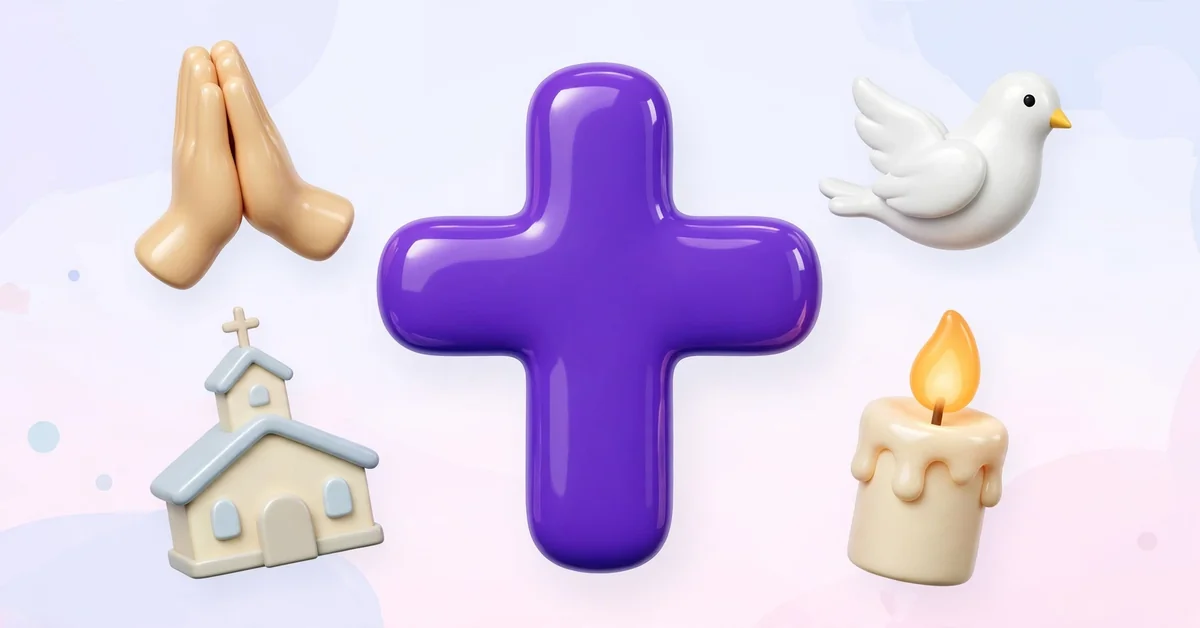
The cross is holy to a great many people, so a little care goes a long way.
Use it in faith contexts: prayers, blessings, church news, and remembrance. That is its home, and no one will read it wrong there.
Do not use it as a joke or a fashion mark if faith is not part of your message. Some people find a casual ✝️ in a party post or a flirty bio rude, even if you meant no harm.
Do not mix it into rows of random symbols. A bio like “✝️🙏❤️” speaks of faith and love. A row like “✝️🍕👻” just looks careless next to a sacred sign.
And if you are not sure whether a cross fits a post about someone else’s grief or faith, leave it out. A kind plain text is never wrong.
The same rule helps at work. A quiet “keeping you in my thoughts” works in any office chat. Save the cross emoji for spaces where you know faith is welcome and shared.
FAQs
What does the cross emoji mean?
✝️ is the Latin cross, a symbol of Christian faith. People use it for prayer, blessings, church posts, and remembrance of the dead.
What is the difference between ✝️ and ☦️?
✝️ is the Latin cross used across most Christian churches. ☦️ is the Orthodox cross with three bars, used in Orthodox Christian traditions.
Is ❌ a cross emoji for faith?
No. ❌ is a red “no” mark. It means wrong or cancelled and has no link to faith. The faith symbol is ✝️.
Can I put ✝️ in my bio?
Yes, many people do to show faith is part of their life. Keep the rest of the bio in line with that message.
When should I not use ✝️?
Skip it in jokes, flirty posts, or ads where faith plays no part. For someone else’s grief, plain kind words are always safe.
Conclusion
The cross emoji carries real faith in a very small space. Use ✝️ for prayer, blessings, and remembrance, and keep it clear of the look-alike crosses that mean “no” or “battle.” Treated with respect, it says a great deal with a single tap.

Hi, I’m Nathan Cole, a symbols researcher and writer for Symboliism.com. I specialize in decoding money symbols, career numbers, and prosperity meanings. I love turning complex spiritual and financial symbolism into clear, practical guides that help readers understand the signs influencing their success, goals, and growth.