Have you ever looked into the toilet and noticed that your stool looked different than usual?
Maybe it was green, yellow, black, pale, or even red. That can be surprising, and sometimes a little worrying. Many people immediately search online for answers because they want to know if a change in stool color is normal or a sign of a health problem.
Stool color meaning can offer clues about your digestion, diet, medications, and overall health. Brown stool is usually considered normal and healthy. Other colors such as green, yellow, black, red, orange, gray, or pale stool may be linked to certain foods, supplements, digestive conditions, or, in some cases, medical issues that need attention.
The good news is that not every color change means something is wrong. In many cases, the explanation is simple. Understanding what your stool color means can help you know when to relax and when to seek medical advice.
What Does Stool Color Mean?
Stool gets its color mainly from bile, a digestive fluid produced by the liver and stored in the gallbladder.
As food moves through the digestive system, including the small intestine, large intestine, and colon, bile changes chemically. This process usually creates the familiar brown color most people associate with healthy stool.
Because stool color is connected to digestion, changes in color can sometimes reflect changes in:
- Diet
- Hydration
- Medications
- Supplements
- Gut health
- Digestive health
- Liver function
- Gallbladder function
- Pancreatic health
In some situations, stool color may also signal bleeding, infection, inflammation, or problems with bile flow.
Healthy Stool Color
A healthy stool color is generally medium to dark brown.
Brown stool is a sign that digestion is working normally and that bile is reaching the intestines as expected.
Different shades of brown are usually considered normal. A slightly lighter or darker brown color is often nothing to worry about, especially if there are no other symptoms.
Many people searching for a healthy poop color chart are relieved to learn that healthy stool can vary somewhat from person to person.
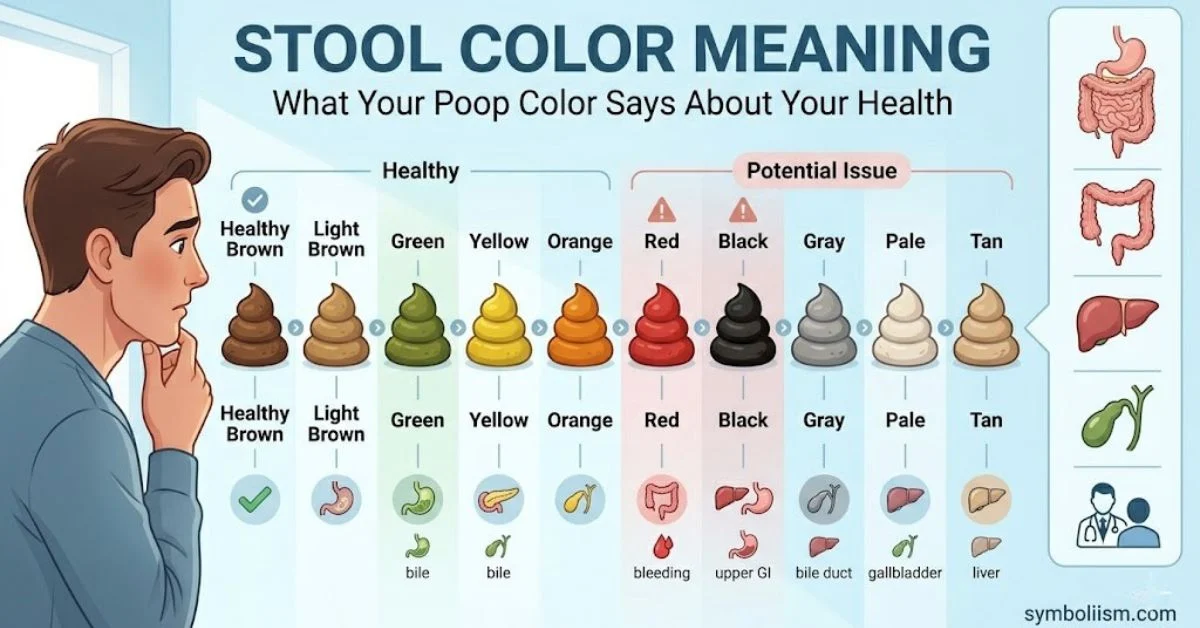
Stool Color Meaning Chart
The following stool color chart provides a simple overview of what different colors may indicate.
| Stool Color | Possible Meaning |
| Brown | Normal digestion and healthy bile flow |
| Light Brown | Often normal and diet-related |
| Green | Fast digestion, green vegetables, supplements |
| Yellow | Fat malabsorption or digestive concerns |
| Orange | Food dyes, carrots, or bile changes |
| Red | Blood, hemorrhoids, or certain foods |
| Black | Iron supplements, medications, or bleeding |
| Gray | Reduced bile flow |
| Pale or Clay-Colored | Possible liver, gallbladder, or bile duct issues |
| Tan | Dietary changes or reduced bile pigments |
While stool color charts and poop color chart pictures can be useful references, they should not replace medical advice.
Why Stool Color Changes
Many factors can influence stool color.
The most common causes include:
Foods
Certain foods naturally affect stool color.
Examples include:
- Leafy green vegetables
- Beets
- Blueberries
- Carrots
- Sweet potatoes
- Foods containing artificial coloring
A meal rich in these foods can temporarily change the appearance of stool.
Medications and Supplements
Several medications and supplements can also alter stool color.
Examples include:
- Iron supplements
- Antibiotics
- Antacids
- Bismuth-containing medications
- Multivitamins
Black stool caused by iron supplements is particularly common.
Digestion and Bile Flow
Normal stool color depends on healthy bile production and movement through the digestive tract.
Conditions affecting the liver, gallbladder, pancreas, or bile ducts may cause stool to appear lighter than normal.
Understanding Different Stool Colors
Instead of focusing on individual keyword variations, it helps to understand what each stool color may indicate.
Brown Stool
Brown stool is typically a sign of healthy digestion.
Both light brown poop and dark brown stool are usually normal variations.
Green Stool
Green stool is one of the most common color changes.
Possible causes include:
- Green vegetables
- Food coloring
- Iron supplements
- Rapid digestion
- Antibiotics
Many people searching for green stool color meaning discover that green stool is often harmless.
Yellow Stool
Yellow stool may occur when fat is not being absorbed properly.
Potential causes include:
- Malabsorption
- Celiac disease
- Pancreatic disorders
- Digestive issues
If yellow stool continues for an extended period, it is worth discussing with a healthcare provider.
Orange Stool
Orange stool is often linked to diet.
Common causes include:
- Carrots
- Pumpkin
- Sweet potatoes
- Food coloring
Occasionally, bile-related changes may also contribute.
Red Stool
Red stool can be alarming.
Sometimes the cause is harmless, such as eating beets or foods with red coloring.
However, red stool may also indicate:
- Hemorrhoids
- Anal fissures
- Lower gastrointestinal bleeding
- Colon polyps
- Colorectal cancer
Blood in stool should always be taken seriously.
Black Stool
Black stool may occur after taking iron supplements or certain medications.
In some cases, black, tar-like stool can indicate bleeding higher in the digestive tract.
Conditions associated with black stool may include:
- Gastritis
- Peptic ulcers
- Upper gastrointestinal bleeding
Medical attention is recommended if black stool appears suddenly and cannot be explained by diet or supplements.
Pale, Gray, or Clay-Colored Stool
Pale stool, gray stool, and clay-colored stool are often discussed together because they can have similar causes.
These colors may suggest reduced bile reaching the intestines.
Possible causes include:
- Gallstones
- Liver disease
- Hepatitis
- Cholestasis
- Bile duct blockage
Persistent pale stool should be evaluated by a healthcare professional.
Tan Stool
Many people wonder, Why is my poop a light tan color?
Tan stool is sometimes related to dietary changes or reduced bile pigments.
Occasional tan stool is often temporary, but repeated episodes deserve attention.
Stool Color Meaning in Adults
Adults commonly experience stool color changes from time to time.
Most changes are linked to:
- Food choices
- Medications
- Supplements
- Temporary digestive changes
However, adults should pay close attention to persistent color changes, especially when they occur alongside symptoms such as:
- Abdominal pain
- Bloating
- Diarrhea
- Constipation
- Nausea
- Vomiting
- Weight loss
- Fatigue
Baby Stool Color Meaning
Baby stool naturally comes in several colors.
Healthy baby stool may appear:
- Yellow
- Brown
- Green
- Mustard-colored
Parents should contact a pediatrician if a baby develops white, gray, or unusual black stool.
Dog Stool Color Meaning
Pet owners often search for dog stool color meaning as well.
Healthy dog stool is generally brown.
Black, red, gray, yellow, or unusually pale stool may suggest digestive problems and should be discussed with a veterinarian.
IBS Poop Color and Digestive Conditions
People with Irritable Bowel Syndrome (IBS) may notice occasional changes in stool appearance.
IBS poop color may sometimes appear:
- Green
- Yellow
- Light brown
However, IBS does not usually cause black, gray, or bloody stool.
Those colors should always be evaluated separately because they may indicate other conditions.
Does Stool Color Mean Anything?
Yes.
While stool color alone cannot diagnose a disease, it can provide valuable clues about what is happening inside the body.
Doctors often consider stool color alongside:
- Medical history
- Diet
- Symptoms
- Stool consistency
- Laboratory tests
The color of stool can sometimes help identify issues involving the digestive tract, liver, gallbladder, pancreas, or gastrointestinal bleeding.
When Should You See a Doctor?
A temporary color change is often harmless.
However, medical attention is recommended if stool color changes are accompanied by:
- Blood in stool
- Black tar-like stool
- Pale or gray stool that persists
- Severe abdominal pain
- Jaundice
- Persistent diarrhea
- Unexplained weight loss
- Ongoing fatigue
These symptoms may indicate a condition that requires professional evaluation.
Frequently Asked Questions
What does stool color mean?
Stool color can reflect digestion, diet, medications, bile flow, and overall digestive health.
What does green stool color mean?
Green stool is often linked to green vegetables, supplements, food coloring, or rapid digestion.
What does pale stool color mean?
Pale stool may indicate reduced bile flow and could be related to liver, gallbladder, or bile duct issues.
What does a gray stool color mean?
Gray stool can occur when bile is not reaching the intestines properly.
What does a dark stool color mean?
Dark stool may be normal, especially if it is dark brown. Very dark or black stool may require medical evaluation.
What is the healthiest stool color?
Most healthcare professionals consider medium to dark brown the healthiest stool color.
Can food change stool color?
Yes. Foods such as beets, spinach, carrots, blueberries, and foods containing artificial coloring can temporarily affect stool color.
Final Thoughts
Understanding stool color meaning can help you better understand your digestive health.
Most stool color changes are harmless and often related to foods, medications, or temporary digestive changes. Brown stool is generally considered healthy, while colors such as green, yellow, orange, black, red, gray, or pale stool may provide clues about what is happening inside the body.
The most important thing is to pay attention to persistent changes and any symptoms that occur alongside them. If something seems unusual or continues for several days, speaking with a healthcare professional is the safest approach.
A quick look at stool color can never replace a medical diagnosis, but it can be a useful signal that helps you stay informed about your health.
Discover More About!
- Bariatric Meaning: Medical Uses & Weight Loss Explained
- ETOH Medical Meaning Explained
- B.I.D. Meaning in Medicine: Simple Guide to Prescription Dosage
- What is a CMP Blood Test? Full Easy Medical Guide

Hi, I’m Lena Foster, a symbolism expert and content writer for Symboliism.com. I specialize in explaining the meanings behind symbols, numbers, and signs in a simple, engaging way. I love turning complex spiritual and cultural symbolism into clear, easy-to-read guides that help readers understand the messages around them.